
疟原虫入侵人类红细胞的细胞和分子基础。
The cellular and molecular basis for malaria parasite invasion of the human red blood cell.
机构信息
The Walter and Eliza Hall Institute of Medical Research, University of Melbourne, Victoria, 3052, Australia.
出版信息
J Cell Biol. 2012 Sep 17;198(6):961-71. doi: 10.1083/jcb.201206112.
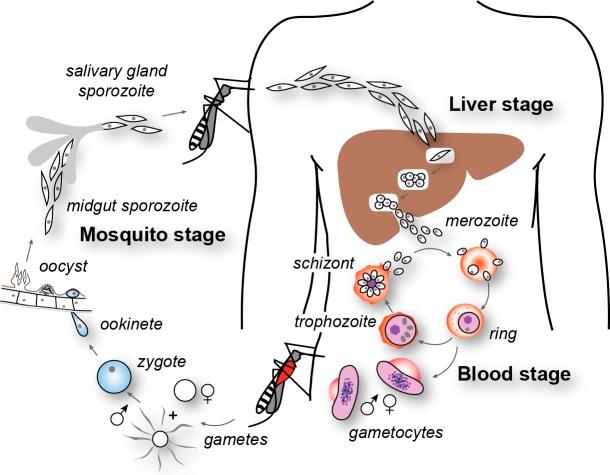
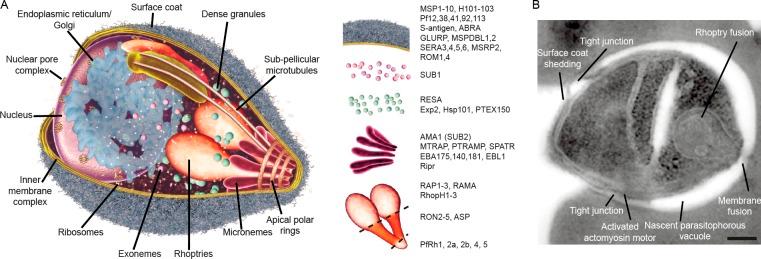
Malaria is a major disease of humans caused by protozoan parasites from the genus Plasmodium. It has a complex life cycle; however, asexual parasite infection within the blood stream is responsible for all disease pathology. This stage is initiated when merozoites, the free invasive blood-stage form, invade circulating erythrocytes. Although invasion is rapid, it is the only time of the life cycle when the parasite is directly exposed to the host immune system. Significant effort has, therefore, focused on identifying the proteins involved and understanding the underlying mechanisms behind merozoite invasion into the protected niche inside the human erythrocyte.
疟疾是一种由疟原虫属原生动物寄生虫引起的人类主要疾病。它具有复杂的生命周期;然而,血液中无性寄生虫感染是所有疾病病理学的罪魁祸首。当裂殖子,即自由侵袭性血液阶段形式,侵入循环红细胞时,就会开始这个阶段。尽管入侵速度很快,但这是寄生虫唯一一次直接暴露于宿主免疫系统的生命周期。因此,人们已经做出了巨大的努力来确定参与的蛋白质,并了解裂殖子侵入人类红细胞内保护小生境的潜在机制。

 Zotero 插件