
拟南芥生殖发育过程中脯氨酸合成的需求。
Requirement of proline synthesis during Arabidopsis reproductive development.
机构信息
Department of Plant Physiology and Biochemistry Biology Section, University of Konstanz, Universitätsstraße 10, 78464 Konstanz, Germany.
出版信息
BMC Plant Biol. 2012 Oct 13;12:191. doi: 10.1186/1471-2229-12-191.
BACKGROUND
Gamete and embryo development are crucial for successful reproduction and seed set in plants, which is often the determining factor for crop yield. Proline accumulation was largely viewed as a specific reaction to overcome stress conditions, while recent studies suggested important functions of proline metabolism also in reproductive development. Both the level of free proline and proline metabolism were proposed to influence the transition to flowering, as well as pollen and embryo development.
RESULTS
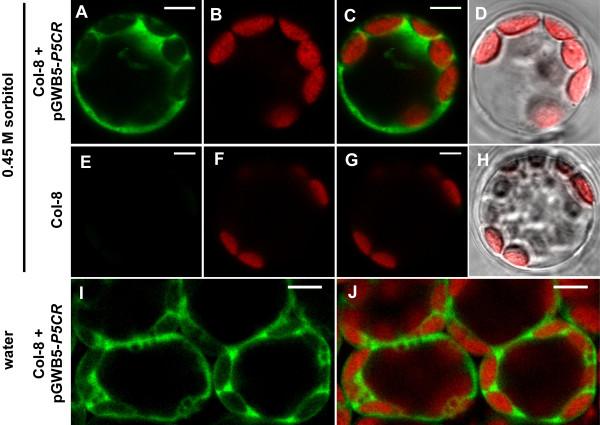
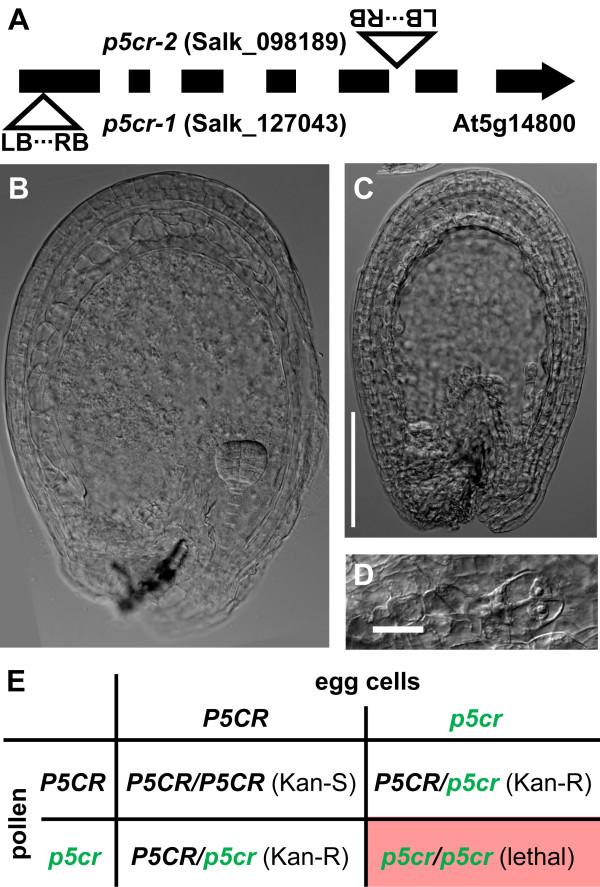
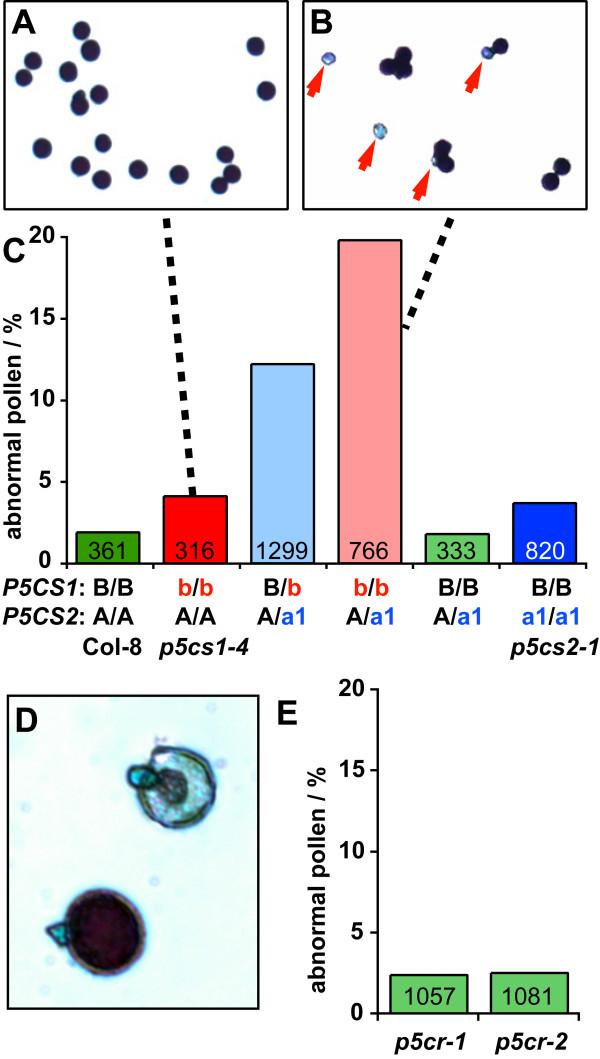
In this study, we performed a detailed analysis of the contribution of individual proline biosynthetic enzymes to vegetative development and reproductive success in Arabidopsis. In contrast to previous reports, we found that pyrroline-5-carboxylate (P5C) synthetase 2 (P5CS2) is not essential for sexual reproduction although p5cs2 mutant plants were retarded in vegetative development and displayed reduced fertility under long-day conditions. Single mutant plants devoid of P5CS1 did not show any developmental defects. Simultaneous absence of both P5CS isoforms resulted in pollen sterility, while fertile egg cells could still be produced. Expression of P5C reductase (P5CR) was indispensable for embryo development but surprisingly not needed for pollen or egg cell fertility. The latter observation could be explained by an extreme stability of P5CR activity, which had a half-life time of greater than 3 weeks in vitro. Expression of P5CR-GFP under the control of the endogenous P5CR promoter was able to restore growth of homozygous p5cr mutant embryos. The analysis of P5CR-GFP-fluorescence in planta supported an exclusively cytoplasmatic localisation of P5CR.
CONCLUSIONS
Our results demonstrate that potential alternative pathways for proline synthesis or inter-generation transfer of proline are not sufficient to overcome a defect in proline biosynthesis from glutamate during pollen development. Proline biosynthesis through P5CS2 and P5CR is limiting for vegetative and reproductive development in Arabidopsis, whereas disruption of P5CS1 alone does not affect development of non-stressed plants.
背景
配子和胚胎发育是植物成功繁殖和结实的关键,这通常是作物产量的决定因素。脯氨酸积累在很大程度上被视为一种克服应激条件的特定反应,而最近的研究表明脯氨酸代谢在生殖发育中也具有重要功能。游离脯氨酸水平和脯氨酸代谢都被认为会影响向开花的转变,以及花粉和胚胎的发育。
结果
在这项研究中,我们对拟南芥中单个脯氨酸生物合成酶对营养生长和生殖成功的贡献进行了详细分析。与之前的报道相反,我们发现吡咯啉-5-羧酸(P5C)合酶 2(P5CS2)虽然在营养生长中是必不可少的,但 p5cs2 突变体植物发育迟缓,在长日照条件下生殖力降低。缺乏 P5CS1 的单突变体植物没有表现出任何发育缺陷。同时缺乏两种 P5CS 同工酶会导致花粉不育,但仍能产生可育的卵细胞。P5C 还原酶(P5CR)的表达对于胚胎发育是必不可少的,但令人惊讶的是,它对于花粉或卵细胞的育性并不需要。后一种观察结果可以用 P5CR 活性的极端稳定性来解释,它在体外的半衰期大于 3 周。在 P5CR 启动子的控制下表达 P5CR-GFP 能够恢复纯合 p5cr 突变体胚胎的生长。P5CR-GFP 在植物体内的表达支持 P5CR 的细胞质定位。
结论
我们的结果表明,在花粉发育过程中,从谷氨酸合成脯氨酸的潜在替代途径或脯氨酸的代际转移不足以克服脯氨酸生物合成的缺陷。通过 P5CS2 和 P5CR 进行脯氨酸生物合成对拟南芥的营养生长和生殖发育是有限的,而单独破坏 P5CS1 不会影响非胁迫植物的发育。


 Zotero 插件