
芳香族氨基酸是希瓦氏菌属中菌毛导电性和长程细胞外电子传递所必需的。
Aromatic amino acids required for pili conductivity and long-range extracellular electron transport in Geobacter sulfurreducens.
机构信息
Department of Microbiology, University of Massachusetts, Amherst, Massachusetts, USA.
出版信息
mBio. 2013 Mar 12;4(2):e00105-13. doi: 10.1128/mBio.00105-13.
UNLABELLED
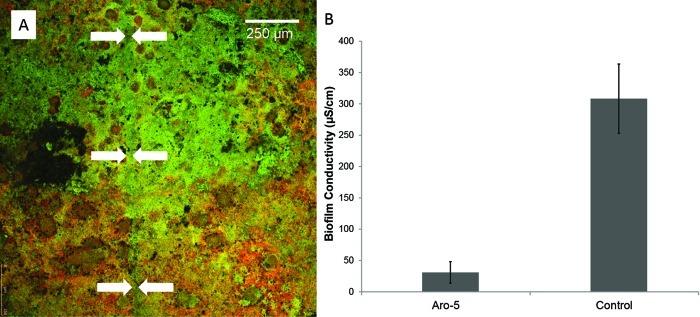
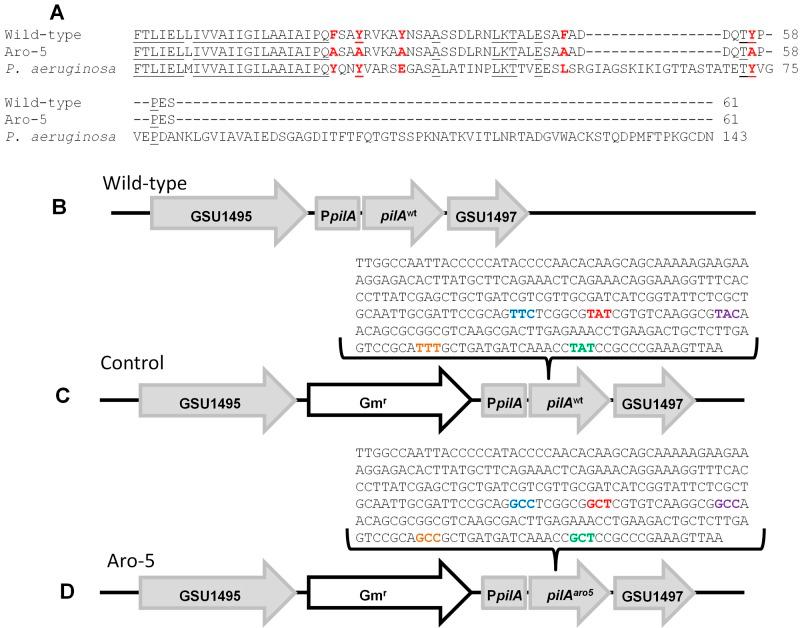
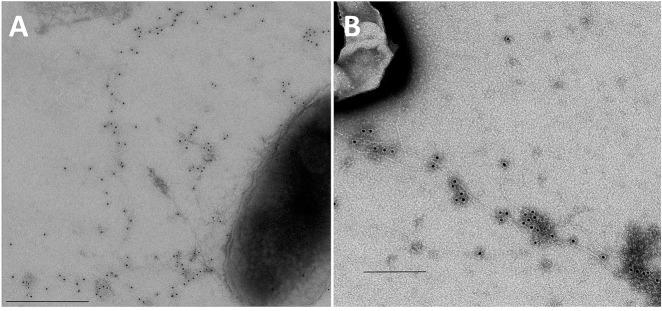
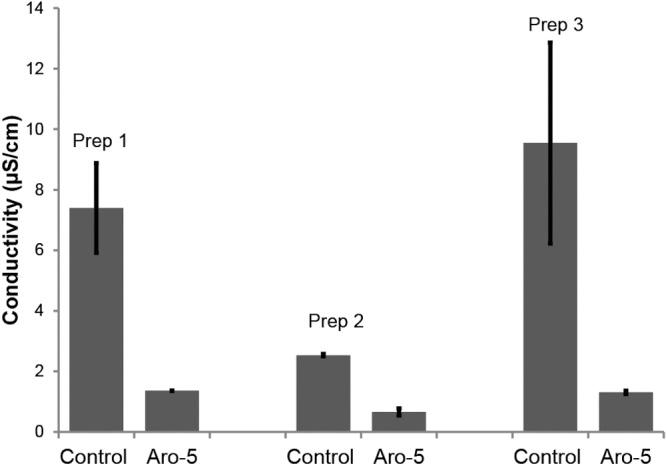
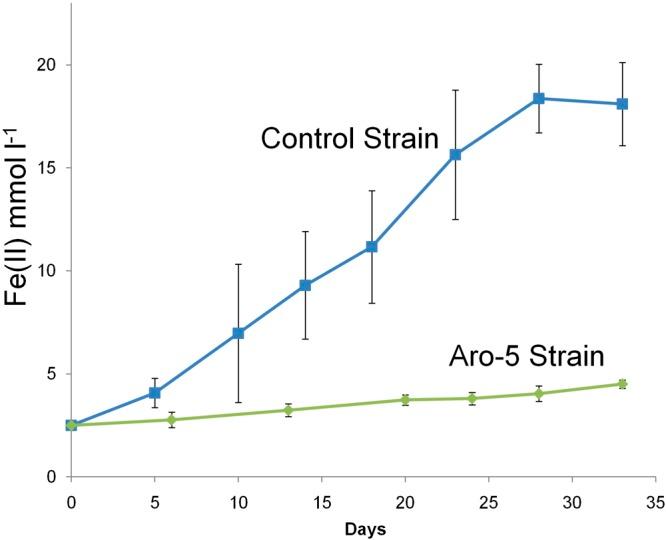
It has been proposed that Geobacter sulfurreducens requires conductive pili for long-range electron transport to Fe(III) oxides and for high-density current production in microbial fuel cells. In order to investigate this further, we constructed a strain of G. sulfurreducens, designated Aro-5, which produced pili with diminished conductivity. This was accomplished by modifying the amino acid sequence of PilA, the structural pilin protein. An alanine was substituted for each of the five aromatic amino acids in the carboxyl terminus of PilA, the region in which G. sulfurreducens PilA differs most significantly from the PilAs of microorganisms incapable of long-range extracellular electron transport. Strain Aro-5 produced pili that were properly decorated with the multiheme c-type cytochrome OmcS, which is essential for Fe(III) oxide reduction. However, pili preparations of the Aro-5 strain had greatly diminished conductivity and Aro-5 cultures were severely limited in their capacity to reduce Fe(III) compared to the control strain. Current production of the Aro-5 strain, with a graphite anode serving as the electron acceptor, was less than 10% of that of the control strain. The conductivity of the Aro-5 biofilms was 10-fold lower than the control strain's. These results demonstrate that the pili of G. sulfurreducens must be conductive in order for the cells to be effective in extracellular long-range electron transport.
IMPORTANCE
Extracellular electron transfer by Geobacter species plays an important role in the biogeochemistry of soils and sediments and has a number of bioenergy applications. For example, microbial reduction of Fe(III) oxide is one of the most geochemically significant processes in anaerobic soils, aquatic sediments, and aquifers, and Geobacter organisms are often abundant in such environments. Geobacter sulfurreducens produces the highest current densities of any known pure culture, and close relatives are often the most abundant organisms colonizing anodes in microbial fuel cells that harvest electricity from wastewater or aquatic sediments. The finding that a strain of G. sulfurreducens that produces pili with low conductivity is limited in these extracellular electron transport functions provides further insight into these environmentally significant processes.
未加标签
有人提出,脱硫弧菌需要导电菌毛才能进行长距离电子传输到氧化铁并在微生物燃料电池中产生高密度电流。为了进一步研究这一点,我们构建了一株脱硫弧菌菌株,命名为 Aro-5,它产生的菌毛导电性降低。这是通过修饰 PilA 的氨基酸序列来实现的,PilA 是结构菌毛蛋白。在 PilA 的羧基末端,即脱硫弧菌 PilA 与不能进行长距离细胞外电子传输的微生物的 PilA 差异最大的区域,用 5 个芳香族氨基酸中的每个氨基酸取代了一个丙氨酸。Aro-5 菌株产生的菌毛正确地装饰有 OmcS 多血红 c 型细胞色素,这对于氧化铁还原是必不可少的。然而,与对照菌株相比,Aro-5 菌株的菌毛制剂的导电性大大降低,并且 Aro-5 培养物还原 Fe(III)的能力受到严重限制。以石墨阳极作为电子受体,Aro-5 菌株的电流产生小于对照菌株的 10%。Aro-5 生物膜的电导率比对照菌株低 10 倍。这些结果表明,脱硫弧菌的菌毛必须具有导电性,才能使细胞有效地进行细胞外长距离电子传输。
重要性
土壤和沉积物中 Geobacter 种的细胞外电子转移在生物地球化学中起着重要作用,并具有多种生物能源应用。例如,微生物还原氧化铁是厌氧土壤、水生生境和含水层中最重要的地球化学过程之一,而 Geobacter 生物体通常在这些环境中丰富。脱硫弧菌产生的电流密度是任何已知纯培养物中最高的,其近亲通常是从废水或水生生境沉积物中采集电能的微生物燃料电池中定植阳极的最丰富的生物体。发现产生低导电性菌毛的脱硫弧菌菌株在这些细胞外电子传输功能上受到限制,这进一步深入了解了这些具有重要环境意义的过程。


 Zotero 插件