
长期以阿霉素和伏立诺他进行药物选择对具有癌症干细胞特征的神经母细胞瘤细胞的影响不同。
Differential effect of long-term drug selection with doxorubicin and vorinostat on neuroblastoma cells with cancer stem cell characteristics.
机构信息
Cancer Biology, Children's Hospital of Chicago Research Center, Ann & Robert H Lurie Children's Hospital of Chicago, Chicago, IL 60611, USA.
出版信息
Cell Death Dis. 2013 Jul 25;4(7):e740. doi: 10.1038/cddis.2013.264.
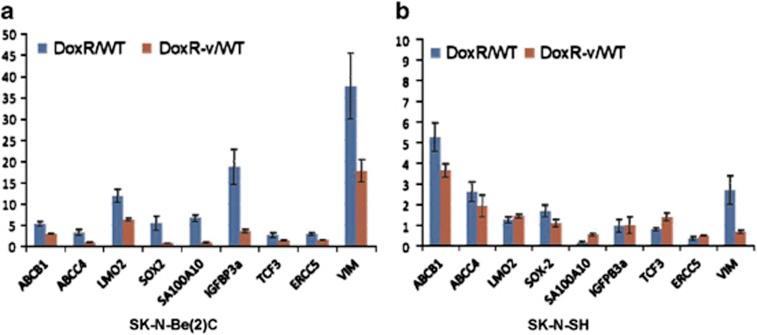
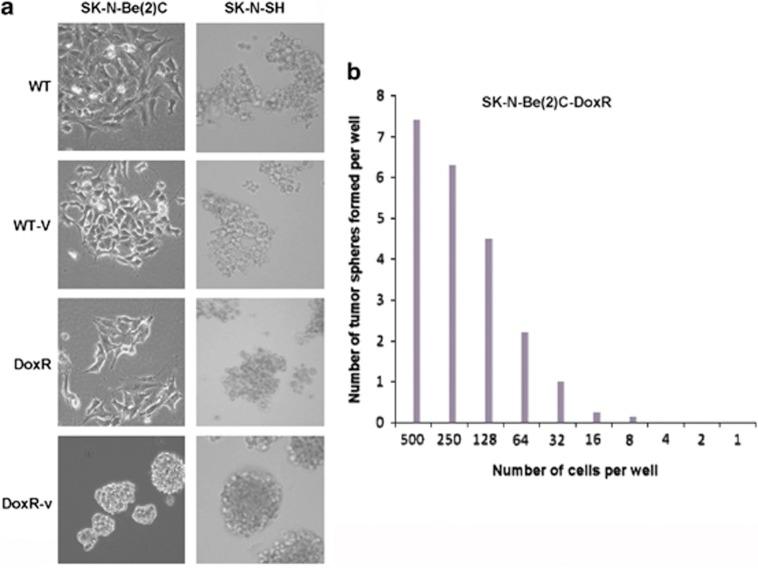
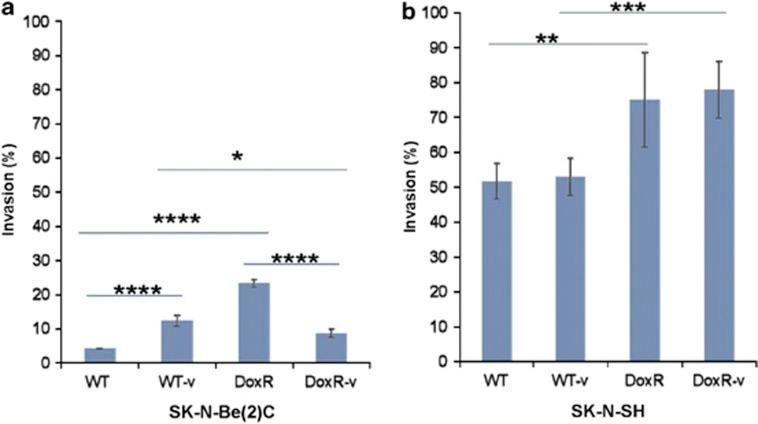
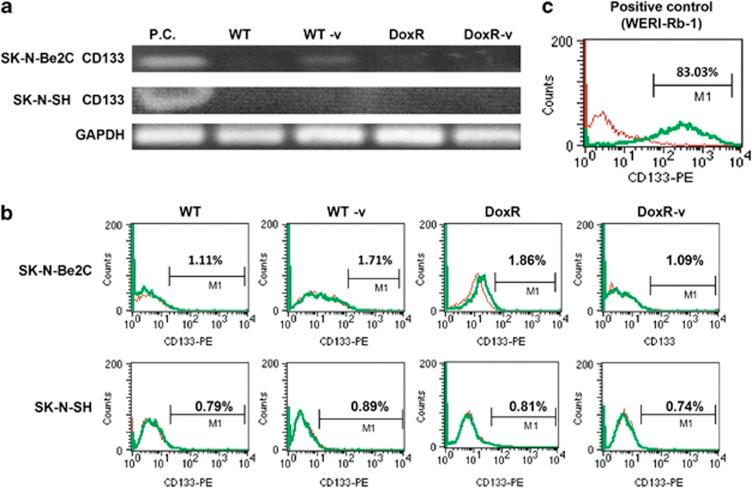
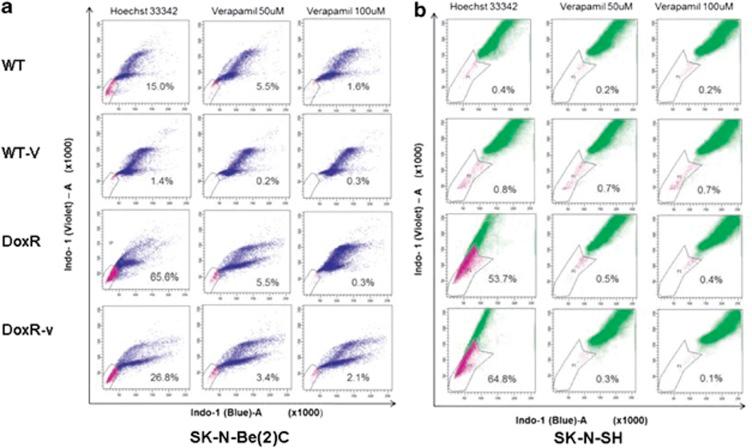
Numerous studies have confirmed that cancer stem cells (CSCs) are more resistant to chemotherapy; however, there is a paucity of data exploring the effect of long-term drug treatment on the CSC sub-population. The purpose of this study was to investigate whether long-term doxorubicin treatment could expand the neuroblastoma cells with CSC characteristics and histone acetylation could affect stemness gene expression during the development of drug resistance. Using n-myc amplified SK-N-Be(2)C and non-n-myc amplified SK-N-SH human neuroblastoma cells, our laboratory generated doxorubicin-resistant cell lines in parallel over 1 year; one cell line intermittently treated with the histone deacetylase inhibitor (HDACi) vorinostat and the other without exposure to HDACi. Cells' sensitivity to chemotherapeutic drugs, the ability to form tumorspheres, and capacity for in vitro invasion were examined. Cell-surface markers and side populations (SPs) were analyzed using flow cytometry. Differentially expressed stemness genes were identified through whole genome analysis and confirmed with real-time PCR. Our results indicated that vorinostat increased the sensitivity of only SK-N-Be(2)C-resistant cells to chemotherapy, made cells lose the ability to form tumorspheres, and reduced in vitro invasion and the SP percentage. CD133 was not enriched in doxorubicin-resistant or vorinostat-treated doxorubicin-resistant cells. Nine stemness-linked genes (ABCB1, ABCC4, LMO2, SOX2, ERCC5, S100A10, IGFBP3, TCF3, and VIM) were downregulated in vorinostat-treated doxorubicin-resistant SK-N-Be(2)C cells relative to doxorubicin-resistant cells. A sub-population of cells with CSC characteristics is enriched during prolonged drug selection of n-myc amplified SK-N-Be(2)C neuroblastoma cells. Vorinostat treatment affects the reversal of drug resistance in SK-N-Be(2)C cells and may be associated with downregulation of stemness gene expression. This work may be valuable for clinicians to design treatment protocols specific for different neuroblastoma patients.
大量研究证实,癌症干细胞(CSCs)对化疗的耐药性更强;然而,目前缺乏研究长期药物治疗对 CSC 亚群影响的数据。本研究旨在探讨长期多柔比星治疗是否会扩增具有 CSC 特征的神经母细胞瘤细胞,以及组蛋白乙酰化是否会影响耐药过程中干性基因的表达。我们实验室使用 n-myc 扩增的 SK-N-Be(2)C 和非 n-myc 扩增的 SK-N-SH 人神经母细胞瘤细胞,在 1 年内平行生成多柔比星耐药细胞系;一个细胞系间歇性用组蛋白去乙酰化酶抑制剂(HDACi)伏立诺他处理,另一个细胞系不接触 HDACi。检测细胞对化疗药物的敏感性、形成肿瘤球的能力和体外侵袭能力。采用流式细胞术分析细胞表面标志物和侧群(SP)。通过全基因组分析鉴定差异表达的干性基因,并通过实时 PCR 进行验证。结果表明,伏立诺他仅增加了 SK-N-Be(2)C 耐药细胞对化疗的敏感性,使细胞丧失形成肿瘤球的能力,降低体外侵袭和 SP 百分比。CD133 未在多柔比星耐药或伏立诺他处理的多柔比星耐药细胞中富集。9 个干性相关基因(ABCB1、ABCC4、LMO2、SOX2、ERCC5、S100A10、IGFBP3、TCF3 和 VIM)在伏立诺他处理的多柔比星耐药 SK-N-Be(2)C 细胞中相对于多柔比星耐药细胞下调。在 n-myc 扩增的 SK-N-Be(2)C 神经母细胞瘤细胞的长期药物选择过程中,富集了具有 CSC 特征的细胞亚群。伏立诺他治疗影响 SK-N-Be(2)C 细胞耐药的逆转,可能与干性基因表达下调有关。这项工作可能对临床医生设计针对不同神经母细胞瘤患者的治疗方案具有重要价值。


 Zotero 插件