
疟疾寄生虫耐药性在一个流行地区 25 年间的变化及其导致的选择的基因组证据。
Changes in malaria parasite drug resistance in an endemic population over a 25-year period with resulting genomic evidence of selection.
机构信息
Medical Research Council Unit, Fajara, The Gambia.
出版信息
J Infect Dis. 2014 Apr 1;209(7):1126-35. doi: 10.1093/infdis/jit618. Epub 2013 Nov 21.
BACKGROUND
Analysis of genome-wide polymorphism in many organisms has potential to identify genes under recent selection. However, data on historical allele frequency changes are rarely available for direct confirmation.
METHODS
We genotyped single nucleotide polymorphisms (SNPs) in 4 Plasmodium falciparum drug resistance genes in 668 archived parasite-positive blood samples of a Gambian population between 1984 and 2008. This covered a period before antimalarial resistance was detected locally, through subsequent failure of multiple drugs until introduction of artemisinin combination therapy. We separately performed genome-wide sequence analysis of 52 clinical isolates from 2008 to prospect for loci under recent directional selection.
RESULTS
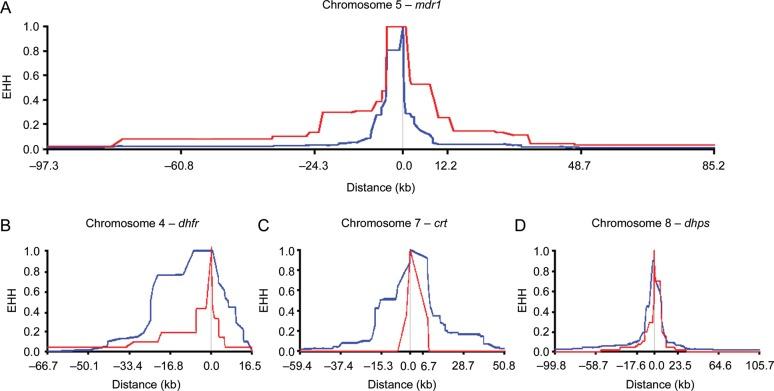
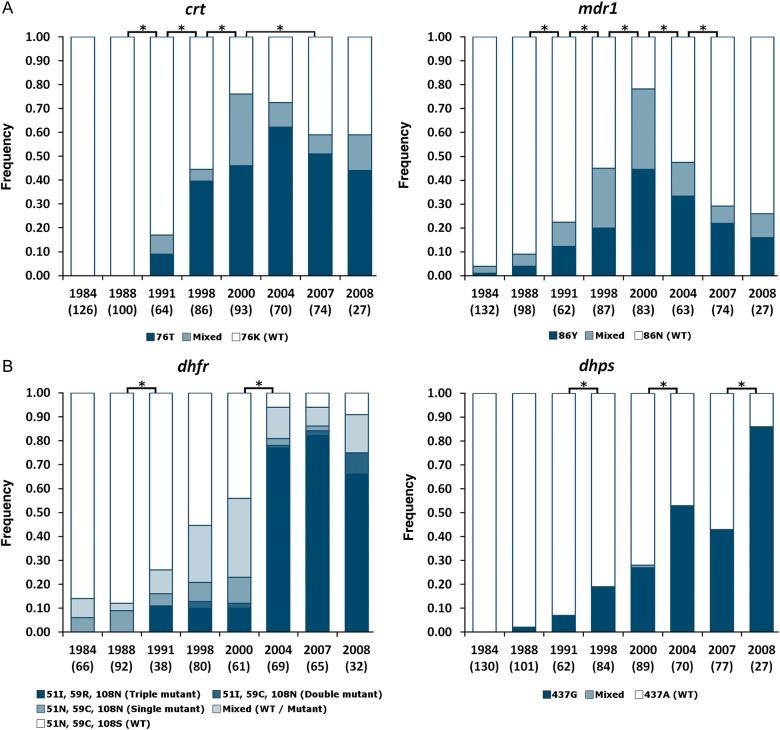
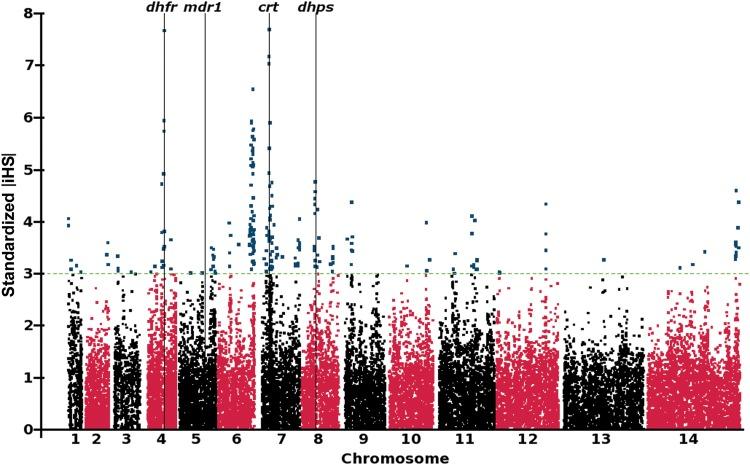
Resistance alleles increased from very low frequencies, peaking in 2000 for chloroquine resistance-associated crt and mdr1 genes and at the end of the survey period for dhfr and dhps genes respectively associated with pyrimethamine and sulfadoxine resistance. Temporal changes fit a model incorporating likely selection coefficients over the period. Three of the drug resistance loci were in the top 4 regions under strong selection implicated by the genome-wide analysis.
CONCLUSIONS
Genome-wide polymorphism analysis of an endemic population sample robustly identifies loci with detailed documentation of recent selection, demonstrating power to prospectively detect emerging drug resistance genes.
背景
对许多生物体的全基因组多态性进行分析,有可能鉴定出近期受到选择的基因。然而,很少有关于历史等位基因频率变化的数据可用于直接确认。
方法
我们对 668 份 1984 年至 2008 年间采集的冈比亚人群寄生虫阳性血液样本中的 4 种疟原虫药物抗性基因的单核苷酸多态性(SNP)进行了基因分型。这一时期在当地发现抗疟药物耐药性之前,多种药物相继失效,直到引入青蒿素联合疗法。我们还对 2008 年的 52 株临床分离株进行了全基因组序列分析,以寻找近期定向选择的位点。
结果
抗性等位基因的频率从非常低的水平增加,到 2000 年时氯喹抗性相关 crt 和 mdr1 基因达到峰值,而与嘧啶和磺胺耐药性相关的 dhfr 和 dhps 基因则分别在调查结束时达到峰值。时间变化符合该时期可能的选择系数模型。全基因组分析中,有 3 个药物抗性基因座位于强烈选择的前 4 个区域。
结论
对流行地区样本的全基因组多态性分析,可准确鉴定出具有近期选择详细记录的基因座,有力地证明了前瞻性检测新兴抗药性基因的能力。

 Zotero 插件