
慢性氧化应激增加 MCF-7 乳腺癌细胞的生长和致瘤潜力。
Chronic oxidative stress increases growth and tumorigenic potential of MCF-7 breast cancer cells.
机构信息
Department of Environmental Toxicology, The Institute of Environmental and Human Health (TIEHH), Texas Tech University, Lubbock, Texas, United States of America.
出版信息
PLoS One. 2014 Jan 28;9(1):e87371. doi: 10.1371/journal.pone.0087371. eCollection 2014.
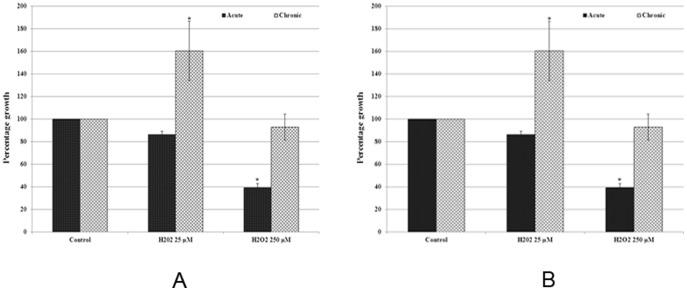
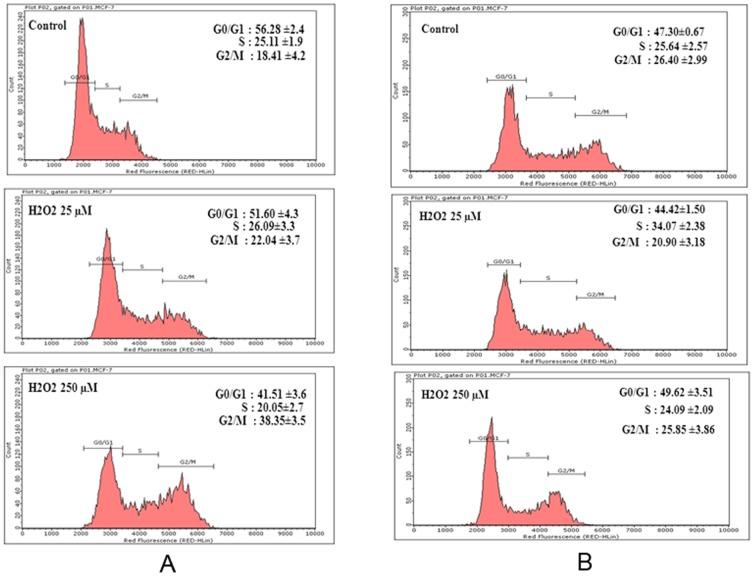
Accumulating evidence suggests that exposures to elevated levels of either endogenous estrogen or environmental estrogenic chemicals are associated with breast cancer development and progression. These natural or synthetic estrogens are known to produce reactive oxygen species (ROS) and increased ROS has been implicated in both cellular apoptosis and carcinogenesis. Though there are several studies on direct involvement of ROS in cellular apoptosis using short-term exposure model, there is no experimental evidence to directly implicate chronic exposure to ROS in increased growth and tumorigenicity of breast cancer cells. Therefore, the objective of this study was to evaluate the effects of chronic oxidative stress on growth, survival and tumorigenic potential of MCF-7 breast cancer cells. MCF-7 cells were exposed to exogenous hydrogen peroxide (H2O2) as a source of ROS at doses of 25 µM and 250 µM for acute (24 hours) and chronic period (3 months) and their effects on cell growth/survival and tumorigenic potential were evaluated. The results of cell count, MTT and cell cycle analysis showed that while acute exposure inhibits the growth of MCF-7 cells in a dose-dependent manner, the chronic exposure to H2O2-induced ROS leads to increased cell growth and survival of MCF-7 cells. This was further confirmed by gene expression analysis of cell cycle and cell survival related genes. Significant increase in number of soft agar colonies, up-regulation of pro-metastatic genes VEGF, WNT1 and CD44, whereas down-regulation of anti-metastatic gene E-Cadherin in H2O2 treated MCF-7 cells observed in this study further suggests that persistent exposure to oxidative stress increases tumorigenic and metastatic potential of MCF-7 cells. Since many chemotherapeutic drugs are known to induce their cytotoxicity by increasing ROS levels, the results of this study are also highly significant in understanding the mechanism for adaptation to ROS-induced toxicity leading to acquired chemotherapeutic resistance in breast cancer cells.
越来越多的证据表明,暴露于高水平的内源性雌激素或环境雌激素化学物质与乳腺癌的发展和进展有关。这些天然或合成的雌激素会产生活性氧(ROS),并且增加的 ROS 已被牵连到细胞凋亡和癌变中。虽然有几项关于使用短期暴露模型研究 ROS 对细胞凋亡的直接作用的研究,但没有实验证据直接表明慢性暴露于 ROS 会增加乳腺癌细胞的生长和致癌性。因此,本研究的目的是评估慢性氧化应激对 MCF-7 乳腺癌细胞生长、存活和致瘤潜能的影响。MCF-7 细胞暴露于外源性过氧化氢 (H2O2) 作为 ROS 的来源,剂量分别为 25 µM 和 250 µM,进行急性(24 小时)和慢性(3 个月)暴露,评估其对细胞生长/存活和致瘤潜能的影响。细胞计数、MTT 和细胞周期分析的结果表明,虽然急性暴露以剂量依赖性方式抑制 MCF-7 细胞的生长,但慢性暴露于 H2O2 诱导的 ROS 会导致 MCF-7 细胞的生长和存活增加。这通过细胞周期和细胞存活相关基因的基因表达分析进一步得到证实。本研究中观察到 H2O2 处理的 MCF-7 细胞中软琼脂集落数量增加、促转移基因 VEGF、WNT1 和 CD44 的上调,以及抗转移基因 E-钙黏蛋白的下调,这进一步表明持续暴露于氧化应激会增加 MCF-7 细胞的致瘤和转移潜能。由于许多化疗药物已知通过增加 ROS 水平来诱导其细胞毒性,因此本研究的结果对于理解导致乳腺癌细胞获得化疗耐药性的 ROS 诱导毒性的适应机制也具有重要意义。




 Zotero 插件