
IFIT1:一种双传感器和效应分子,可检测非2'-O甲基化病毒RNA并抑制其翻译。
IFIT1: A dual sensor and effector molecule that detects non-2'-O methylated viral RNA and inhibits its translation.
作者信息
Diamond Michael S
机构信息
Department of Medicine, Washington University School of Medicine, St Louis, MO 63110, United States; Department of Molecular MicrobiologyWashington University School of Medicine, St Louis, MO 63110, United States; Department of Pathology & Immunology, Washington University School of Medicine, St Louis, MO 63110, United States; Center for Human Immunology and Immunotherapy Programs, Washington University School of Medicine, St Louis, MO 63110, United States.
出版信息
Cytokine Growth Factor Rev. 2014 Oct;25(5):543-50. doi: 10.1016/j.cytogfr.2014.05.002. Epub 2014 May 17.
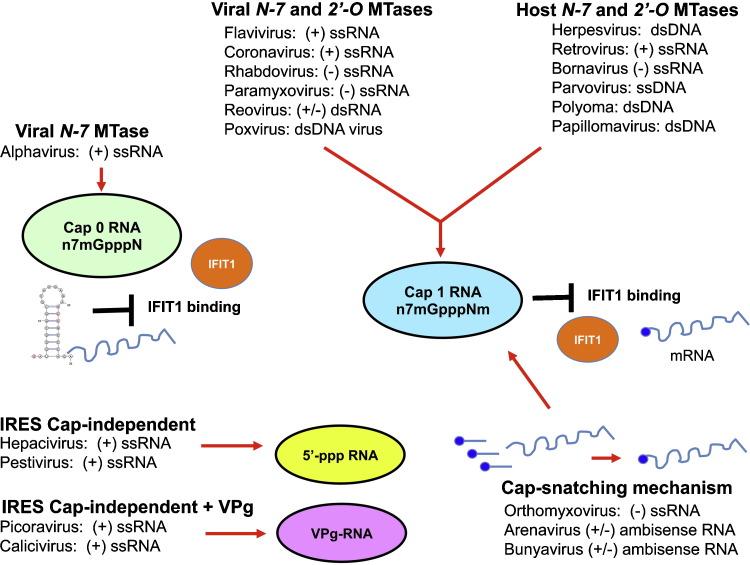
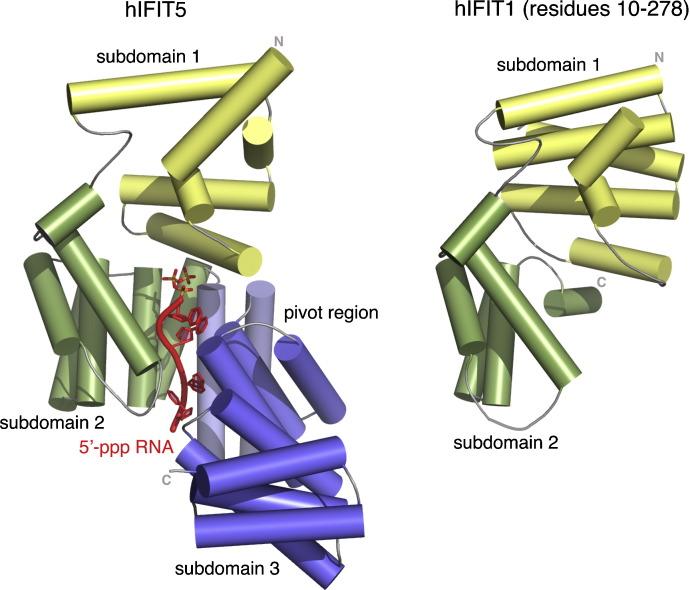
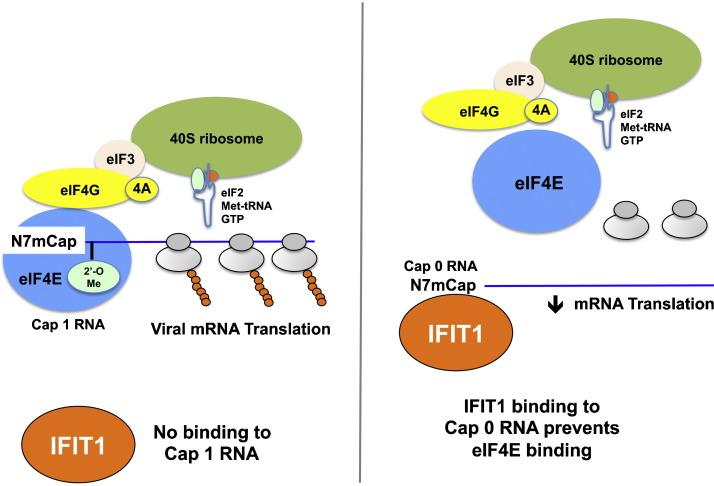
Our understanding of the antiviral actions of IFIT1, one of the most strongly induced interferon stimulated genes (ISGs), has advanced remarkably within the last few years. This review focuses on the recent cellular, biochemical, and structural discoveries that have provided new insight as to how IFIT1 functions as both a sensor and effector molecule of the cellular innate immune system. IFIT1 can detect viral RNA lacking 2'-O methylation on their cap structures or displaying a 5'-triphosphate moiety and inhibit their translation or sequester them from active replication. Because of these inhibitory actions, many viruses have evolved unique mechanisms to evade IFIT1 to facilitate replication, spread of infection, and disease pathogenesis.
在过去几年中,我们对IFIT1(最强烈诱导的干扰素刺激基因(ISG)之一)的抗病毒作用的理解有了显著进展。本综述重点关注最近在细胞、生化和结构方面的发现,这些发现为IFIT1如何作为细胞先天免疫系统的传感器和效应分子发挥作用提供了新的见解。IFIT1可以检测其帽结构上缺乏2'-O甲基化或显示5'-三磷酸基团的病毒RNA,并抑制其翻译或使其与活跃复制隔离。由于这些抑制作用,许多病毒已经进化出独特的机制来逃避IFIT1,以促进复制、感染传播和疾病发病机制。
 Zotero 插件