
早期CD8 T细胞记忆前体和终末效应细胞在体内表现出同等强度的脱颗粒作用。
Early CD8 T-cell memory precursors and terminal effectors exhibit equipotent in vivo degranulation.
作者信息
Yuzefpolskiy Yevgeniy, Baumann Florian M, Kalia Vandana, Sarkar Surojit
出版信息
Cell Mol Immunol. 2015 Jul;12(4):400-8. doi: 10.1038/cmi.2014.48. Epub 2014 Jul 28.
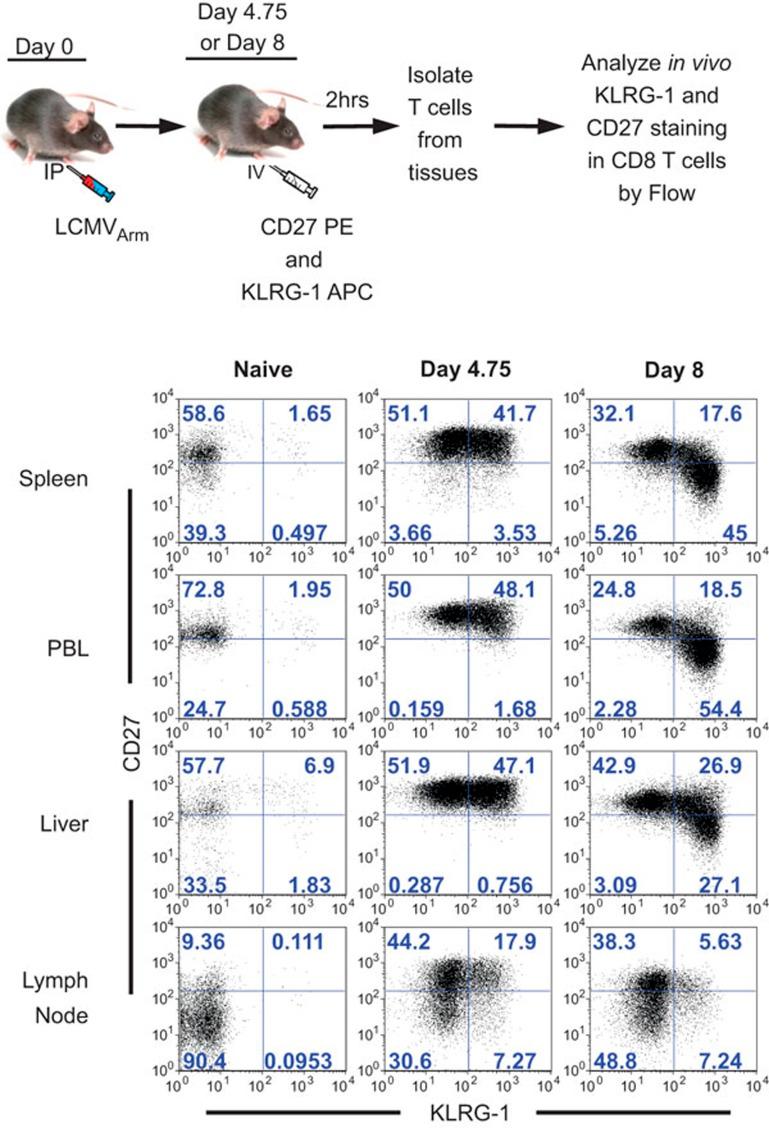
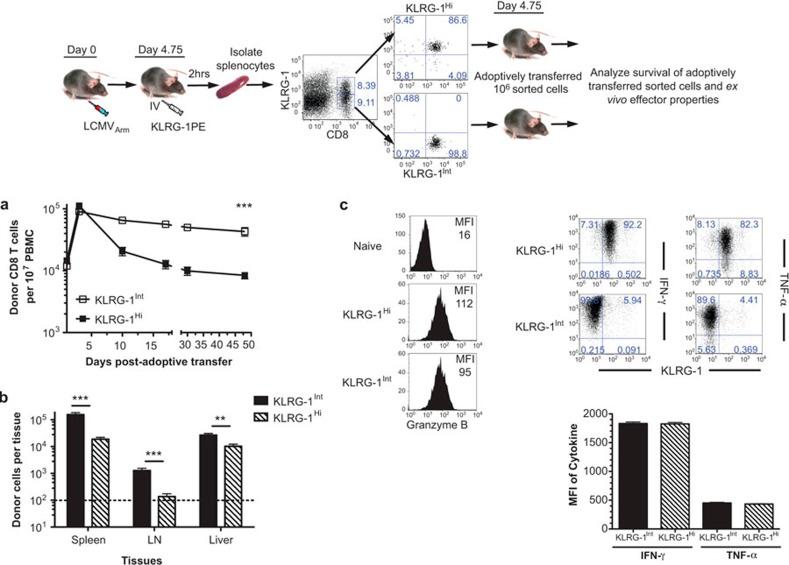
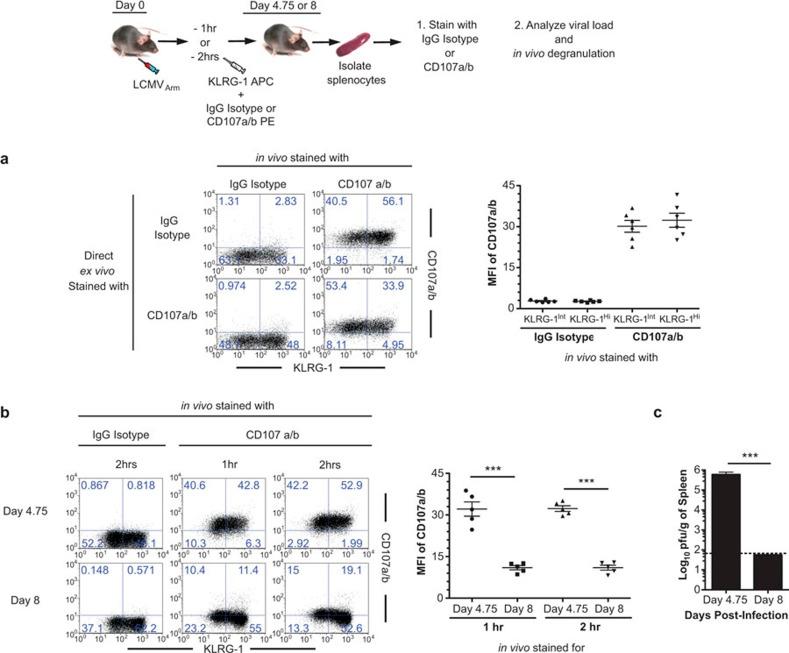
Early after priming, effector CD8 T cells are distinguished into memory precursor and short-lived effector cell subsets (MPECs and SLECs). Here, we delineated a distinct in vivo heterogeneity in killer cell lectin-like receptor G1 (KLRG-1) expression, which was strongly associated with diverse MPEC and SLEC fates. These in vivo MPECs and SLECs expressed equivalent levels of cytotoxic molecules and effector cytokines. Using a unique in vivo degranulation assay, we found that the MPECs and SLECs similarly encountered infected target cells and elaborated equivalent levels of cytotoxicity in vivo. These data provide direct in vivo evidence that memory-fated cells pass through a robust effector phase. Additionally, the preferential localization of the MPECs in the lymph nodes, where a lesser degree of cytotoxicity was elaborated, suggests that the MPECs may be protected from excessive stimulation and terminal differentiation by virtue of their differential tissue localization. These data provide novel mechanistic insights into the linear decreasing potential model of memory differentiation.
在致敏后早期,效应性CD8 T细胞可分为记忆前体细胞和短期效应细胞亚群(MPEC和SLEC)。在此,我们描绘了杀伤细胞凝集素样受体G1(KLRG-1)表达中一种独特的体内异质性,其与不同的MPEC和SLEC命运密切相关。这些体内的MPEC和SLEC表达同等水平的细胞毒性分子和效应细胞因子。通过一种独特的体内脱颗粒试验,我们发现MPEC和SLEC同样会遇到被感染的靶细胞,并在体内产生同等水平的细胞毒性。这些数据提供了直接的体内证据,表明具有记忆命运的细胞会经历一个强大的效应阶段。此外,MPEC在淋巴结中的优先定位(在淋巴结中产生的细胞毒性程度较低)表明,MPEC可能因其不同的组织定位而免受过度刺激和终末分化的影响。这些数据为记忆分化的线性递减潜能模型提供了新的机制见解。

 Zotero 插件