
在高流行地区同时检测一线和二线抗结核药物的24孔板检测法。
A 24-well plate assay for simultaneous testing of first and second line drugs against Mycobacterium tuberculosis in a high endemic setting.
作者信息
Wedajo Wassihun, Schön Thomas, Bedru Ahmed, Kiros Teklu, Hailu Elena, Mebrahtu Tesfamariam, Yamuah Lawrence, Ängeby Kristian, Werngren Jim, Onyebujoh Philip, Dagne Kifle, Aseffa Abraham
机构信息
Department of Medical Microbiology, Linkoping University, Linköping, Sweden.
出版信息
BMC Res Notes. 2014 Aug 10;7:512. doi: 10.1186/1756-0500-7-512.
BACKGROUND
Early detection of drug resistance is one of the priorities of tuberculosis (TB) control programs as drug resistance is increasing. New molecular assays are only accessible for a minority of the second line drugs and their availability in high endemic settings is also hampered by high cost and logistic challenges. Therefore, we evaluated a previously developed method for drug susceptibility testing (DST) including both first- and second line anti-TB drugs for use in high endemic areas.
RESULTS
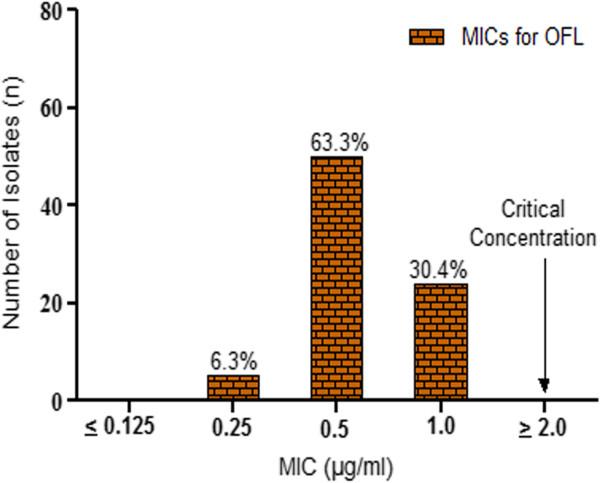
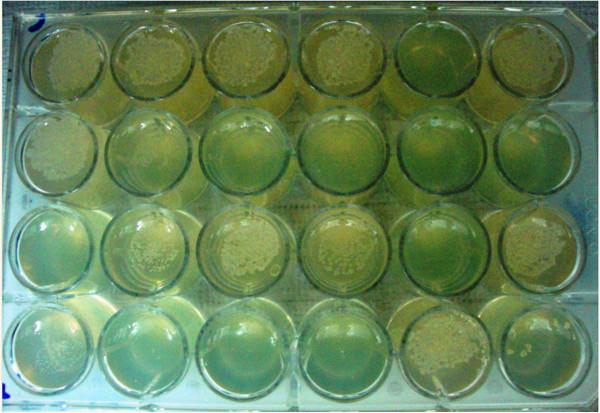
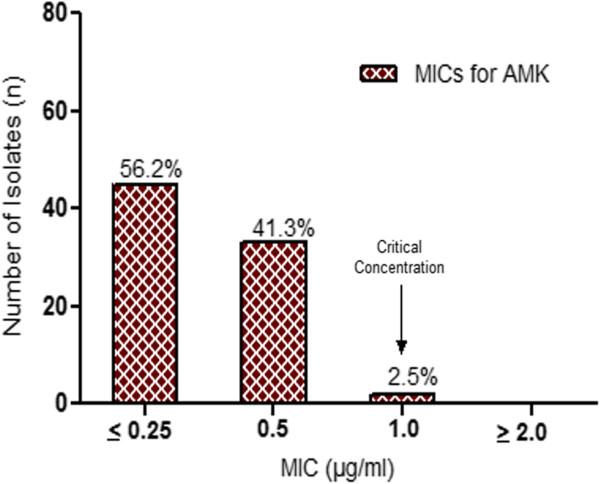
Baseline mycobacterial isolates from 78 consecutive pulmonary TB patients from Addis Ababa, Ethiopia who were culture positive for Mycobacterium tuberculosis at the end of a two-month directly observed treatment short course (DOTS) were included. The isolates were simultaneously tested for isoniazid, rifampicin, ethambutol, streptomycin, amikacin, kanamycin, capreomycin, ofloxacin, moxifloxacin, ethionamide and para-aminosalicylic acid susceptibility using the indirect proportion method adopted for 24-well agar plates containing Middlebrook 7H10 medium. Applying the 24-well plate assay, 43 (55.1%) isolates were resistant to one or more of the first line drugs tested (isoniazid, rifampicin and ethambutol). MDR-TB was identified in 20.5% of this selected group and there was a perfect correlation for rifampicin resistance with the results from the genotype MTBDRplus assay. All isolates were susceptible to aminoglycosides and fluoroquinolones in agreement with the genotype MTBDRsl assay. The only tested second line drug associated to resistance was ethionamide (14.1% resistant). The method was reproducible with stable results for internal controls (one multi-drug resistant (MDR) and one pan-susceptible strain (H37Rv) and DST results could be reported at two weeks.
CONCLUSIONS
The 24-well plate method for simultaneous DST for first- and second line drugs was found to be reproducible and correlated well to molecular drug susceptibility tests. It is likely to be useful in high-endemic areas for surveillance as well as for the detection of second line drug resistance in targeted groups such as in those who fail empirical MDR treatment.
背景
随着耐药性的增加,早期检测耐药性是结核病控制项目的重点之一。新的分子检测方法仅适用于少数二线药物,其在高流行地区的可用性还受到高成本和后勤挑战的阻碍。因此,我们评估了一种先前开发的药物敏感性检测(DST)方法,该方法包括一线和二线抗结核药物,用于高流行地区。
结果
纳入了来自埃塞俄比亚亚的斯亚贝巴的78例连续肺结核患者的基线分枝杆菌分离株,这些患者在为期两个月的直接观察短程治疗(DOTS)结束时结核分枝杆菌培养呈阳性。使用含Middlebrook 7H10培养基的24孔琼脂平板采用的间接比例法,同时检测分离株对异烟肼、利福平、乙胺丁醇、链霉素、阿米卡星、卡那霉素、卷曲霉素、氧氟沙星、莫西沙星、乙硫异烟胺和对氨基水杨酸的敏感性。应用24孔平板检测法,43株(55.1%)分离株对一种或多种检测的一线药物(异烟肼、利福平、乙胺丁醇)耐药。在该选定组中,20.5%的患者被鉴定为耐多药结核病,利福平耐药结果与基因型MTBDRplus检测结果完全相关。所有分离株对氨基糖苷类和氟喹诺酮类药物敏感,这与基因型MTBDRsl检测结果一致。唯一检测到与耐药相关的二线药物是乙硫异烟胺(14.1%耐药)。该方法可重复,内部对照(一株耐多药(MDR)菌株和一株全敏感菌株(H37Rv))结果稳定,药敏试验结果可在两周内报告。
结论
用于一线和二线药物同时进行药敏试验的24孔平板法可重复,与分子药敏试验相关性良好。它可能在高流行地区用于监测以及检测目标人群(如经验性耐多药治疗失败的人群)中的二线药物耐药性。

 Zotero 插件