
mTORC2信号通路在肺纤维化中起关键作用。
A critical role for the mTORC2 pathway in lung fibrosis.
作者信息
Chang Wenteh, Wei Ke, Ho Lawrence, Berry Gerald J, Jacobs Susan S, Chang Cheryl H, Rosen Glenn D
机构信息
Division of Pulmonary and Critical Care Medicine, Stanford University School of Medicine, Stanford, California, United States of America.
Division of Pulmonary and Critical Care Medicine, University of Washington School of Medicine, Seattle, Washington, United States of America.
出版信息
PLoS One. 2014 Aug 27;9(8):e106155. doi: 10.1371/journal.pone.0106155. eCollection 2014.
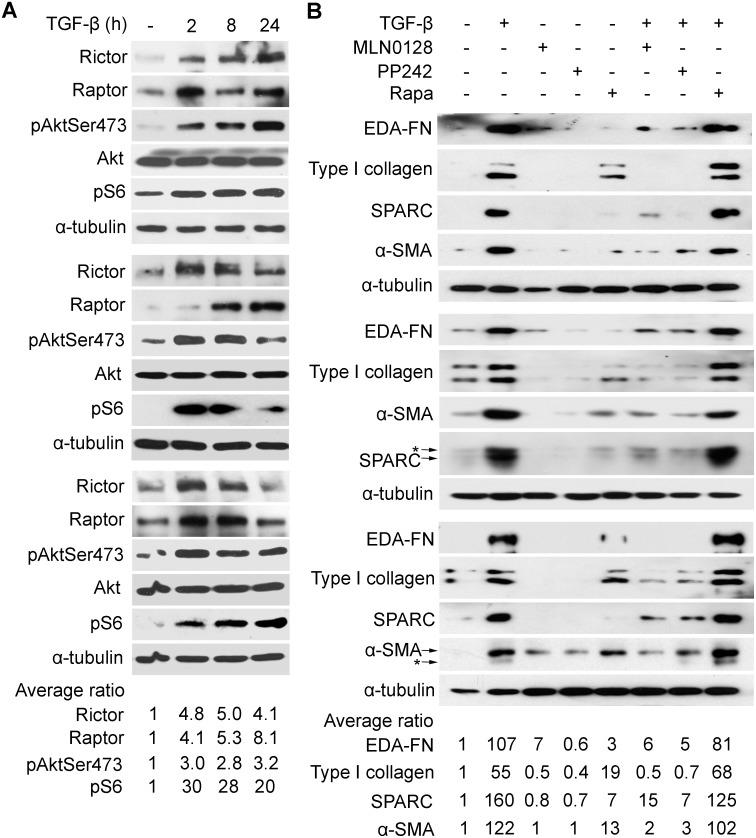
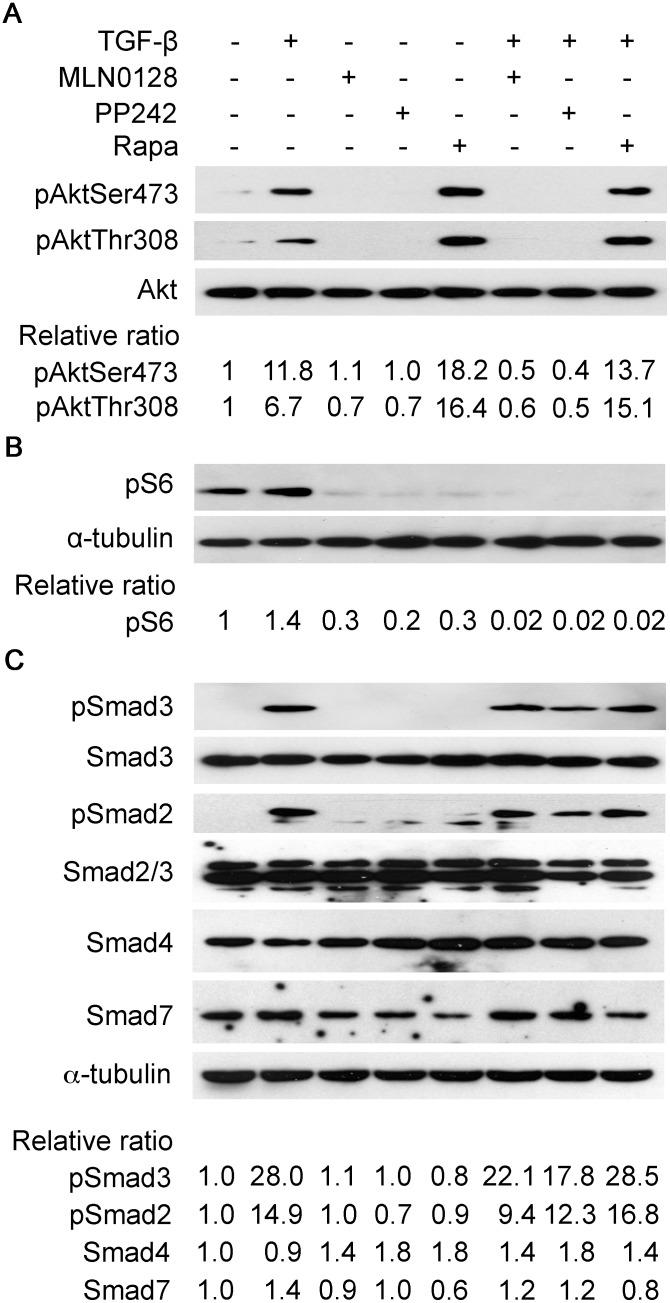
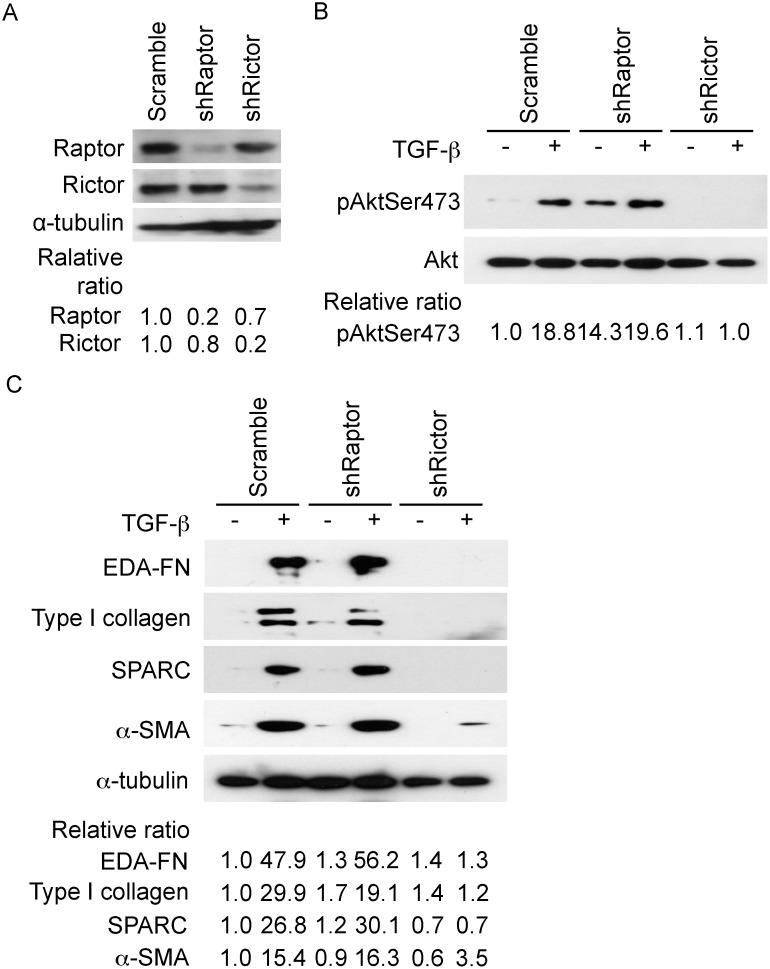
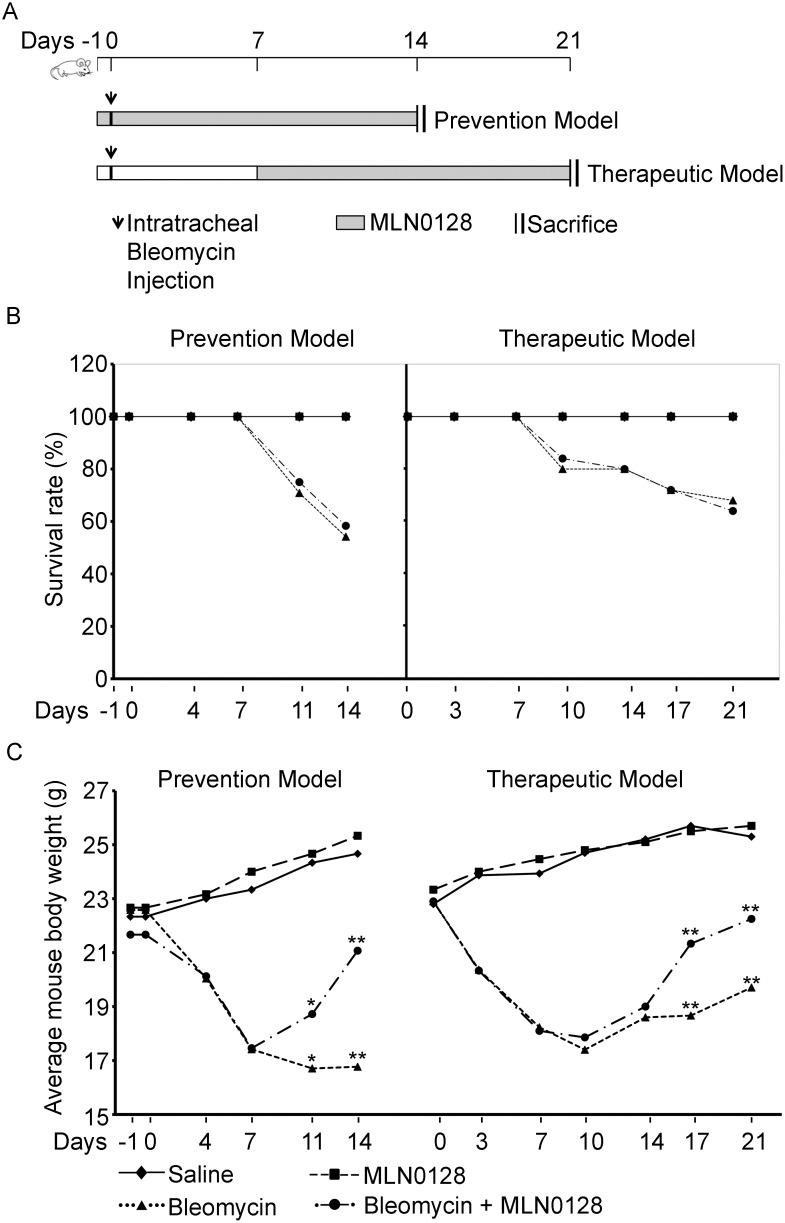
A characteristic of dysregulated wound healing in IPF is fibroblastic-mediated damage to lung epithelial cells within fibroblastic foci. In these foci, TGF-β and other growth factors activate fibroblasts that secrete growth factors and matrix regulatory proteins, which activate a fibrotic cascade. Our studies and those of others have revealed that Akt is activated in IPF fibroblasts and it mediates the activation by TGF-β of pro-fibrotic pathways. Recent studies show that mTORC2, a component of the mTOR pathway, mediates the activation of Akt. In this study we set out to determine if blocking mTORC2 with MLN0128, an active site dual mTOR inhibitor, which blocks both mTORC1 and mTORC2, inhibits lung fibrosis. We examined the effect of MLN0128 on TGF-β-mediated induction of stromal proteins in IPF lung fibroblasts; also, we looked at its effect on TGF-β-mediated epithelial injury using a Transwell co-culture system. Additionally, we assessed MLN0128 in the murine bleomycin lung model. We found that TGF-β induces the Rictor component of mTORC2 in IPF lung fibroblasts, which led to Akt activation, and that MLN0128 exhibited potent anti-fibrotic activity in vitro and in vivo. Also, we observed that Rictor induction is Akt-mediated. MLN0128 displays multiple anti-fibrotic and lung epithelial-protective activities; it (1) inhibited the expression of pro-fibrotic matrix-regulatory proteins in TGF-β-stimulated IPF fibroblasts; (2) inhibited fibrosis in a murine bleomycin lung model; and (3) protected lung epithelial cells from injury caused by TGF-β-stimulated IPF fibroblasts. Our findings support a role for mTORC2 in the pathogenesis of lung fibrosis and for the potential of active site mTOR inhibitors in the treatment of IPF and other fibrotic lung diseases.
特发性肺纤维化(IPF)中伤口愈合失调的一个特征是成纤维细胞介导的对成纤维细胞灶内肺上皮细胞的损伤。在这些病灶中,转化生长因子-β(TGF-β)和其他生长因子激活成纤维细胞,这些成纤维细胞分泌生长因子和基质调节蛋白,从而激活纤维化级联反应。我们的研究以及其他人的研究表明,Akt在IPF成纤维细胞中被激活,并且它介导TGF-β对促纤维化途径的激活。最近的研究表明,mTOR途径的一个组成部分mTORC2介导Akt的激活。在本研究中,我们着手确定用MLN0128(一种活性位点双mTOR抑制剂,可同时阻断mTORC1和mTORC2)阻断mTORC2是否能抑制肺纤维化。我们研究了MLN0128对TGF-β介导的IPF肺成纤维细胞中基质蛋白诱导的影响;此外,我们使用Transwell共培养系统观察了其对TGF-β介导的上皮损伤的影响。另外,我们在小鼠博来霉素肺模型中评估了MLN0128。我们发现TGF-β在IPF肺成纤维细胞中诱导mTORC2的Rictor成分,导致Akt激活,并且MLN0128在体外和体内均表现出强大的抗纤维化活性。此外,我们观察到Rictor的诱导是由Akt介导的。MLN0128具有多种抗纤维化和肺上皮保护活性;它(1)抑制TGF-β刺激的IPF成纤维细胞中促纤维化基质调节蛋白的表达;(2)在小鼠博来霉素肺模型中抑制纤维化;(3)保护肺上皮细胞免受TGF-β刺激的IPF成纤维细胞引起的损伤。我们的研究结果支持mTORC2在肺纤维化发病机制中的作用,以及活性位点mTOR抑制剂在治疗IPF和其他纤维化肺病方面的潜力。




 Zotero 插件