
心肌功能障碍:恶性疟原虫感染的人源化小鼠模型中严重疟疾导致死亡的主要原因
Myocardial Dysfunction: A Primary Cause of Death Due To Severe Malaria in A Plasmodium falciparum-Infected Humanized Mouse Model.
作者信息
Stanley Imade Odaro, Iguodala Akinnibosun Faith, Henry Oladeinde Bankole, Iyekowa Osaro
机构信息
Department of Biological Sciences, College of Natural & Applied Sciences, Igbinedion University, Okada, Edo State, Nigeria.
Microbiology Department, Faculty of Life Sciences, University of Benin, Benin City, Edo State, Nigeria.
出版信息
Iran J Parasitol. 2013 Oct;8(4):499-509.
BACKGROUND
Our study aimed at substantiating the recent claim of myocardial complications in severe malaria by experimentally inducing severe Plasmodium falciparum infection in a humanized mouse model employed as human surrogate.
METHODS
Twenty five humanized mice were inoculated with standard in vitro cultured P. falciparum and blood extracts collected from the inner cardiac muscles of infected mice that died were examined for the presence of the infectious cause of death. The therapeutic effect of quinine on 7 mice severely infected with P. falciparum was also evaluated.
RESULTS
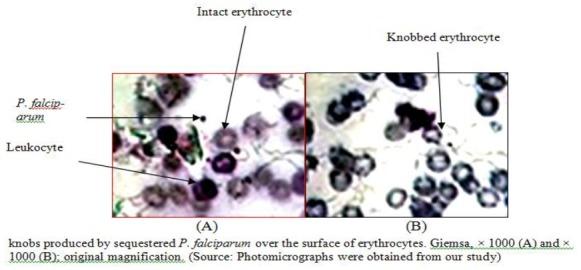
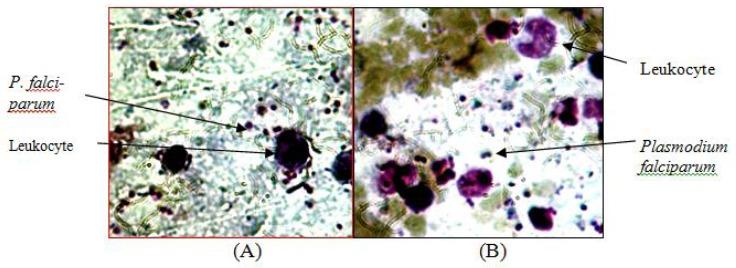
All the 25 humanized mice inoculated with the in vitro cultured P. falciparum revealed peripheral parasitemia with a total of 10 deaths recorded. Postmortem examination of the inner cardiac muscles of the dead mice also revealed massive sequestration of mature P. falciparum as well as significant infiltration of inflammatory cells such as lymphocytes and monocytes. Postmortem evaluation of the inner cardiac muscles of the P. falciparum-infected mice after quinine therapy showed significant decline in parasite density with no death of mice recorded.
CONCLUSIONS
Data obtained from our study significantly corroborated the findings of myocardial dysfunction as the primary cause of death in recent case reports of humans infected with P. falciparum.
背景
我们的研究旨在通过在用作人类替代模型的人源化小鼠模型中实验性诱导严重的恶性疟原虫感染,来证实近期关于严重疟疾中心肌并发症的说法。
方法
给25只人源化小鼠接种标准体外培养的恶性疟原虫,并对死于感染的小鼠心脏内部肌肉采集的血液提取物进行检查,以确定死亡的感染原因。还评估了奎宁对7只严重感染恶性疟原虫的小鼠的治疗效果。
结果
所有25只接种体外培养恶性疟原虫的人源化小鼠均出现外周血寄生虫血症,共记录到10只死亡。对死亡小鼠心脏内部肌肉的尸检还发现大量成熟恶性疟原虫的滞留以及淋巴细胞和单核细胞等炎性细胞的显著浸润。奎宁治疗后对恶性疟原虫感染小鼠心脏内部肌肉的尸检显示寄生虫密度显著下降,且未记录到小鼠死亡。
结论
我们研究获得的数据显著证实了近期人类感染恶性疟原虫病例报告中关于心肌功能障碍是主要死亡原因的研究结果。
 Zotero 插件