
NADPH硫氧还蛋白还原酶C(NTRC)和亚磺基还原酶对拟南芥叶绿体中2-半胱氨酸过氧化物酶过度氧化的作用。
The contribution of NADPH thioredoxin reductase C (NTRC) and sulfiredoxin to 2-Cys peroxiredoxin overoxidation in Arabidopsis thaliana chloroplasts.
作者信息
Puerto-Galán Leonor, Pérez-Ruiz Juan M, Guinea Manuel, Cejudo Francisco Javier
机构信息
Instituto de Bioquímica Vegetal y Fotosíntesis, Universidad de Sevilla-CSIC, Avda Américo Vespucio, 49, 41092-Sevilla, Spain.
Instituto de Bioquímica Vegetal y Fotosíntesis, Universidad de Sevilla-CSIC, Avda Américo Vespucio, 49, 41092-Sevilla, Spain
出版信息
J Exp Bot. 2015 May;66(10):2957-66. doi: 10.1093/jxb/eru512. Epub 2015 Jan 5.
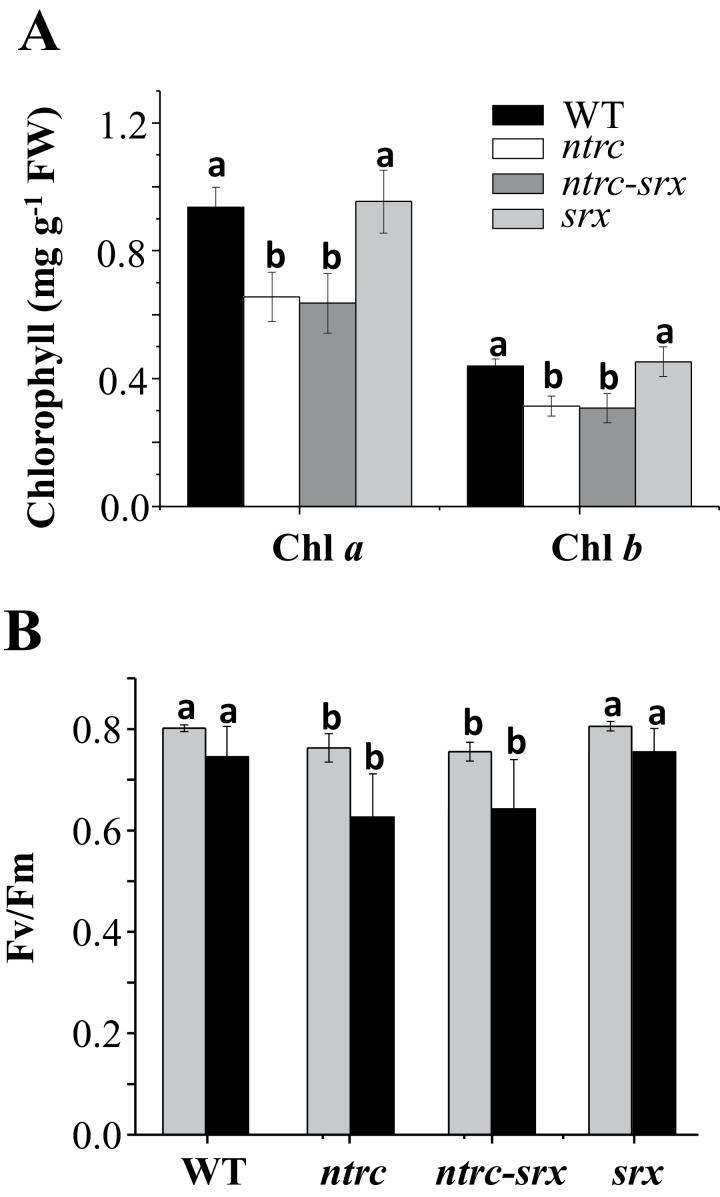
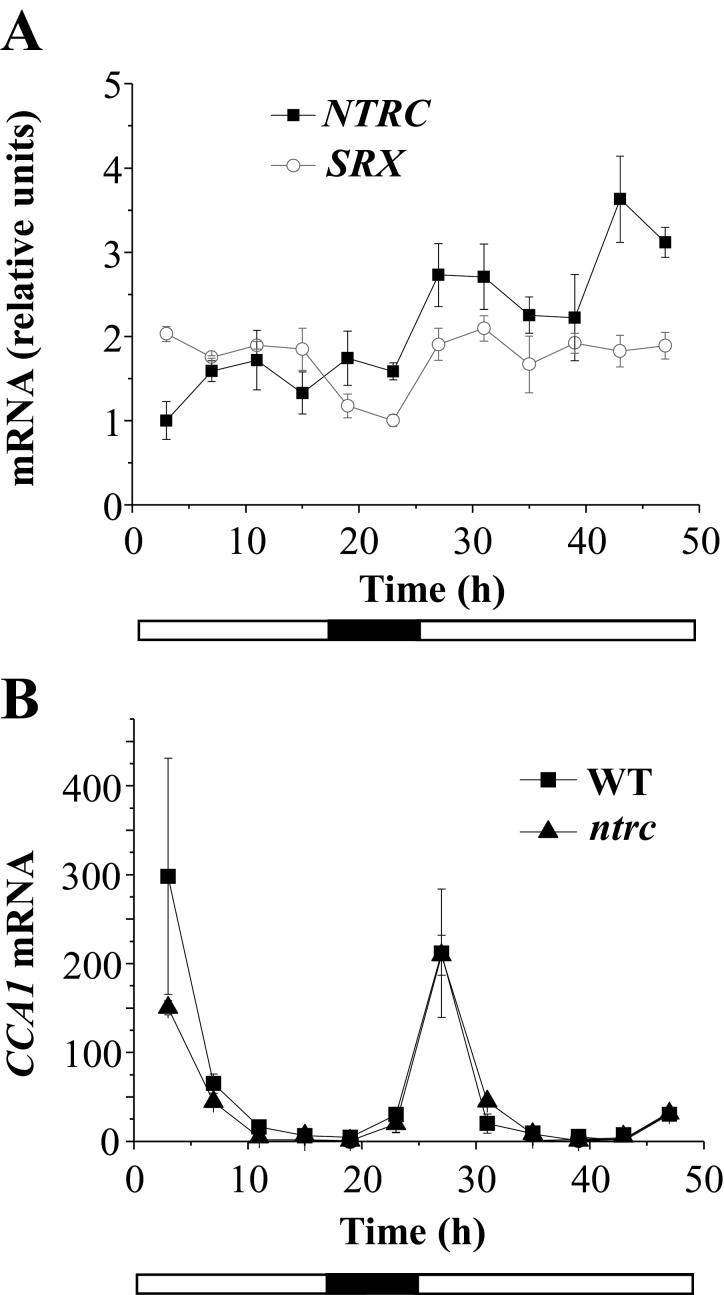
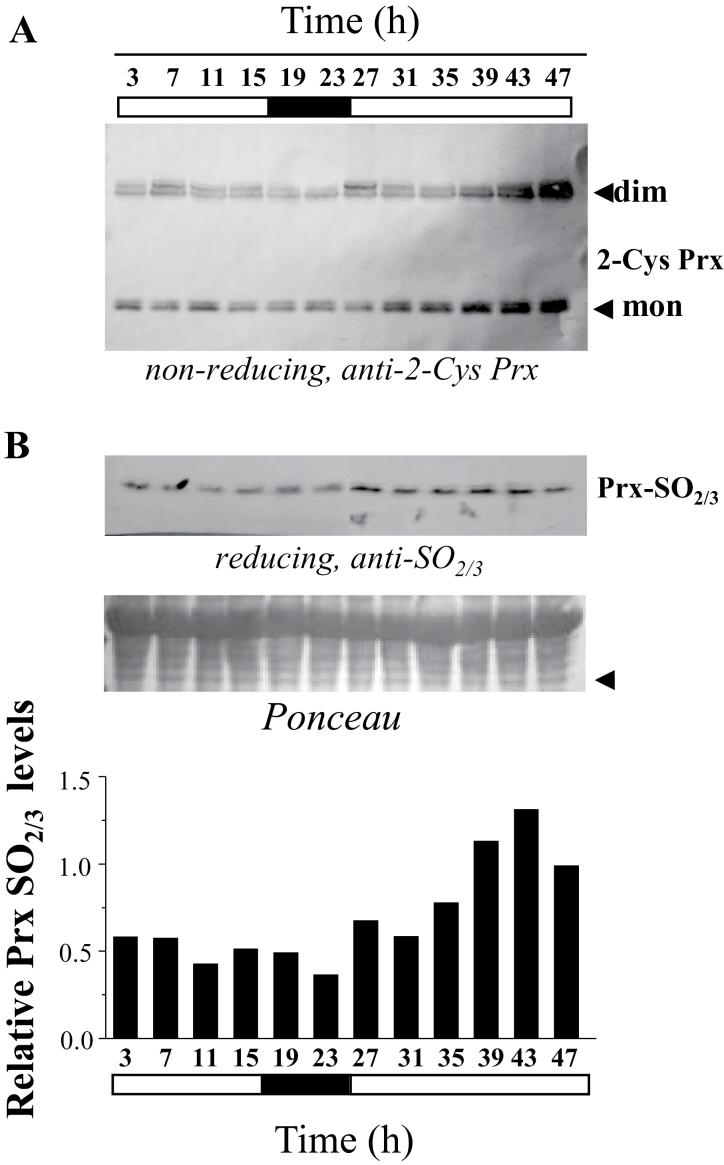
Hydrogen peroxide is a harmful by-product of photosynthesis, which also has important signalling activity. Therefore, the level of hydrogen peroxide needs to be tightly controlled. Chloroplasts harbour different antioxidant systems including enzymes such as the 2-Cys peroxiredoxins (2-Cys Prxs). Under oxidizing conditions, 2-Cys Prxs are susceptible to inactivation by overoxidation of their peroxidatic cysteine, which is enzymatically reverted by sulfiredoxin (Srx). In chloroplasts, the redox status of 2-Cys Prxs is highly dependent on NADPH-thioredoxin reductase C (NTRC) and Srx; however, the relationship of these activities in determining the level of 2-Cys Prx overoxidation is unknown. Here we have addressed this question by a combination of genetic and biochemical approaches. An Arabidopsis thaliana double knockout mutant lacking NTRC and Srx shows a phenotype similar to the ntrc mutant, while the srx mutant resembles wild-type plants. The deficiency of NTRC causes reduced overoxidation of 2-Cys Prxs, whereas the deficiency of Srx has the opposite effect. Moreover, in vitro analyses show that the disulfide bond linking the resolving and peroxidatic cysteines protects the latter from overoxidation, thus explaining the dominant role of NTRC on the level of 2-Cys Prx overoxidation in vivo. The overoxidation of chloroplast 2-Cys Prxs shows no circadian oscillation, in agreement with the fact that neither the NTRC nor the SRX genes show circadian regulation of expression. Additionally, the low level of 2-Cys Prx overoxidation in the ntrc mutant is light dependent, suggesting that the redox status of 2-Cys Prxs in chloroplasts depends on light rather than the circadian clock.
过氧化氢是光合作用的一种有害副产物,它也具有重要的信号传导活性。因此,过氧化氢的水平需要被严格控制。叶绿体含有不同的抗氧化系统,包括诸如2-半胱氨酸过氧化物酶(2-Cys Prxs)等酶。在氧化条件下,2-半胱氨酸过氧化物酶易因其过氧化物半胱氨酸的过度氧化而失活,而这种失活可被硫氧还蛋白(Srx)酶促逆转。在叶绿体中,2-半胱氨酸过氧化物酶的氧化还原状态高度依赖于NADPH-硫氧还蛋白还原酶C(NTRC)和Srx;然而,这些活性在决定2-半胱氨酸过氧化物酶过度氧化水平方面的关系尚不清楚。在这里,我们通过遗传和生化方法相结合来解决这个问题。缺乏NTRC和Srx的拟南芥双敲除突变体表现出与ntrc突变体相似的表型,而srx突变体则类似于野生型植物。NTRC的缺乏导致2-半胱氨酸过氧化物酶的过度氧化减少,而Srx的缺乏则产生相反的效果。此外,体外分析表明,连接解离半胱氨酸和过氧化物半胱氨酸的二硫键可保护后者免于过度氧化,从而解释了NTRC在体内2-半胱氨酸过氧化物酶过度氧化水平上的主导作用。叶绿体2-半胱氨酸过氧化物酶的过度氧化没有昼夜节律振荡,这与NTRC和SRX基因均不显示昼夜节律表达调控的事实一致。此外,ntrc突变体中2-半胱氨酸过氧化物酶过度氧化的低水平是光依赖性的,这表明叶绿体中2-半胱氨酸过氧化物酶的氧化还原状态取决于光而不是生物钟。





 Zotero 插件