
谷胱甘肽过氧化物酶对拟南芥叶绿体氧化还原平衡的贡献。
The contribution of glutathione peroxidases to chloroplast redox homeostasis in Arabidopsis.
机构信息
Instituto de Bioquímica Vegetal y Fotosíntesis, Universidad de Sevilla and CSIC, Avda. Américo Vespucio 49, 41092-Sevilla, Spain.
Instituto de Bioquímica Vegetal y Fotosíntesis, Universidad de Sevilla and CSIC, Avda. Américo Vespucio 49, 41092-Sevilla, Spain.
出版信息
Redox Biol. 2023 Jul;63:102731. doi: 10.1016/j.redox.2023.102731. Epub 2023 May 22.
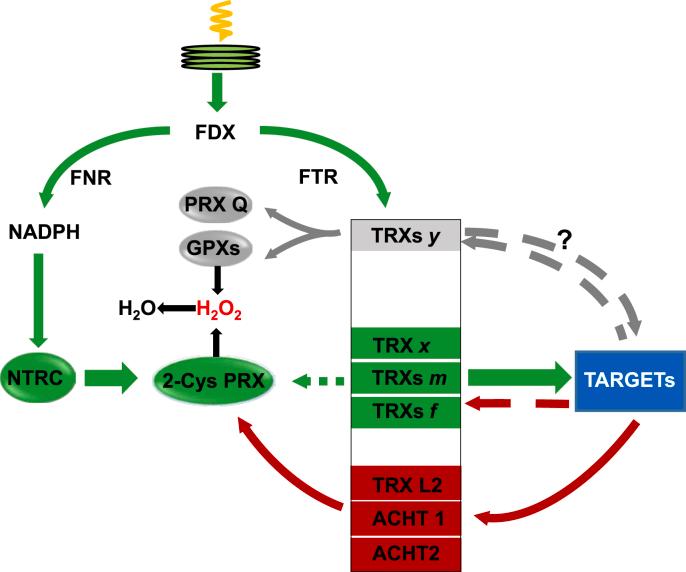
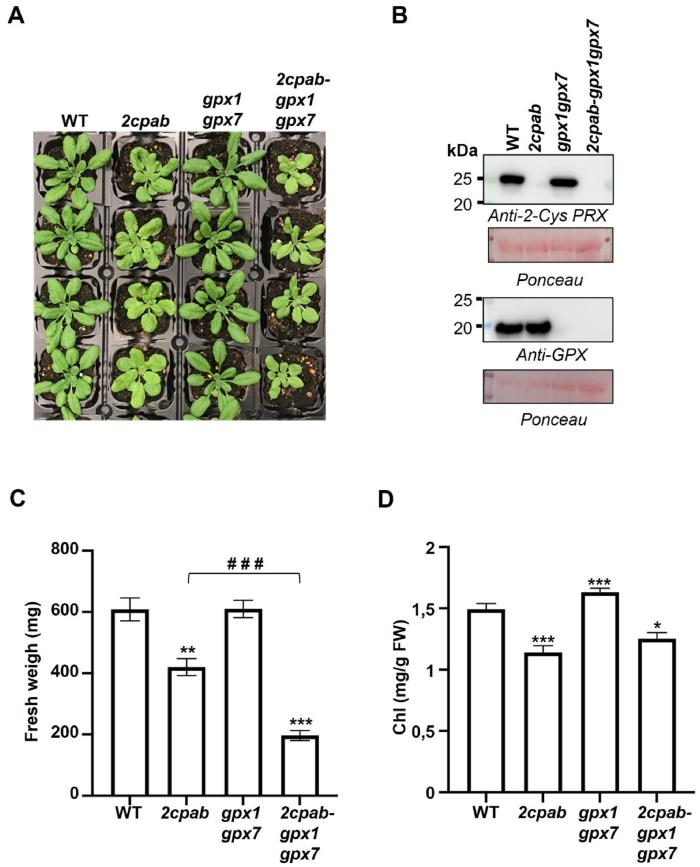
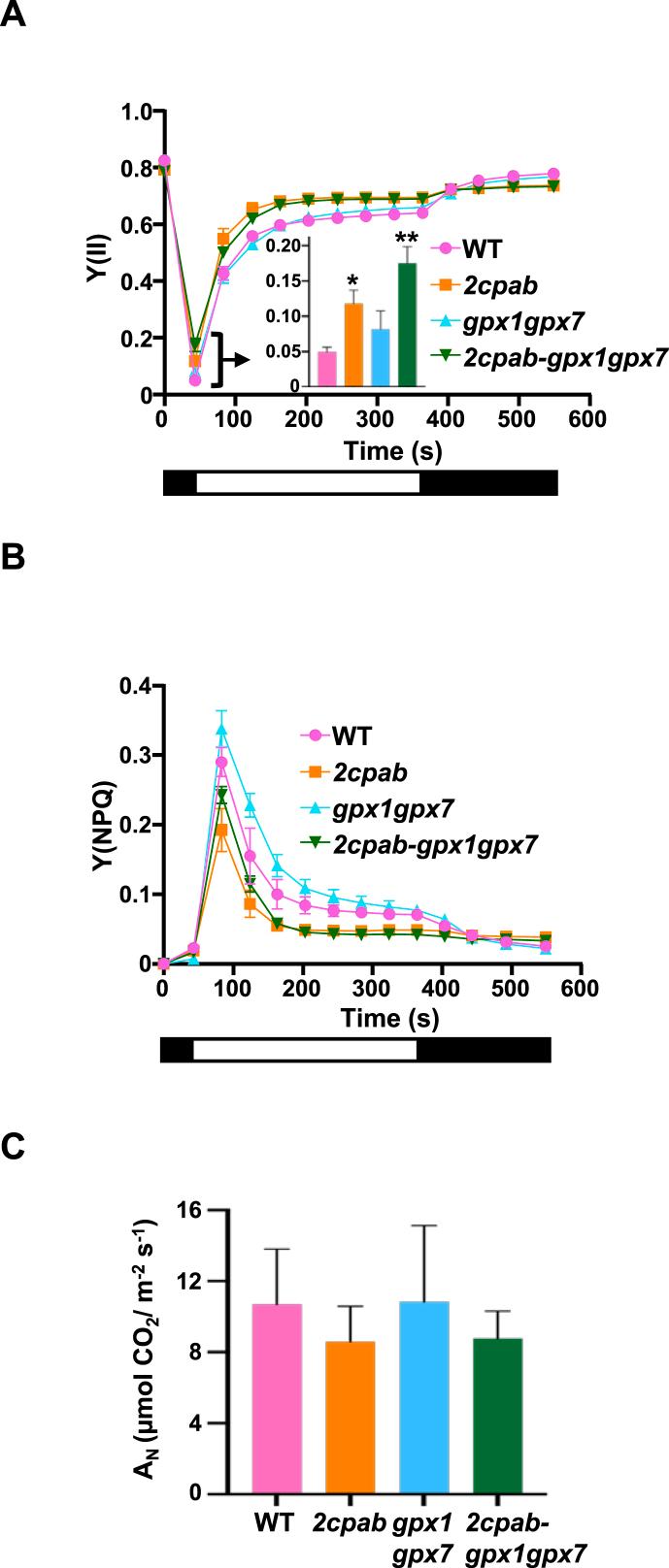
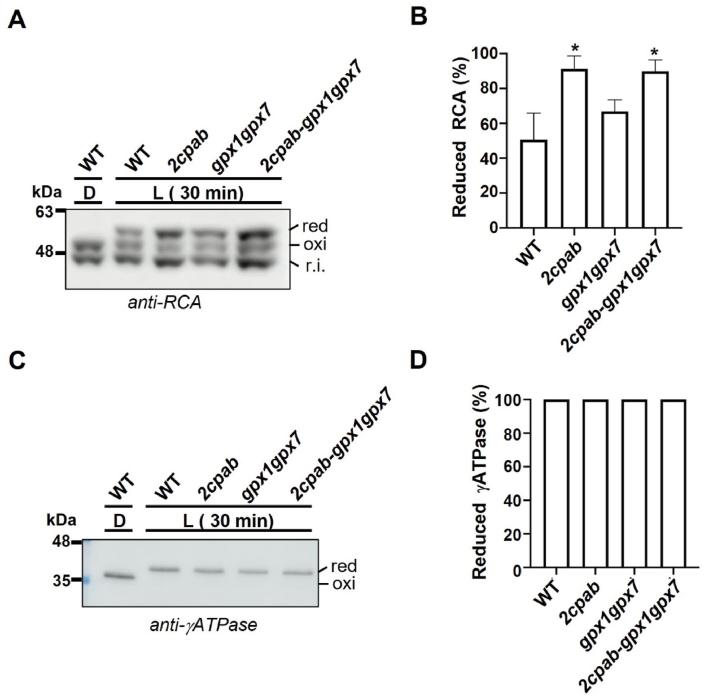
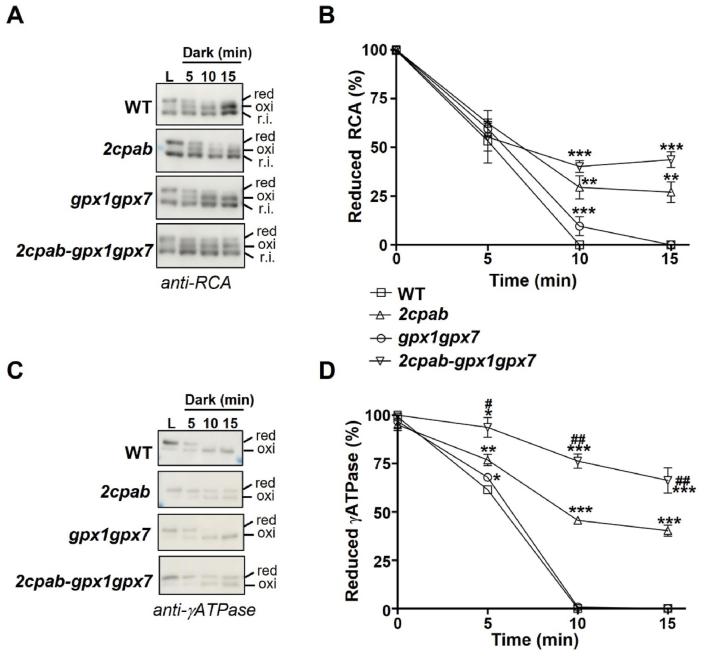
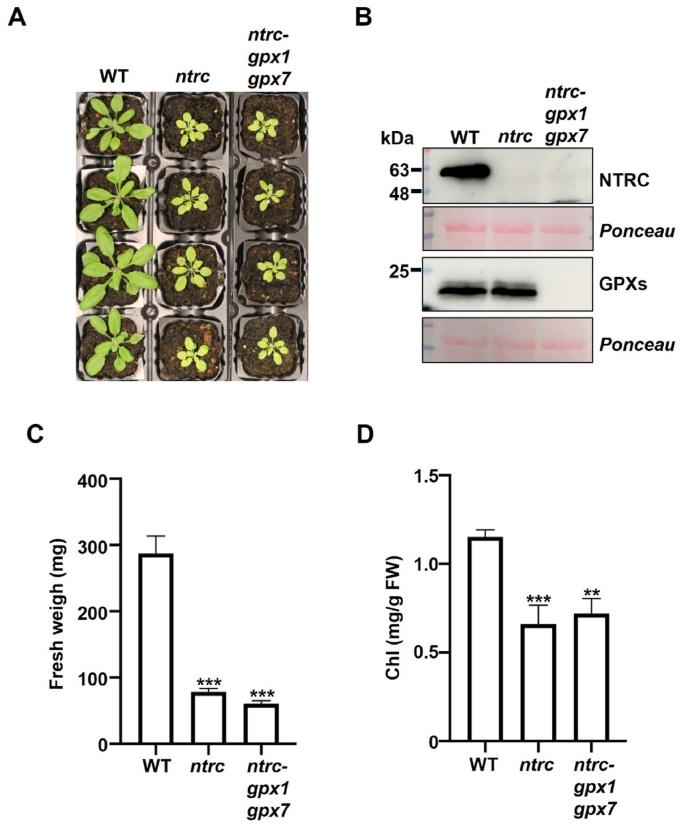
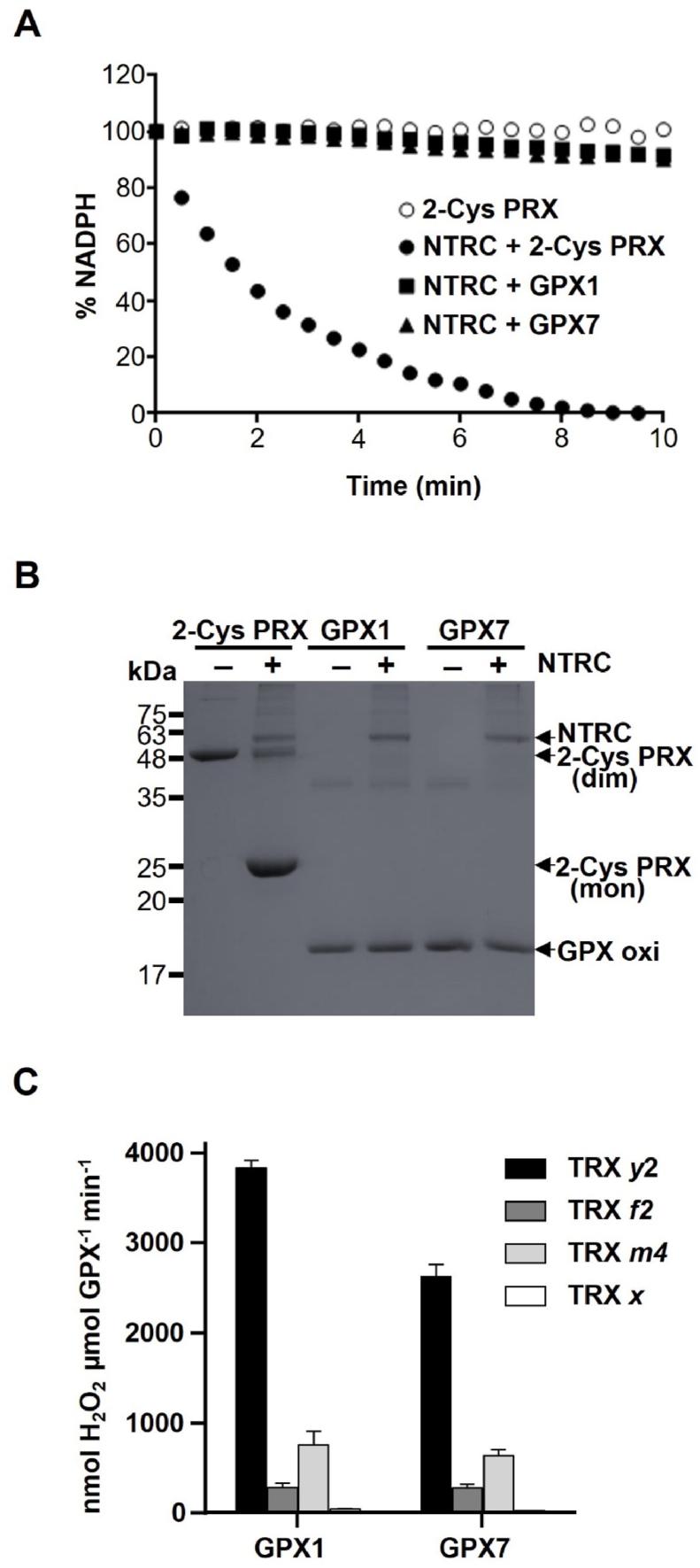
Oxidizing signals mediated by the thiol-dependent peroxidase activity of 2-Cys peroxiredoxins (PRXs) plays an essential role in fine-tuning chloroplast redox balance in response to changes in light intensity, a function that depends on NADPH-dependent thioredoxin reductase C (NTRC). In addition, plant chloroplasts are equipped with glutathione peroxidases (GPXs), thiol-dependent peroxidases that rely on thioredoxins (TRXs). Despite having a similar reaction mechanism than 2-Cys PRXs, the contribution of oxidizing signals mediated by GPXs to the chloroplast redox homeostasis remains poorly known. To address this issue, we have generated the Arabidopsis (Arabidopsis thaliana) double mutant gpx1gpx7, which is devoid of the two GPXs, 1 and 7, localized in the chloroplast. Furthermore, to analyze the functional relationship of chloroplast GPXs with the NTRC-2-Cys PRXs redox system, the 2cpab-gpx1gpx7 and ntrc-gpx1gpx7 mutants were generated. The gpx1gpx7 mutant displayed wild type-like phenotype indicating that chloroplast GPXs are dispensable for plant growth at least under standard conditions. However, the 2cpab-gpx1gpx7 showed more retarded growth than the 2cpab mutant. The simultaneous lack of 2-Cys PRXs and GPXs affected PSII performance and caused higher delay of enzyme oxidation in the dark. In contrast, the ntrc-gpx1gpx7 mutant combining the lack of NTRC and chloroplast GPXs behaved like the ntrc mutant indicating that the contribution of GPXs to chloroplast redox homeostasis is independent of NTRC. Further supporting this notion, in vitro assays showed that GPXs are not reduced by NTRC but by TRX y2. Based on these results, we propose a role for GPXs in the chloroplast redox hierarchy.
依赖于 2-Cys 过氧化物酶活性的氧化信号在调节叶绿体氧化还原平衡中起着至关重要的作用,以响应光强度的变化,这一功能依赖于 NADPH 依赖的硫氧还蛋白还原酶 C(NTRC)。此外,植物叶绿体还配备有谷胱甘肽过氧化物酶(GPXs),这是一种依赖于硫氧还蛋白(TRXs)的硫依赖性过氧化物酶。尽管与 2-Cys PRXs 具有相似的反应机制,但 GPXs 介导的氧化信号对叶绿体氧化还原稳态的贡献仍知之甚少。为了解决这个问题,我们生成了拟南芥(Arabidopsis thaliana)双突变体 gpx1gpx7,该突变体缺乏定位于叶绿体中的两种 GPXs,即 1 和 7。此外,为了分析叶绿体 GPXs 与 NTRC-2-Cys PRXs 氧化还原系统的功能关系,我们生成了 2cpab-gpx1gpx7 和 ntrc-gpx1gpx7 突变体。gpx1gpx7 突变体表现出与野生型相似的表型,表明叶绿体 GPXs 在至少在标准条件下对于植物生长不是必需的。然而,2cpab-gpx1gpx7 的生长比 2cpab 突变体更为迟缓。同时缺乏 2-Cys PRXs 和 GPXs 会影响 PSII 的性能,并导致在黑暗中酶氧化的延迟更大。相比之下,同时缺乏 NTRC 和叶绿体 GPXs 的 ntrc-gpx1gpx7 突变体表现得像 ntrc 突变体一样,表明 GPXs 对叶绿体氧化还原稳态的贡献不依赖于 NTRC。进一步支持这一观点,体外实验表明 GPXs 不是由 NTRC 还原,而是由 TRX y2 还原。基于这些结果,我们提出了 GPXs 在叶绿体氧化还原层次结构中的作用。

 Zotero 插件