
尼妥珠单抗和雷帕霉素联合治疗对替莫唑胺耐药的人胶质瘤有效,无论表皮生长因子受体(EGFR)突变状态如何。
Combined treatment of Nimotuzumab and rapamycin is effective against temozolomide-resistant human gliomas regardless of the EGFR mutation status.
作者信息
Chong Dawn Q, Toh Xin Y, Ho Ivy A W, Sia Kian C, Newman Jennifer P, Yulyana Yulyana, Ng Wai-Hoe, Lai Siang H, Ho Mac M F, Dinesh Nivedh, Tham Chee K, Lam Paula Y P
机构信息
National Cancer Centre, 11 Hospital Drive, Singapore, 169610, Singapore.
National Neuroscience Institute, Singapore, 308433, Singapore.
出版信息
BMC Cancer. 2015 Apr 11;15:255. doi: 10.1186/s12885-015-1191-3.
BACKGROUND
The treatment of glioblastoma multiforme (GBM) is an unmet clinical need. The 5-year survival rate of patients with GBM is less than 3%. Temozolomide (TMZ) remains the standard first-line treatment regimen for gliomas despite the fact that more than 90% of recurrent gliomas do not respond to TMZ after repeated exposure. We have also independently shown that many of the Asian-derived glioma cell lines and primary cells derived from Singaporean high-grade glioma patients are indeed resistant to TMZ. This issue highlights the need to develop new effective anti-cancer treatment strategies. In a recent study, wild-type epidermal growth factor receptor (wtEGFR) has been shown to phosphorylate a truncated EGFR (known as EGFRvIII), leading to the phosphorylation of STAT proteins and progression in gliomagenesis. Despite the fact that combination of EGFR targeting drugs and rapamycin has been used before, the effect of mono-treatment of Nimotuzumab, rapamycin and combination therapy in human glioma expressing different types of EGFR is not well-studied. Herein, we evaluated the efficacy of dual blockage using monoclonal antibody against EGFR (Nimotuzumab) and an mTOR inhibitor (rapamycin) in Caucasian patient-derived human glioma cell lines, Asian patient-derived human glioma cell lines, primary glioma cells derived from the Mayo GBM xenografts, and primary short-term glioma culture derived from high-grade glioma patients.
METHODS
The combination effect of Nimotuzumab and rapamycin was examined in a series of primary human glioma cell lines and glioma cell lines. The cell viability was compared to TMZ treatment alone. Endogenous expressions of EGFR in various GBM cells were determined by western blotting.
RESULTS
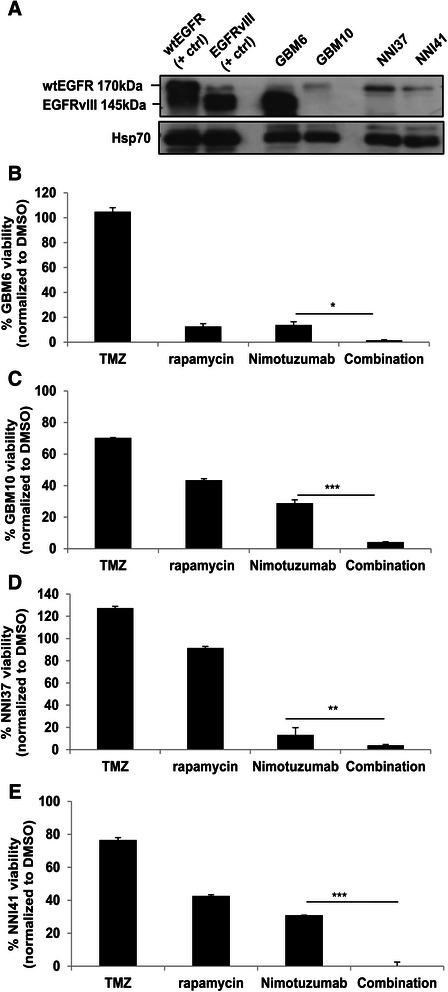
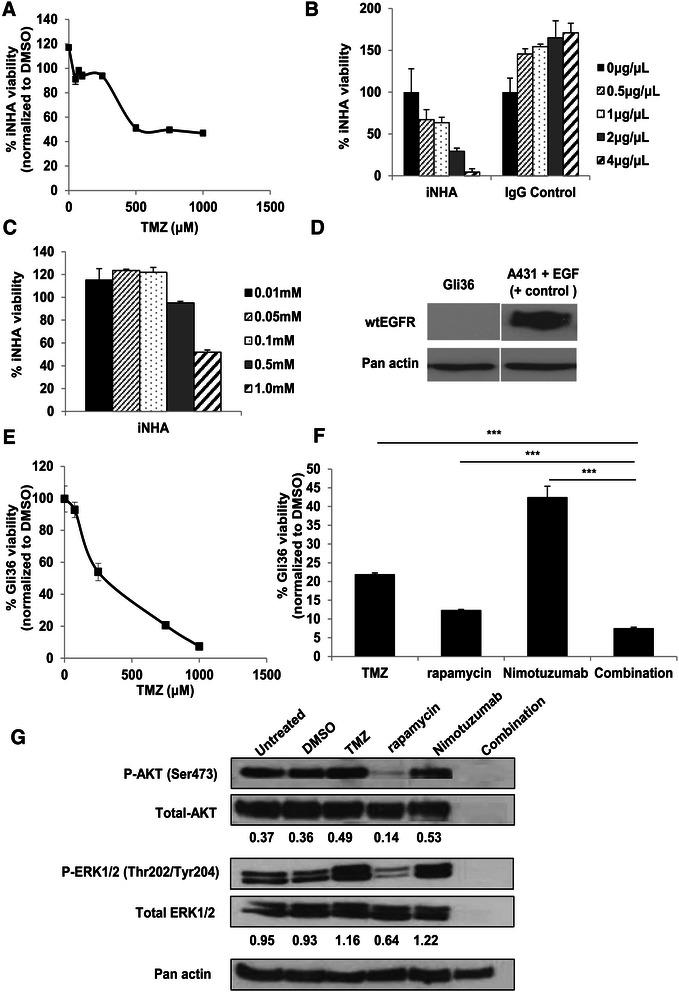
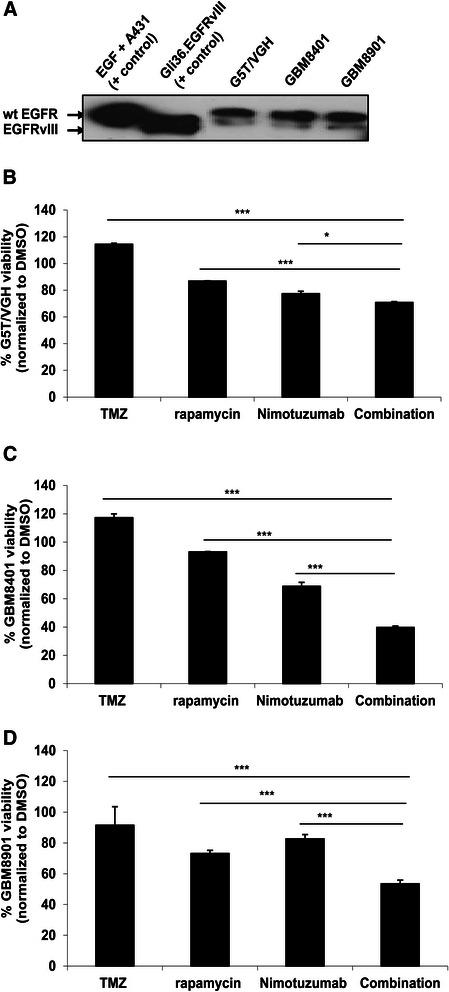
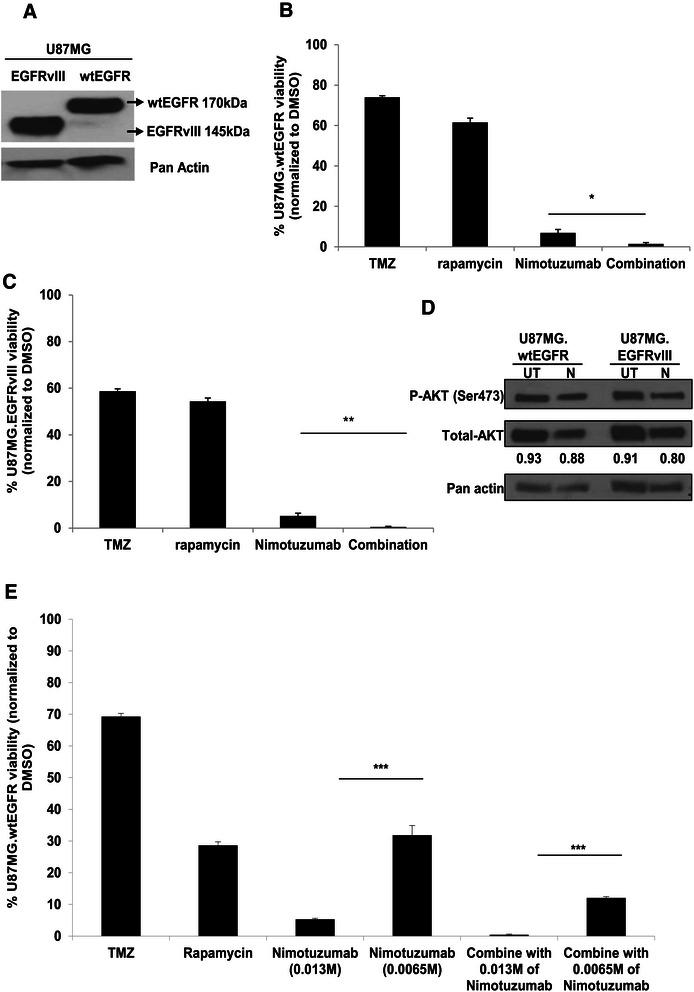
The results showed that combination of Nimotuzumab with rapamycin significantly enhanced the therapeutic efficacy of human glioma cells compared to single treatment. More importantly, many of the Asian patient-derived glioma cell lines and primary cells derived from Singaporean high-grade gliomas, which showed resistance to TMZ, were susceptible to the combined treatments.
CONCLUSIONS
In conclusion, our results strongly suggest that combination usage of Nimotuzumab and rapamycin exert higher cytotoxic activities than TMZ. Our data suggest that this combination may provide an alternative treatment for TMZ-resistant gliomas regardless of the EGFR status.
背景
多形性胶质母细胞瘤(GBM)的治疗是一项尚未满足的临床需求。GBM患者的5年生存率低于3%。替莫唑胺(TMZ)仍然是胶质瘤的标准一线治疗方案,尽管超过90%的复发性胶质瘤在反复接触TMZ后无反应。我们还独立表明,许多源自亚洲的胶质瘤细胞系以及来自新加坡高级别胶质瘤患者的原代细胞确实对TMZ耐药。这个问题凸显了开发新的有效抗癌治疗策略的必要性。在最近的一项研究中,野生型表皮生长因子受体(wtEGFR)已被证明可磷酸化截短的EGFR(称为EGFRvIII),导致STAT蛋白磷酸化并促进胶质瘤发生。尽管之前已经使用过EGFR靶向药物和雷帕霉素的联合治疗,但尼莫妥珠单抗、雷帕霉素单药治疗以及联合治疗在表达不同类型EGFR的人胶质瘤中的效果尚未得到充分研究。在此,我们评估了使用抗EGFR单克隆抗体(尼莫妥珠单抗)和mTOR抑制剂(雷帕霉素)进行双重阻断在源自白种人患者的人胶质瘤细胞系、源自亚洲患者的人胶质瘤细胞系、源自梅奥GBM异种移植的原代胶质瘤细胞以及源自高级别胶质瘤患者的原代短期胶质瘤培养物中的疗效。
方法
在一系列原代人胶质瘤细胞系和胶质瘤细胞系中检测尼莫妥珠单抗和雷帕霉素的联合作用。将细胞活力与单独使用TMZ治疗进行比较。通过蛋白质印迹法测定各种GBM细胞中EGFR的内源性表达。
结果
结果表明,与单一治疗相比,尼莫妥珠单抗与雷帕霉素联合使用显著增强了人胶质瘤细胞的治疗效果。更重要的是,许多对TMZ耐药的源自亚洲患者的胶质瘤细胞系以及来自新加坡高级别胶质瘤的原代细胞对联合治疗敏感。
结论
总之,我们的结果强烈表明,尼莫妥珠单抗和雷帕霉素联合使用比TMZ具有更高的细胞毒性活性。我们的数据表明,无论EGFR状态如何,这种联合治疗可能为TMZ耐药的胶质瘤提供一种替代治疗方法。
 Zotero 插件