
重新利用水杨酰苯胺类驱虫药来对抗耐甲氧西林金黄色葡萄球菌。
Repurposing salicylanilide anthelmintic drugs to combat drug resistant Staphylococcus aureus.
作者信息
Rajamuthiah Rajmohan, Fuchs Beth Burgwyn, Conery Annie L, Kim Wooseong, Jayamani Elamparithi, Kwon Bumsup, Ausubel Frederick M, Mylonakis Eleftherios
机构信息
Division of Infectious Diseases, Rhode Island Hospital, Alpert Medical School of Brown University, Providence, Rhode Island, United States of America; Massachusetts General Hospital, Harvard Medical School, Boston, Massachusetts, United States of America.
Division of Infectious Diseases, Rhode Island Hospital, Alpert Medical School of Brown University, Providence, Rhode Island, United States of America.
出版信息
PLoS One. 2015 Apr 21;10(4):e0124595. doi: 10.1371/journal.pone.0124595. eCollection 2015.
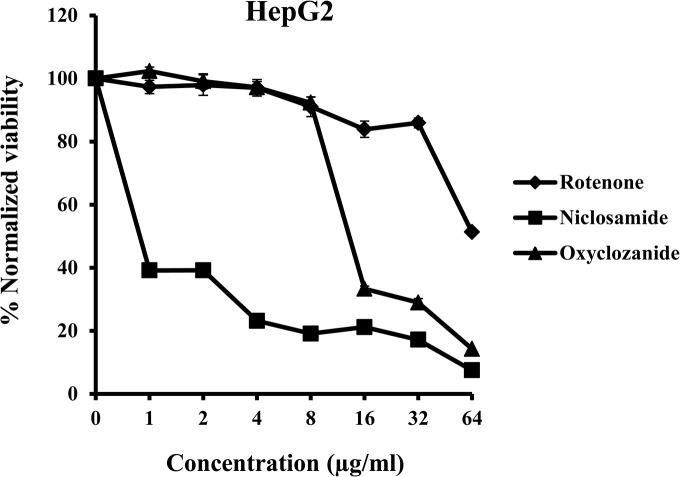
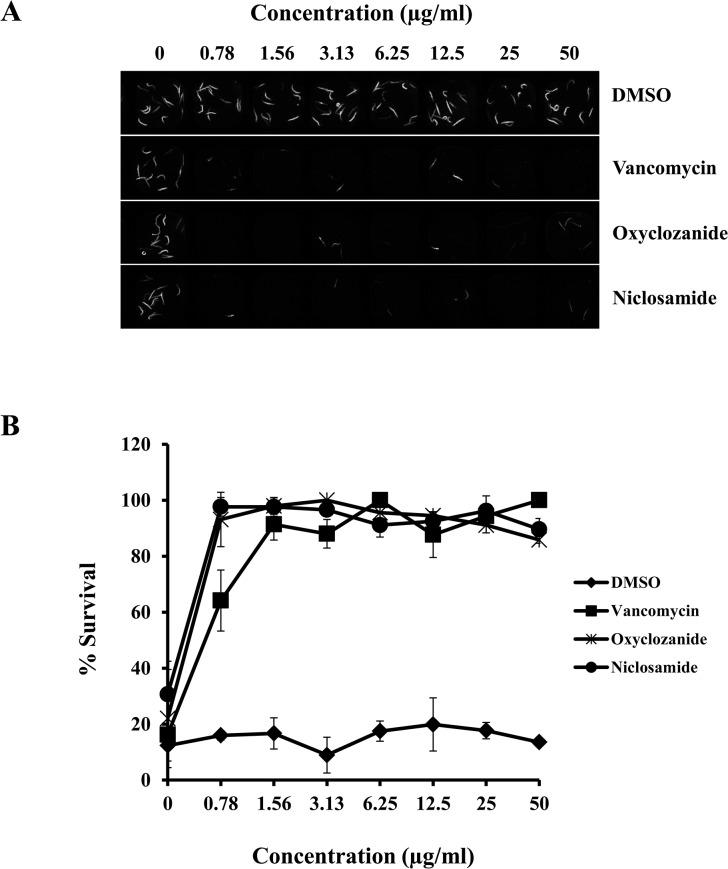
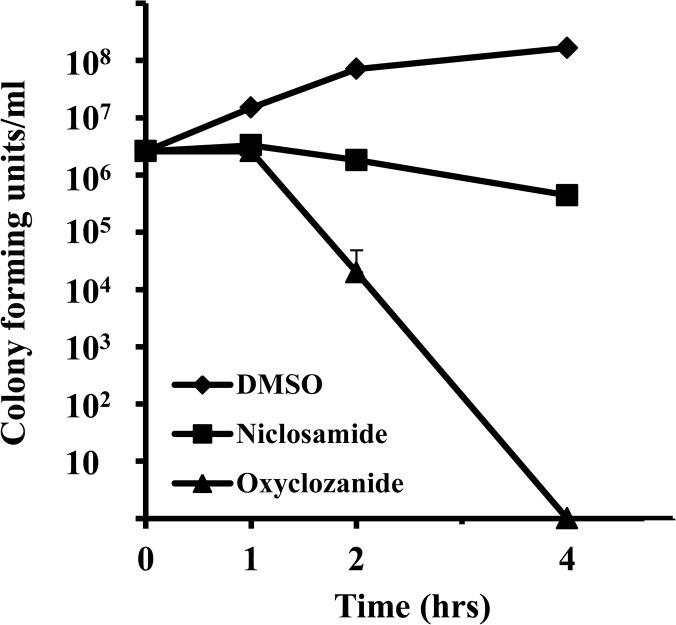
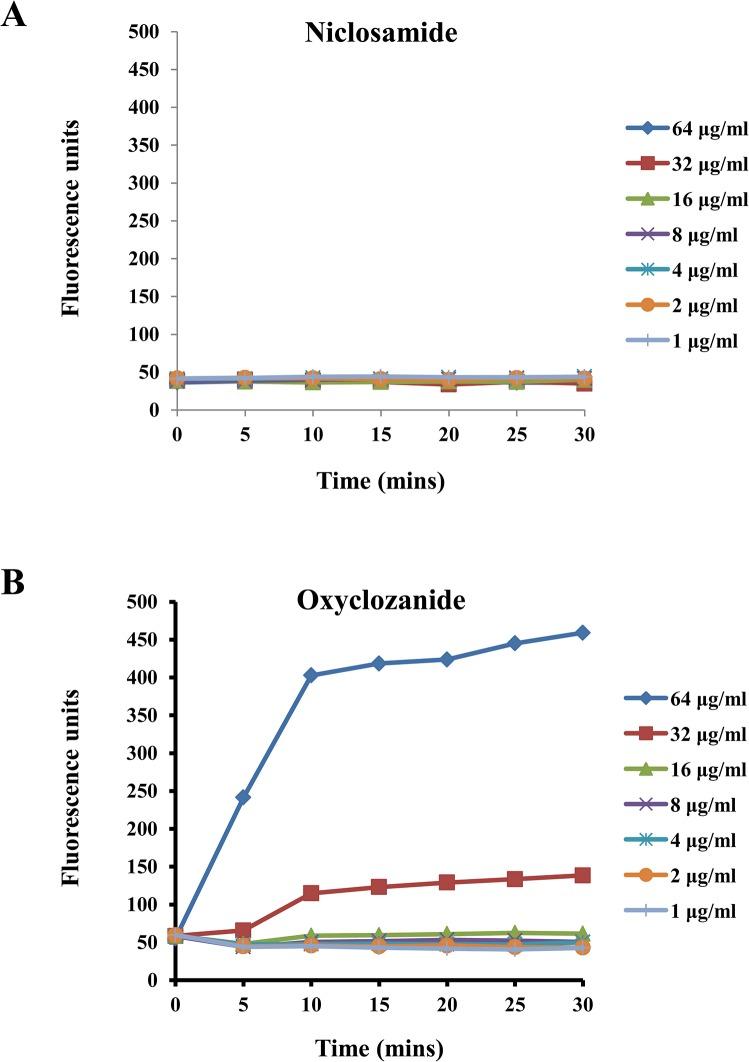
Staphylococcus aureus is a Gram-positive bacterium that has become the leading cause of hospital acquired infections in the US. Repurposing Food and Drug Administration (FDA) approved drugs for antimicrobial therapy involves lower risks and costs compared to de novo development of novel antimicrobial agents. In this study, we examined the antimicrobial properties of two commercially available anthelmintic drugs. The FDA approved drug niclosamide and the veterinary drug oxyclozanide displayed strong in vivo and in vitro activity against methicillin resistant S. aureus (minimum inhibitory concentration (MIC): 0.125 and 0.5 μg/ml respectively; minimum effective concentration: ≤ 0.78 μg/ml for both drugs). The two drugs were also effective against another Gram-positive bacteria Enterococcus faecium (MIC 0.25 and 2 μg/ml respectively), but not against the Gram-negative species Klebsiella pneumoniae, Acinetobacter baumannii, Pseudomonas aeruginosa and Enterobacter aerogenes. The in vitro antimicrobial activity of niclosamide and oxyclozanide were determined against methicillin, vancomycin, linezolid or daptomycin resistant S. aureus clinical isolates, with MICs at 0.0625-0.5 and 0.125-2 μg/ml for niclosamide and oxyclozanide respectively. A time-kill study demonstrated that niclosamide is bacteriostatic, whereas oxyclozanide is bactericidal. Interestingly, oxyclozanide permeabilized the bacterial membrane but neither of the anthelmintic drugs exhibited demonstrable toxicity to sheep erythrocytes. Oxyclozanide was non-toxic to HepG2 human liver carcinoma cells within the range of its in vitro MICs but niclosamide displayed toxicity even at low concentrations. These data show that the salicylanilide anthelmintic drugs niclosamide and oxyclozanide are suitable candidates for mechanism of action studies and further clinical evaluation for treatment of staphylococcal infections.
金黄色葡萄球菌是一种革兰氏阳性菌,已成为美国医院获得性感染的主要原因。与从头研发新型抗菌药物相比,重新利用美国食品药品监督管理局(FDA)批准的药物进行抗菌治疗风险更低、成本更低。在本研究中,我们检测了两种市售驱虫药的抗菌特性。FDA批准的药物氯硝柳胺和兽药奥昔氯生对耐甲氧西林金黄色葡萄球菌显示出强大的体内和体外活性(最低抑菌浓度(MIC):分别为0.125和0.5μg/ml;最低有效浓度:两种药物均≤0.78μg/ml)。这两种药物对另一种革兰氏阳性菌粪肠球菌也有效(MIC分别为0.25和2μg/ml),但对革兰氏阴性菌肺炎克雷伯菌、鲍曼不动杆菌、铜绿假单胞菌和产气肠杆菌无效。测定了氯硝柳胺和奥昔氯生对耐甲氧西林、万古霉素、利奈唑胺或达托霉素的金黄色葡萄球菌临床分离株的体外抗菌活性,氯硝柳胺和奥昔氯生的MIC分别为0.0625 - 0.5和0.125 - 2μg/ml。时间杀菌研究表明,氯硝柳胺具有抑菌作用,而奥昔氯生具有杀菌作用。有趣的是,奥昔氯生可使细菌细胞膜通透性增加,但这两种驱虫药对绵羊红细胞均未显示出明显毒性。在其体外MIC范围内,奥昔氯生对HepG2人肝癌细胞无毒,但氯硝柳胺即使在低浓度下也表现出毒性。这些数据表明,水杨酰苯胺类驱虫药氯硝柳胺和奥昔氯生是作用机制研究和葡萄球菌感染治疗进一步临床评估的合适候选药物。



 Zotero 插件