
在复杂结构再生过程中衰老细胞的反复更替。
Recurrent turnover of senescent cells during regeneration of a complex structure.
作者信息
Yun Maximina H, Davaapil Hongorzul, Brockes Jeremy P
机构信息
Institute of Structural and Molecular Biology, Division of Biosciences, University College London, London, United Kingdom.
Institute of Ophthalmology, University College London, London, United Kingdom.
出版信息
Elife. 2015 May 5;4:e05505. doi: 10.7554/eLife.05505.
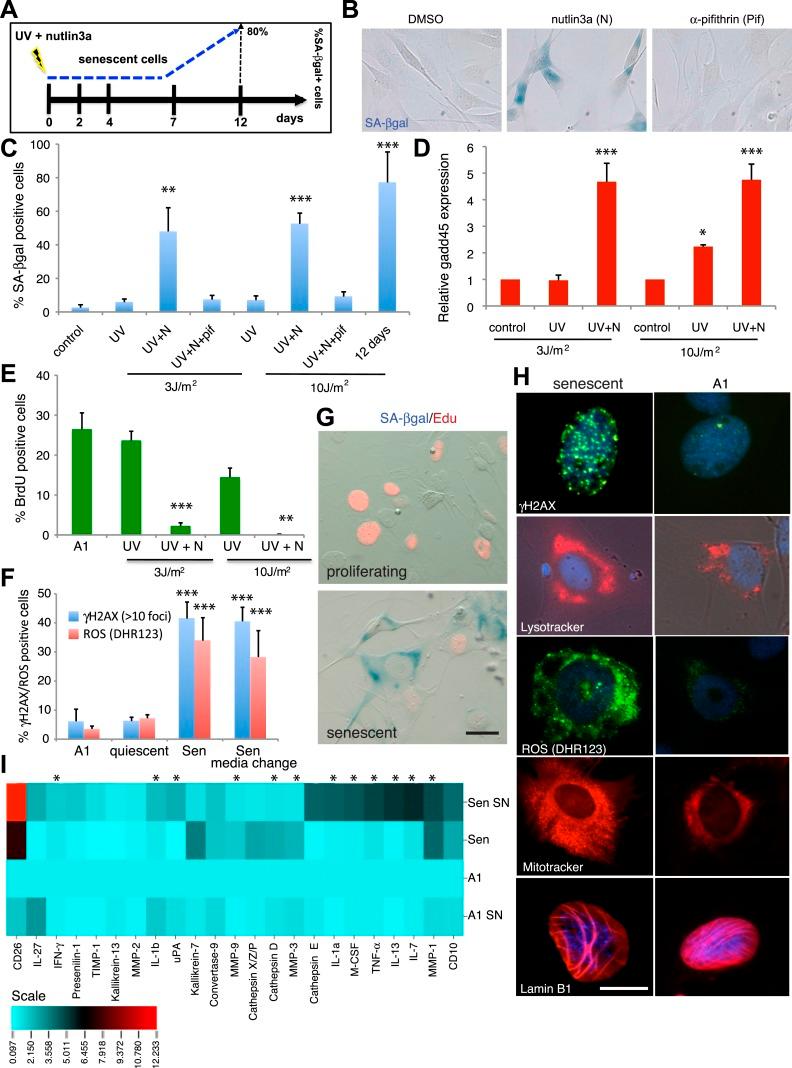
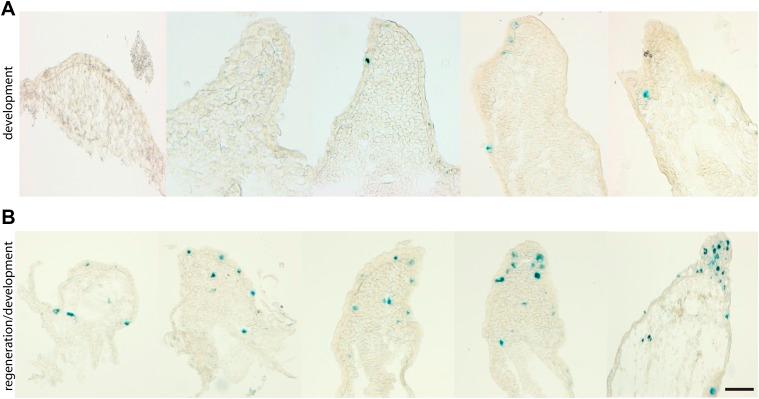
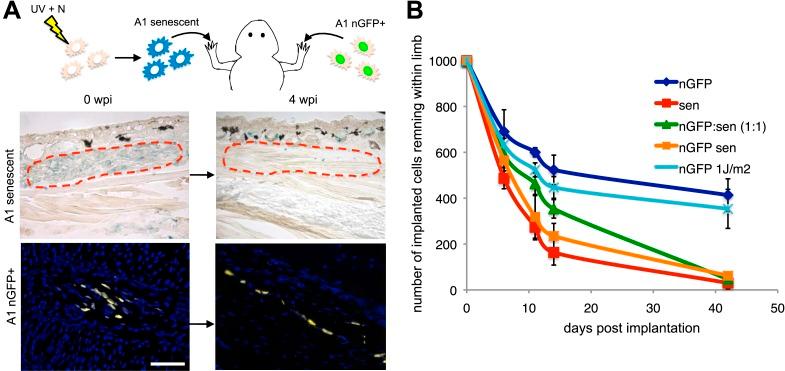
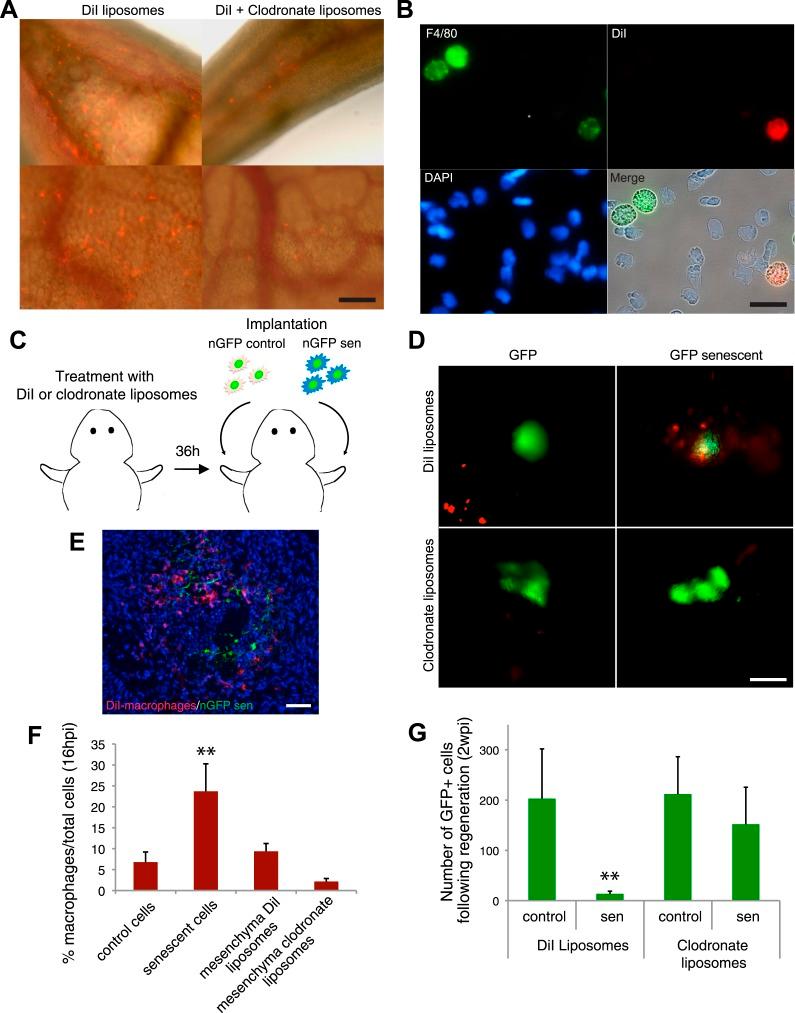
Cellular senescence has been recently linked to the promotion of age-related pathologies, including a decline in regenerative capacity. While such capacity deteriorates with age in mammals, it remains intact in species such as salamanders, which have an extensive repertoire of regeneration and can undergo multiple episodes through their lifespan. Here we show that, surprisingly, there is a significant induction of cellular senescence during salamander limb regeneration, but that rapid and effective mechanisms of senescent cell clearance operate in normal and regenerating tissues. Furthermore, the number of senescent cells does not increase upon repetitive amputation or ageing, in contrast to mammals. Finally, we identify the macrophage as a critical player in this efficient senescent cell clearance mechanism. We propose that effective immunosurveillance of senescent cells in salamanders supports their ability to undergo regeneration throughout their lifespan.
细胞衰老最近被认为与促进与年龄相关的病理变化有关,包括再生能力的下降。虽然这种能力在哺乳动物中会随着年龄增长而衰退,但在蝾螈等物种中却保持完好,蝾螈具有广泛的再生能力,并且在其生命周期中可以经历多次再生过程。在这里,我们令人惊讶地发现,蝾螈肢体再生过程中会有显著的细胞衰老诱导现象,但在正常组织和再生组织中存在快速且有效的衰老细胞清除机制。此外,与哺乳动物不同,重复截肢或衰老后,衰老细胞的数量并不会增加。最后,我们确定巨噬细胞是这种高效衰老细胞清除机制中的关键参与者。我们提出,对蝾螈衰老细胞进行有效的免疫监视有助于它们在整个生命周期中进行再生的能力。






 Zotero 插件