
评估涂覆银纳米颗粒的空气过滤器对雾化病毒的防护效果:含尘量情况下的抗病毒效率。
Evaluation of Ag nanoparticle coated air filter against aerosolized virus: Anti-viral efficiency with dust loading.
作者信息
Joe Yun Haeng, Park Dae Hoon, Hwang Jungho
机构信息
School of Mechanical Engineering, Yonsei University, Seoul 120-749, Republic of Korea.
出版信息
J Hazard Mater. 2016 Jan 15;301:547-53. doi: 10.1016/j.jhazmat.2015.09.017. Epub 2015 Sep 11.
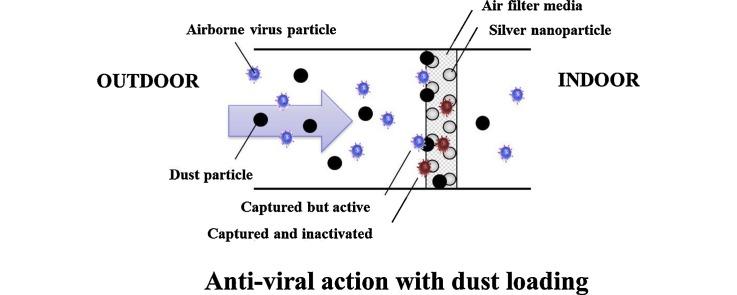
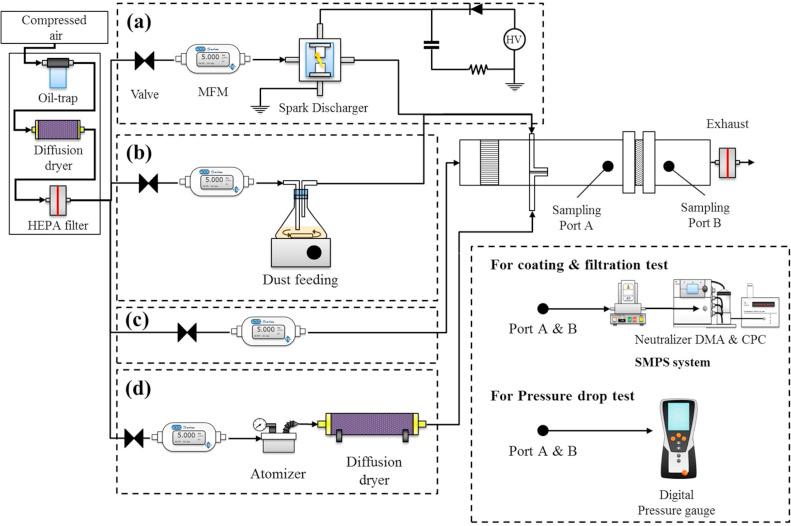
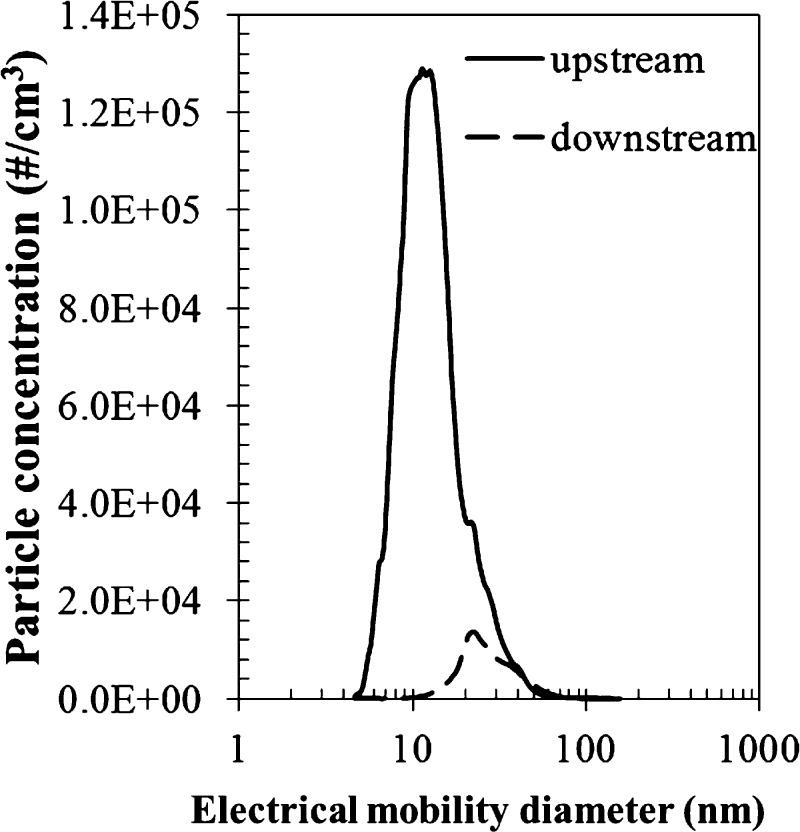
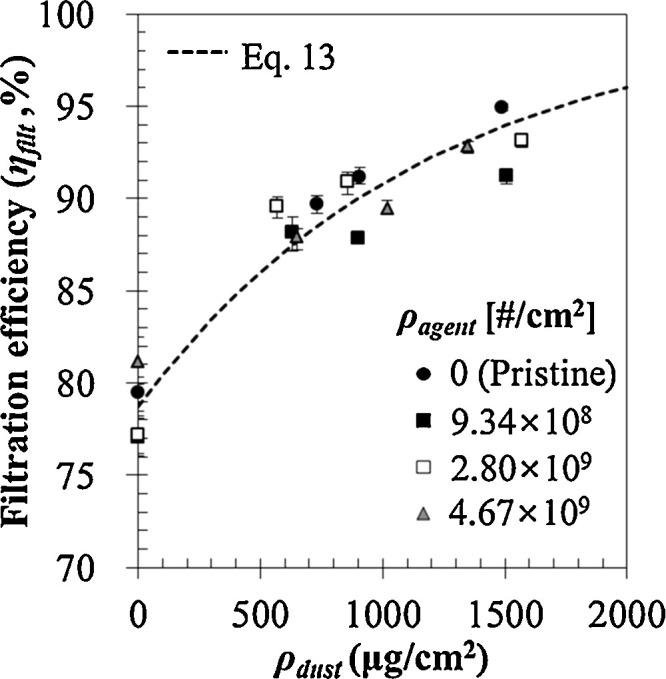
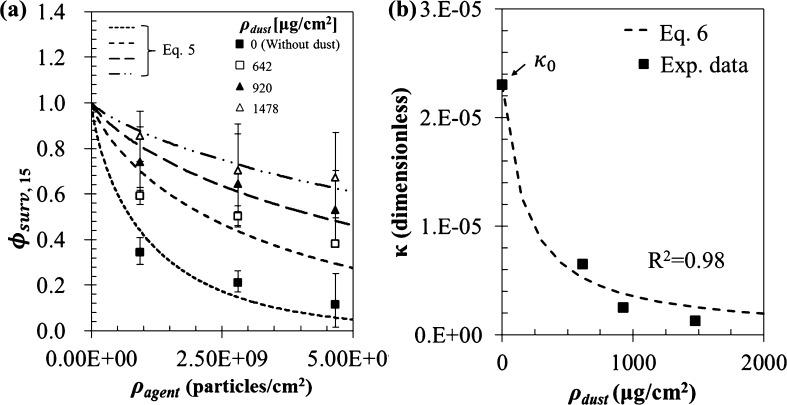
In this study, the effect of dust loading on the anti-viral ability of an anti-viral air filter was investigated. Silver nanoparticles approximately 11 nm in diameter were synthesized via a spark discharge generation system and were used as anti-viral agents coated onto a medium air filter. The pressure drop, filtration efficiency, and anti-viral ability of the filter against aerosolized bacteriophage MS2 virus particles were tested with dust loading. The filtration efficiency and pressure drop increased with dust loading, while the anti-viral ability decreased. Theoretical analysis of anti-viral ability with dust loading was carried out using a mathematical model based on that presented by Joe et al. (J. Hazard. Mater.; 280: 356-363, 2014). Our model can be used to compare anti-viral abilities of various anti-viral agents, determine appropriate coating areal density of anti-viral agent on a filter, and predict the life cycle of an anti-viral filter.
在本研究中,研究了积尘量对抗病毒空气过滤器抗病毒能力的影响。通过火花放电产生系统合成了直径约为11nm的银纳米颗粒,并将其用作涂覆在中效空气过滤器上的抗病毒剂。在有积尘的情况下,测试了过滤器对雾化噬菌体MS2病毒颗粒的压降、过滤效率和抗病毒能力。过滤效率和压降随积尘量增加而升高,而抗病毒能力则下降。基于Joe等人(《危险材料杂志》;280:356 - 363,2014年)提出的数学模型,对积尘量下的抗病毒能力进行了理论分析。我们的模型可用于比较各种抗病毒剂的抗病毒能力,确定过滤器上抗病毒剂的合适涂覆面密度,并预测抗病毒过滤器的生命周期。




 Zotero 插件