
人类淋巴祖细胞的长链非编码RNA分析揭示了B细胞和T细胞谱系的转录差异。
Long non-coding RNA profiling of human lymphoid progenitor cells reveals transcriptional divergence of B cell and T cell lineages.
作者信息
Casero David, Sandoval Salemiz, Seet Christopher S, Scholes Jessica, Zhu Yuhua, Ha Vi Luan, Luong Annie, Parekh Chintan, Crooks Gay M
机构信息
Department of Pathology &Laboratory Medicine, David Geffen School of Medicine University of California, Los Angeles, Los Angeles, California, USA.
Division of Hematology-Oncology, Department of Medicine, David Geffen School of Medicine, University of California, Los Angeles, Los Angeles, California, USA.
出版信息
Nat Immunol. 2015 Dec;16(12):1282-91. doi: 10.1038/ni.3299. Epub 2015 Oct 26.
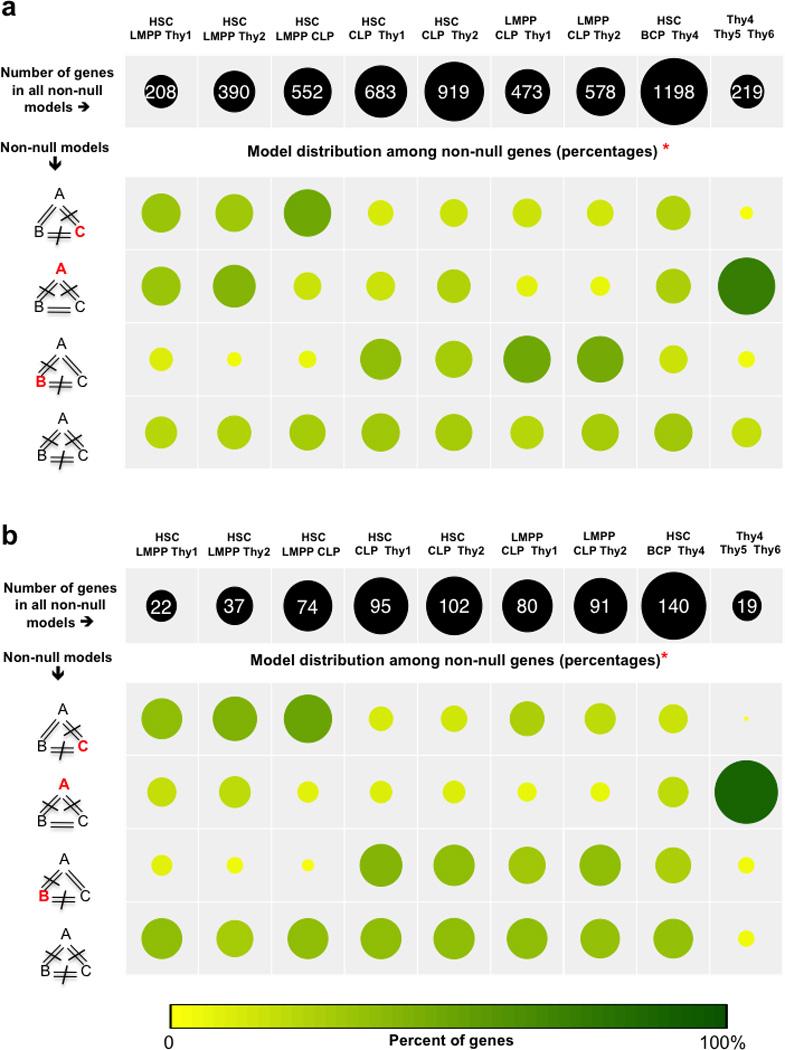
To elucidate the transcriptional 'landscape' that regulates human lymphoid commitment during postnatal life, we used RNA sequencing to assemble the long non-coding transcriptome across human bone marrow and thymic progenitor cells spanning the earliest stages of B lymphoid and T lymphoid specification. Over 3,000 genes encoding previously unknown long non-coding RNAs (lncRNAs) were revealed through the analysis of these rare populations. Lymphoid commitment was characterized by lncRNA expression patterns that were highly stage specific and were more lineage specific than those of protein-coding genes. Protein-coding genes co-expressed with neighboring lncRNA genes showed enrichment for ontologies related to lymphoid differentiation. The exquisite cell-type specificity of global lncRNA expression patterns independently revealed new developmental relationships among the earliest progenitor cells in the human bone marrow and thymus.
为了阐明在出生后生命过程中调节人类淋巴细胞定向分化的转录“景观”,我们使用RNA测序技术,在跨越B淋巴细胞和T淋巴细胞定向分化最早阶段的人类骨髓和胸腺祖细胞中组装长链非编码转录组。通过对这些稀有细胞群体的分析,发现了3000多个编码此前未知的长链非编码RNA(lncRNA)的基因。淋巴细胞定向分化的特征是lncRNA表达模式具有高度的阶段特异性,并且比蛋白质编码基因的表达模式更具谱系特异性。与相邻lncRNA基因共表达的蛋白质编码基因在与淋巴细胞分化相关的本体中显示出富集。全球lncRNA表达模式的精细细胞类型特异性独立揭示了人类骨髓和胸腺中最早祖细胞之间新的发育关系。


 Zotero 插件