
白藜芦醇通过促进沉默调节蛋白1诱导的核因子-κB和p38丝裂原活化蛋白激酶的抑制来保护人脐静脉内皮细胞免受肿瘤坏死因子-α诱导的损伤。
Resveratrol Protects against TNF-α-Induced Injury in Human Umbilical Endothelial Cells through Promoting Sirtuin-1-Induced Repression of NF-KB and p38 MAPK.
作者信息
Pan Wei, Yu Huizhen, Huang Shujie, Zhu Pengli
机构信息
Provincial Clinical Medical College, Fujian Medical University, Fuzhou, China.
Department of Geriatrics, Fujian Provincial Hospital Key Laboratory of Geriatrics, Fujian Medical University, Fuzhou, China.
出版信息
PLoS One. 2016 Jan 22;11(1):e0147034. doi: 10.1371/journal.pone.0147034. eCollection 2016.
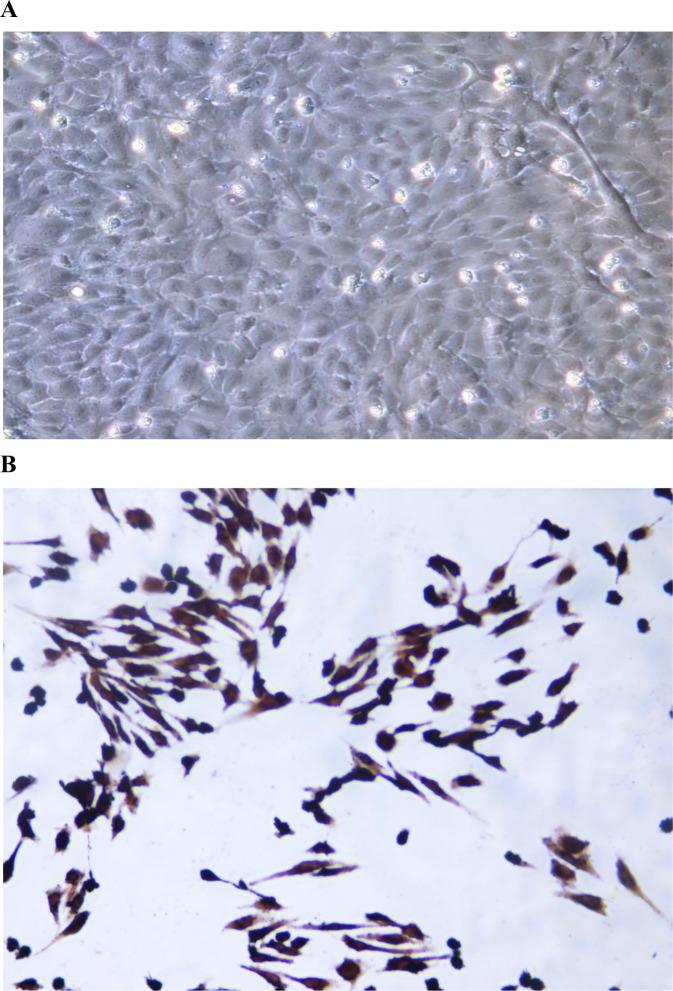
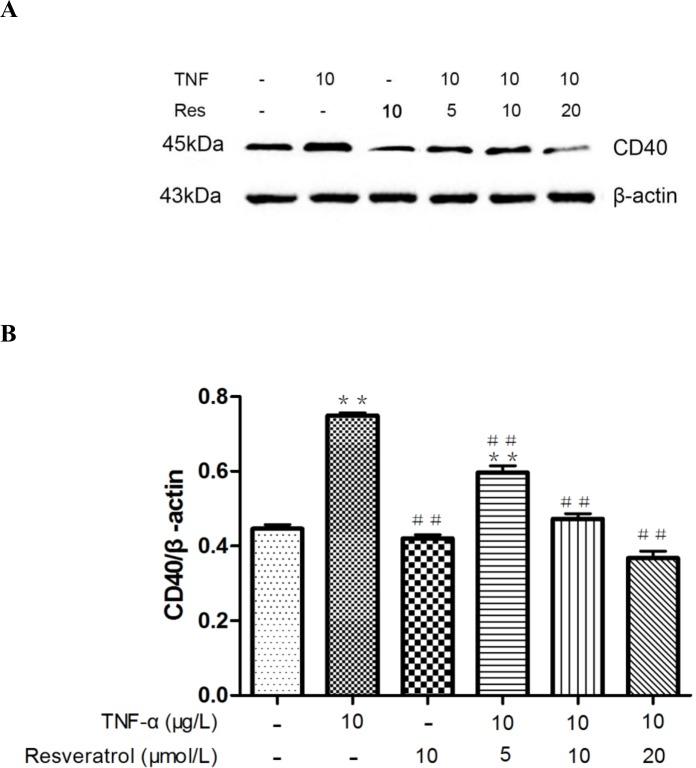
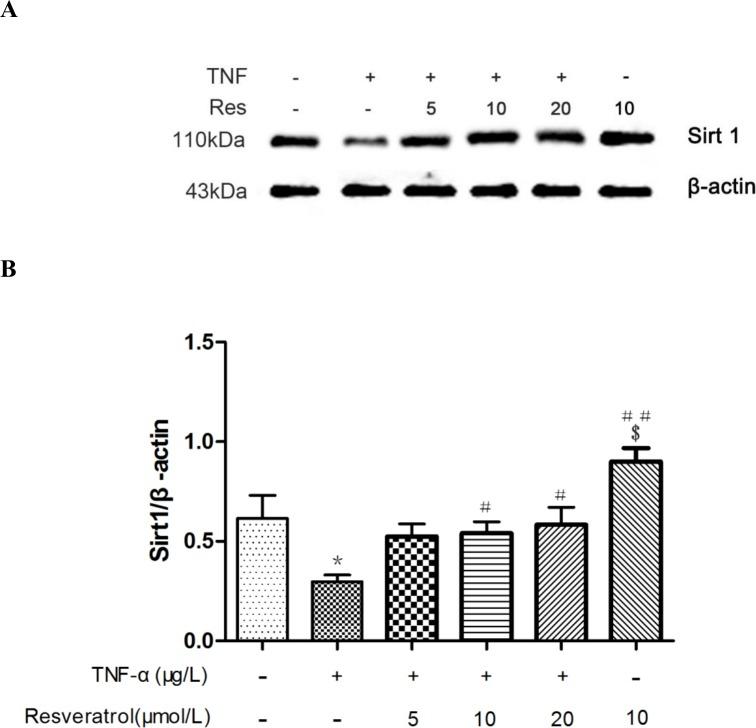
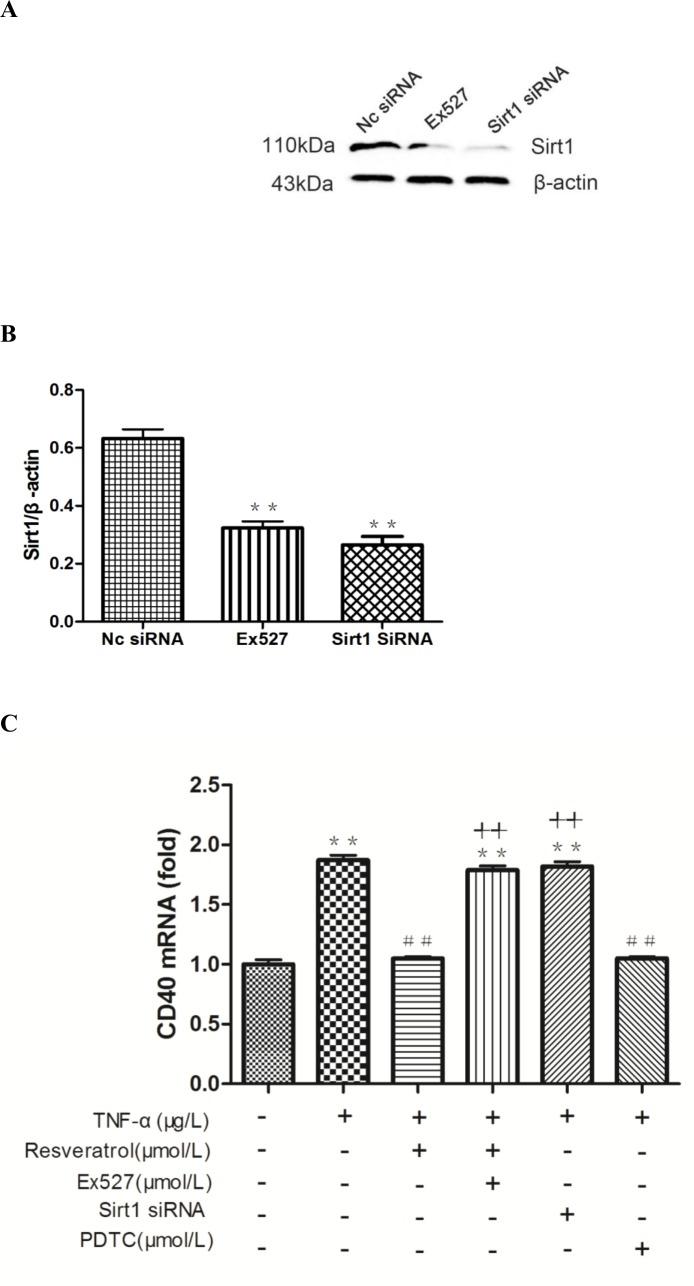
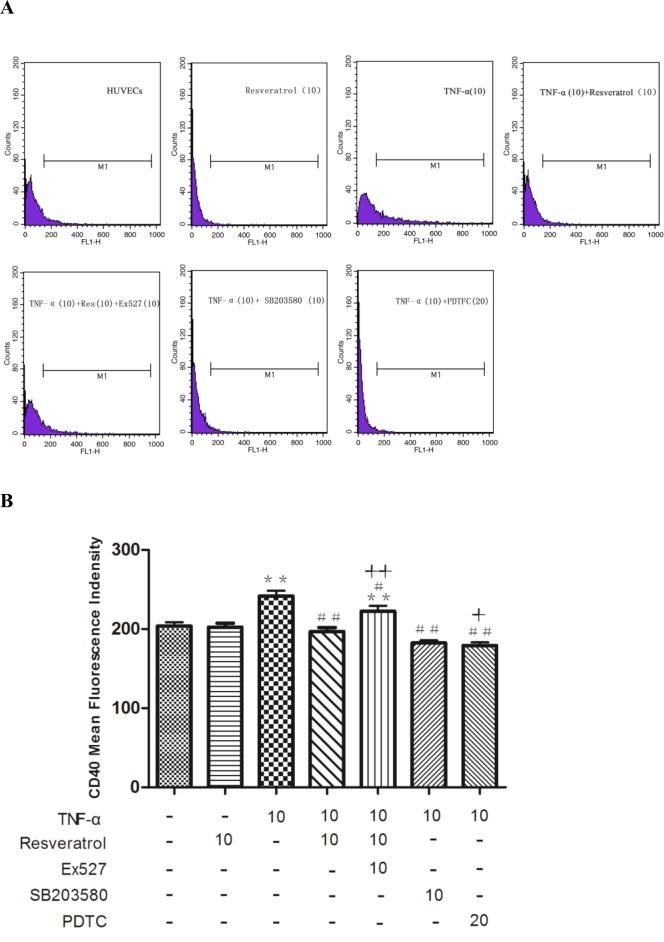
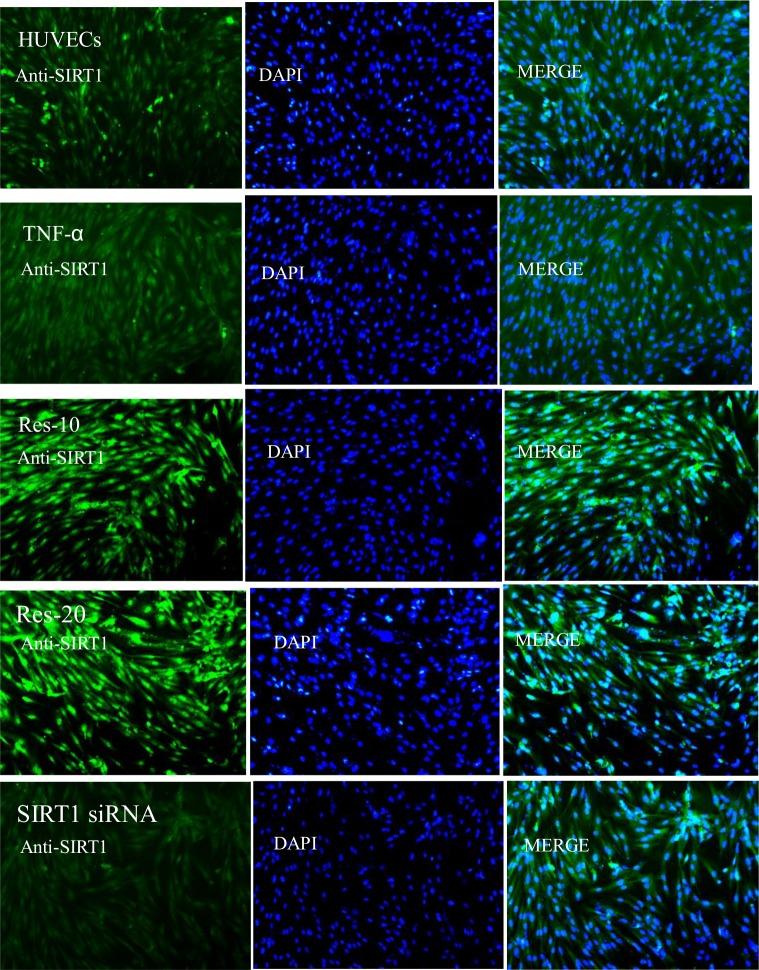
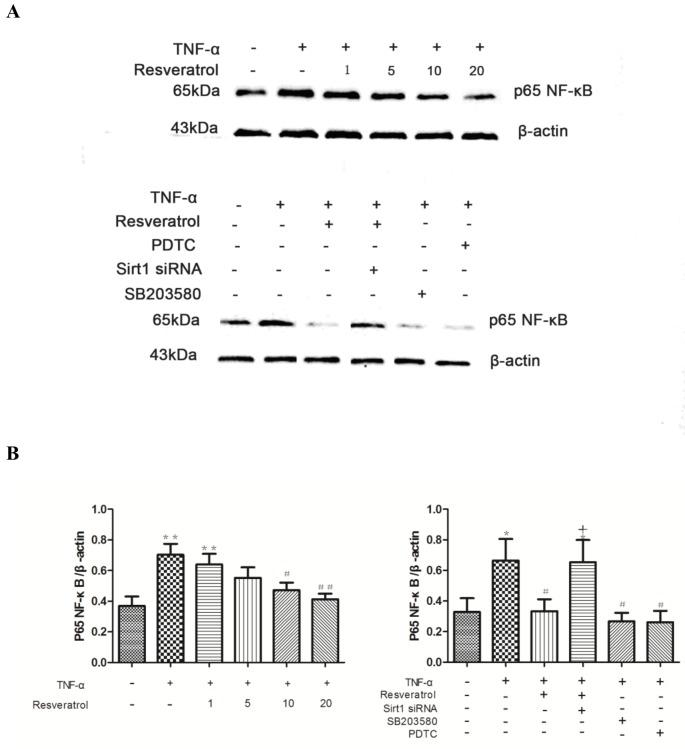
Inflammation and reactive oxygen species (ROS) play important roles in the pathogenesis of atherosclerosis. Resveratrol has been shown to possess anti-inflammatory and antioxidative stress activities, but the underlying mechanisms are not fully understood. In the present study, we investigated the molecular basis associated with the protective effects of resveratrol on tumor necrosis factor-alpha (TNF-α)-induced injury in human umbilical endothelial cells (HUVECs) using a variety of approaches including a cell viability assay, reverse transcription and quantitative polymerase chain reaction, western blot, and immunofluorescence staining. We showed that TNF-α induced CD40 expression and ROS production in cultured HUVECs, which were attenuated by resveratrol treatment. Also, resveratrol increased the expression of sirtuin 1 (SIRT1); and repression of SIRT1 by small-interfering RNA (siRNA) and the SIRT1 inhibitor Ex527 reduced the inhibitory effects of resveratrol on CD40 expression and ROS generation. In addition, resveratrol downregulated the levels of p65 and phospho-p38 MAPK, but this inhibitory effect was attenuated by the suppression of SIRT1 activity. Moreover, the p38 MAPK inhibitor SD203580 and the nuclear factor (NF)-κB inhibitor pyrrolidine dithiocarbamate (PDTC) achieved similar repressive effects as resveratrol on TNF-α-induced ROS generation and CD40 expression. Thus, our study provides a mechanistic link between resveratrol and the activation of SIRT1, the latter of which is involved in resveratrol-mediated repression of the p38 MAPK/NF-κB pathway and ROS production in TNF-α-treated HUVECs.
炎症和活性氧(ROS)在动脉粥样硬化的发病机制中起重要作用。白藜芦醇已被证明具有抗炎和抗氧化应激活性,但其潜在机制尚未完全阐明。在本研究中,我们使用多种方法,包括细胞活力测定、逆转录和定量聚合酶链反应、蛋白质免疫印迹及免疫荧光染色,研究了白藜芦醇对肿瘤坏死因子-α(TNF-α)诱导的人脐静脉内皮细胞(HUVECs)损伤的保护作用相关的分子基础。我们发现,TNF-α可诱导培养的HUVECs中CD40表达和ROS产生,而白藜芦醇处理可使其减弱。此外,白藜芦醇可增加沉默调节蛋白1(SIRT1)的表达;小干扰RNA(siRNA)抑制SIRT1及使用SIRT1抑制剂Ex527可降低白藜芦醇对CD40表达和ROS生成的抑制作用。另外,白藜芦醇可下调p65和磷酸化p38丝裂原活化蛋白激酶(MAPK)的水平,但抑制SIRT1活性可减弱这种抑制作用。此外,p38 MAPK抑制剂SD203580和核因子(NF)-κB抑制剂吡咯烷二硫代氨基甲酸盐(PDTC)对白藜芦醇抑制TNF-α诱导的ROS生成和CD40表达具有类似的作用。因此,我们的研究揭示了白藜芦醇与SIRT1激活之间的机制联系,后者参与白藜芦醇介导的对TNF-α处理的HUVECs中p38 MAPK/NF-κB信号通路及ROS产生的抑制作用。



 Zotero 插件