
桔小实蝇触角中雄性和雌性特异性嗅觉基因的鉴定
Identification of Male- and Female-Specific Olfaction Genes in Antennae of the Oriental Fruit Fly (Bactrocera dorsalis).
作者信息
Liu Zhao, Smagghe Guy, Lei Zhongren, Wang Jin-Jun
机构信息
Institute of Entomology, College of Plant Protection, Southwest University, Chongqing, 400715, China.
Department of Crop Protection, Faculty of Bioscience Engineering, Ghent University, B-9000, Ghent, Belgium.
出版信息
PLoS One. 2016 Feb 4;11(2):e0147783. doi: 10.1371/journal.pone.0147783. eCollection 2016.
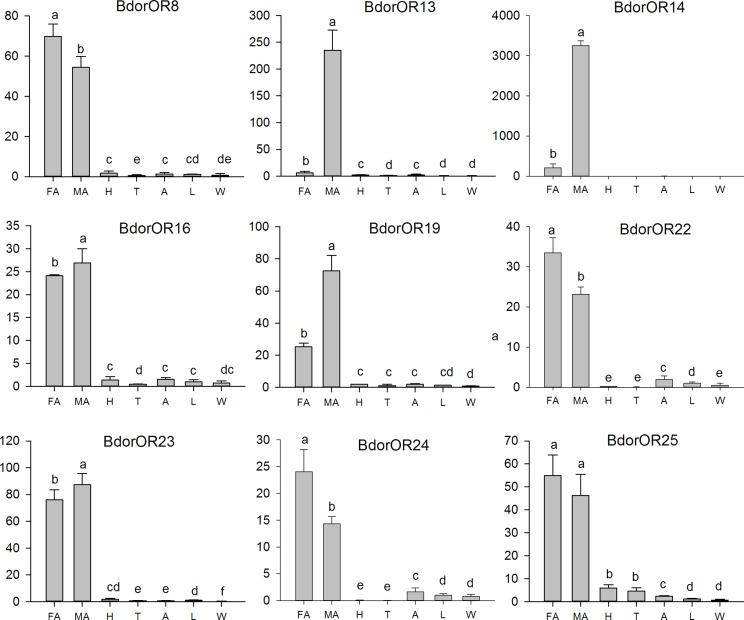
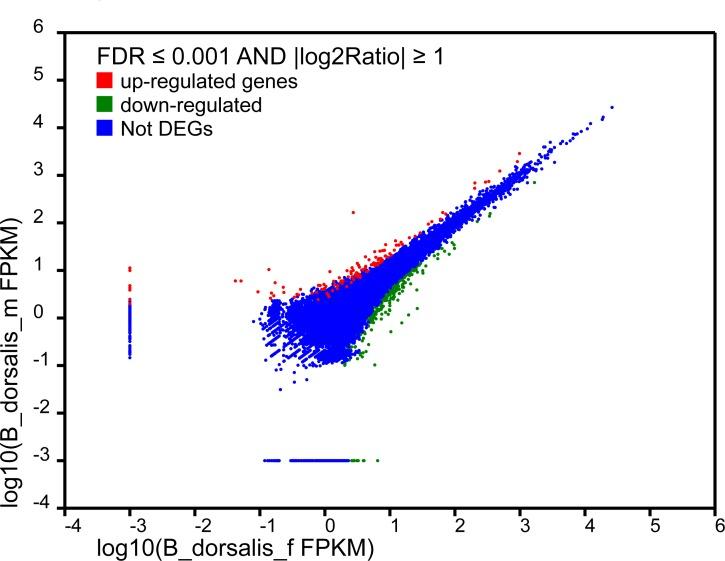
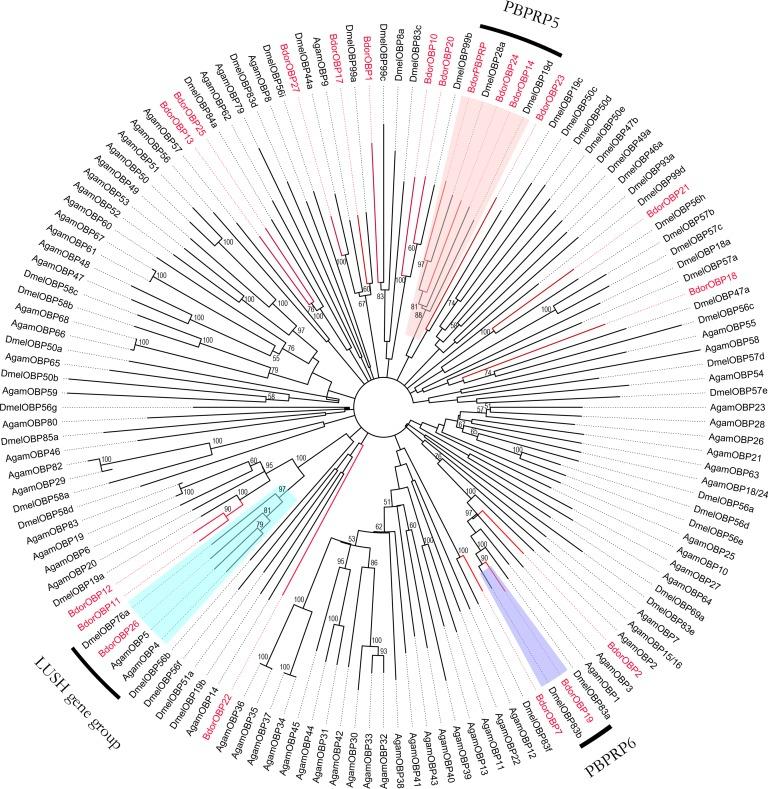
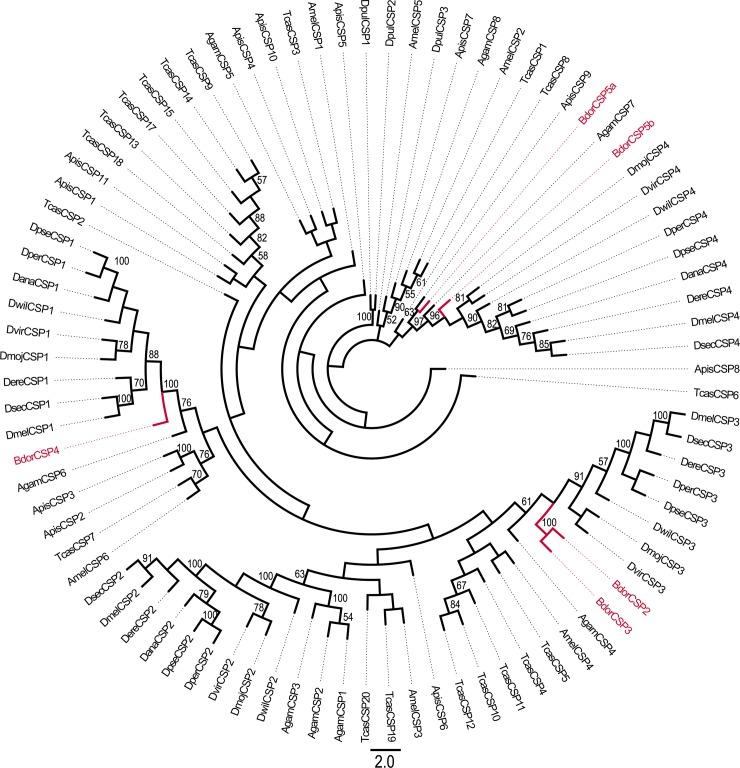
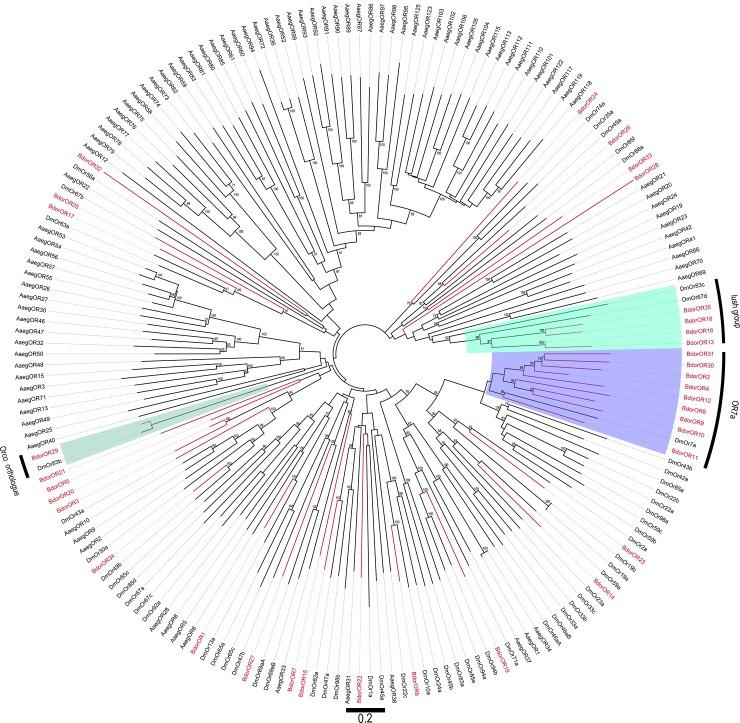
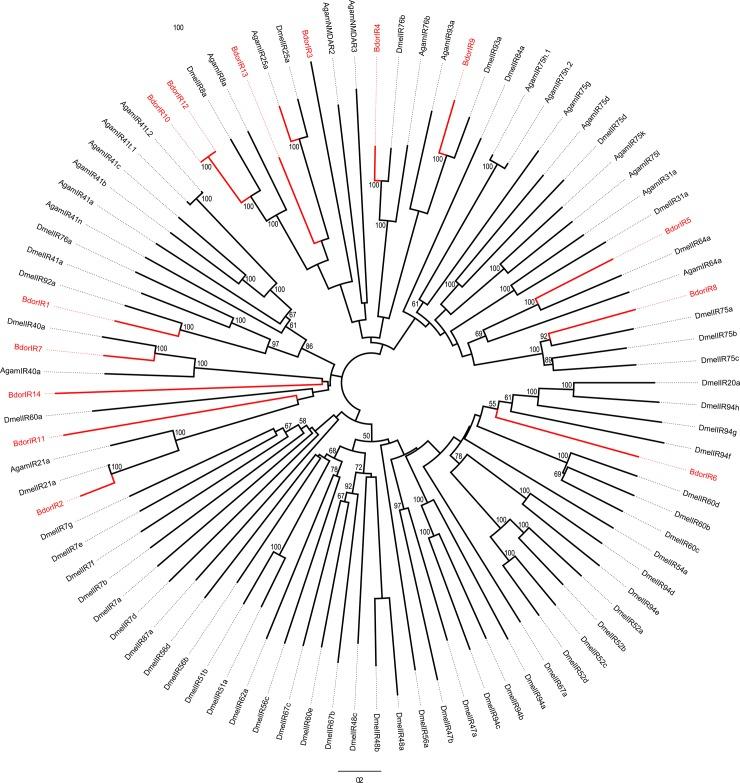
The oriental fruit fly (Bactrocera dorsalis) is a species of tephritid fruit fly, endemic to Southeast Asia but also introduced to many regions of the US, and it is one of the major pest species with a broad host range of cultivated and wild fruits. Although males of B. dorsalis respond strongly to methyl eugenol and this is used for monitoring and estimating populations, the molecular mechanism of the oriental fruit fly olfaction has not been elucidated yet. Therefore, in this project, using next generation sequencing technologies, we sequenced the transcriptome of the antennae of male and female adults of B. dorsalis. We identified a total of 20 candidate odorant binding proteins (OBPs), 5 candidate chemosensory proteins (CSPs), 35 candidate odorant receptors (ORs), 12 candidate ionotropic receptors (IRs) and 4 candidate sensory neuron membrane proteins (SNMPs). The sex-specific expression of these genes was determined and a subset of 9 OR genes was further characterized by qPCR with male and female antenna, head, thorax, abdomen, leg and wing samples. In the male antennae, 595 genes showed a higher expression, while 128 genes demonstrated a higher expression in the female antennae. Interestingly, 2 ORs (BdorOR13 and BdorOR14) were highly and specifically expressed in the antennae of males, and 4 ORs (BdorOR13, BdorOR16, BdorOR18 and BdorOR35) clustered with DmOR677, suggesting pheromone reception. We believe this study with these antennae-enriched OBPs, CSPs, ORs, IRs and SNMPs can play an important role in the detection of pheromones and general odorants, and so in turn our data improve our current understanding of insect olfaction at the molecular level and provide important information for disrupting the behavior of the oriental fruit fly using chemical communication methods.
东方果实蝇(橘小实蝇)是实蝇科果实蝇的一种,原产于东南亚,但也已被引入美国的许多地区,它是主要害虫物种之一,对多种栽培和野生水果均有广泛的寄主范围。尽管橘小实蝇雄虫对甲基丁香酚反应强烈,且该物质用于监测和估计种群数量,但东方果实蝇嗅觉的分子机制尚未阐明。因此,在本项目中,我们利用下一代测序技术对橘小实蝇雌雄成虫触角的转录组进行了测序。我们共鉴定出20种候选气味结合蛋白(OBP)、5种候选化学感受蛋白(CSP)、35种候选气味受体(OR)、12种候选离子型受体(IR)和4种候选感觉神经元膜蛋白(SNMP)。测定了这些基因的性别特异性表达,并通过qPCR对9个OR基因的一个子集进行了进一步表征,所用样本包括雌雄触角、头部、胸部、腹部、腿部和翅膀。在雄虫触角中,有595个基因表达较高,而在雌虫触角中有128个基因表达较高。有趣的是,2个OR(BdorOR13和BdorOR14)在雄虫触角中高度特异性表达,4个OR(BdorOR13、BdorOR16、BdorOR18和BdorOR35)与DmOR677聚类,表明具有性信息素接收功能。我们相信,这项针对富含触角的OBP、CSP、OR、IR和SNMP的研究,能够在性信息素和普通气味剂的检测中发挥重要作用,进而我们的数据增进了我们目前在分子水平上对昆虫嗅觉的理解,并为利用化学通讯方法干扰东方果实蝇的行为提供了重要信息。

 Zotero 插件