
从橄榄果实到橄榄油:相同农艺条件下种植的六个不同橄榄品种中酚类化合物的转移
From Olive Fruits to Olive Oil: Phenolic Compound Transfer in Six Different Olive Cultivars Grown under the Same Agronomical Conditions.
作者信息
Talhaoui Nassima, Gómez-Caravaca Ana María, León Lorenzo, De la Rosa Raúl, Fernández-Gutiérrez Alberto, Segura-Carretero Antonio
机构信息
Department of Analytical Chemistry, University of Granada, Avda. Fuentenueva s/n, 18071 Granada, Spain.
Research and Development of Functional Food Centre (CIDAF), PTS Granada, Avda. del Conocimiento s/n, Edificio Bioregión, 18016 Granada, Spain.
出版信息
Int J Mol Sci. 2016 Mar 4;17(3):337. doi: 10.3390/ijms17030337.
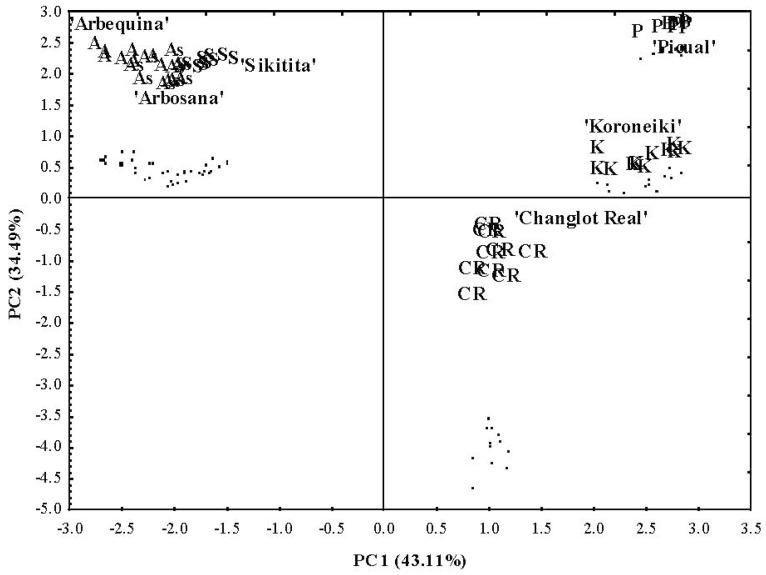
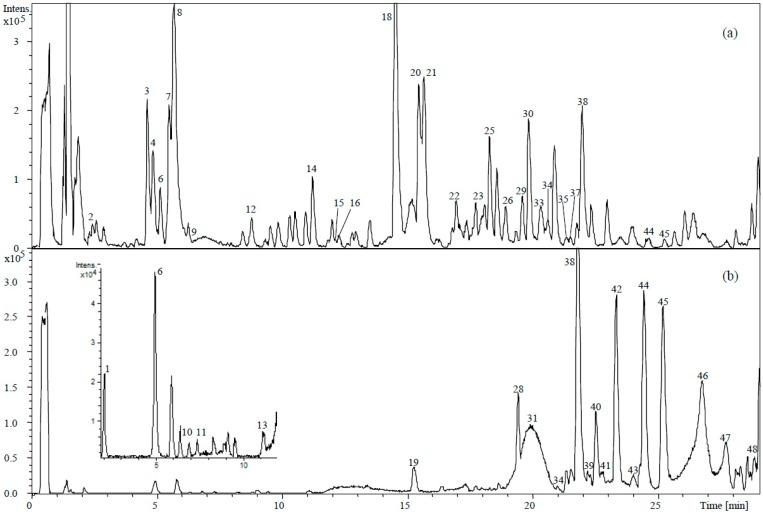
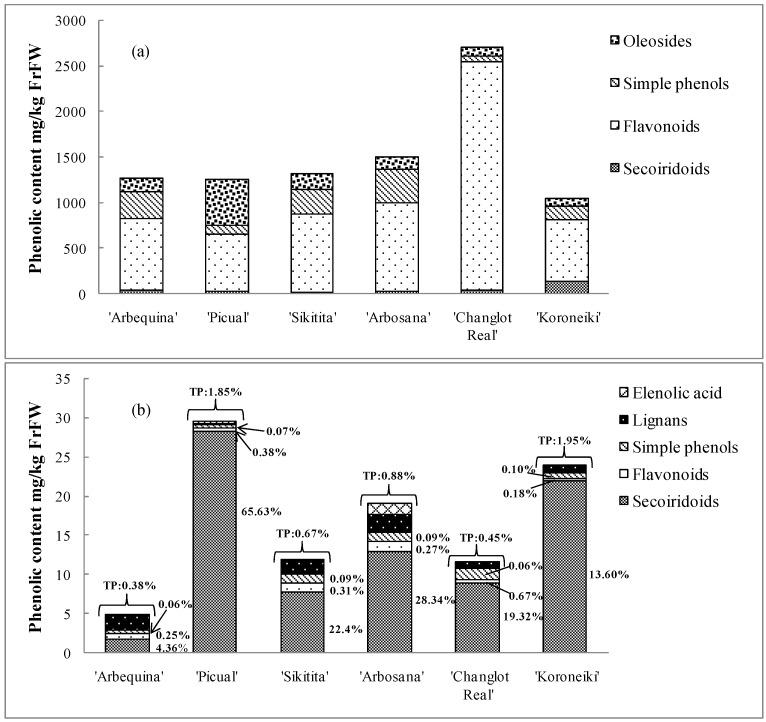
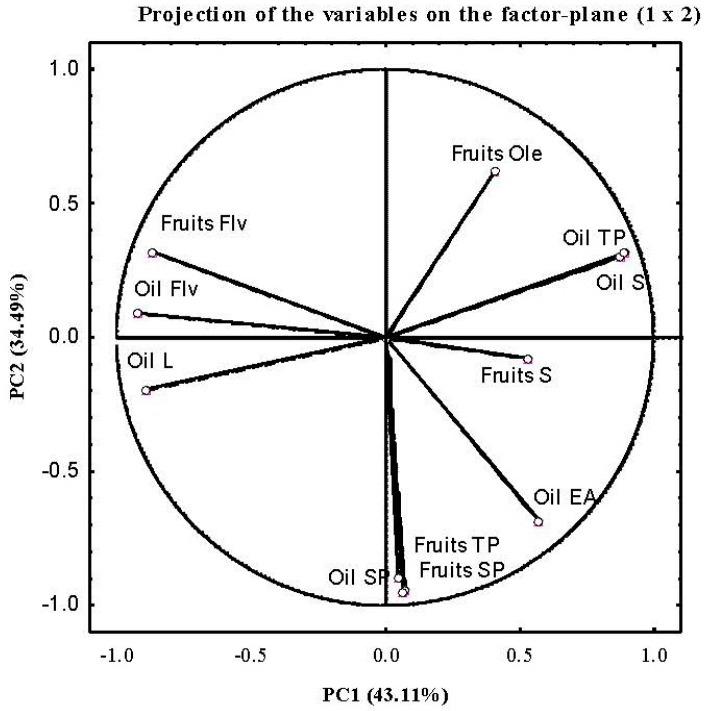
Phenolic compounds are responsible of the nutritional and sensory quality of extra-virgin olive oil (EVOO). The composition of phenolic compounds in EVOO is related to the initial content of phenolic compounds in the olive-fruit tissues and the activity of enzymes acting on these compounds during the industrial process to produce the oil. In this work, the phenolic composition was studied in six major cultivars grown in the same orchard under the same agronomical and environmental conditions in an effort to test the effects of cultivars on phenolic composition in fruits and oils as well as on transfer between matrices. The phenolic fractions were identified and quantified using high-performance liquid chromatography-diode array detector-time-of-flight-mass spectrometry. A total of 33 phenolic compounds were determined in the fruit samples and a total of 20 compounds in their corresponding oils. Qualitative and quantitative differences in phenolic composition were found among cultivars in both matrices, as well as regarding the transfer rate of phenolic compounds from fruits to oil. The results also varied according to the different phenolic groups evaluated, with secoiridoids registering the highest transfer rates from fruits to oils. Moreover, wide-ranging differences have been noticed between cultivars for the transfer rates of secoiridoids (4.36%-65.63% of total transfer rate) and for flavonoids (0.18%-0.67% of total transfer rate). 'Picual' was the cultivar that transferred secoiridoids to oil at the highest rate, whereas 'Changlot Real' was the cultivar that transferred flavonoids at the highest rates instead. Principal-component analysis confirmed a strong genetic effect on the basis of the phenolic profile both in the olive fruits and in the oils.
酚类化合物决定了特级初榨橄榄油(EVOO)的营养和感官品质。EVOO中酚类化合物的组成与橄榄果实组织中酚类化合物的初始含量以及在生产橄榄油的工业过程中作用于这些化合物的酶的活性有关。在这项研究中,对在同一果园、相同农艺和环境条件下种植的六个主要品种的酚类组成进行了研究,以测试品种对果实和油中酚类组成以及基质间转移的影响。使用高效液相色谱-二极管阵列检测器-飞行时间质谱仪对酚类组分进行鉴定和定量。在果实样品中总共测定了33种酚类化合物,在其相应的油中总共测定了20种化合物。在两种基质中,不同品种在酚类组成上存在定性和定量差异,酚类化合物从果实到油的转移率也有所不同。结果还因所评估的不同酚类基团而异,裂环烯醚萜类化合物从果实到油的转移率最高。此外,裂环烯醚萜类化合物(占总转移率的4.36%-65.63%)和黄酮类化合物(占总转移率的0.18%-0.67%)的转移率在不同品种间存在很大差异。“皮夸尔”是裂环烯醚萜类化合物向油中转移率最高的品种,而“长洛特雷亚尔”则是黄酮类化合物转移率最高的品种。主成分分析证实了橄榄果实和油中酚类特征存在很强的遗传效应。
 Zotero 插件