
价格补贴对印度城市6至23个月大儿童强化包装婴儿谷物减少缺铁性贫血的成本效益分析
Cost-Effectiveness of Price Subsidies on Fortified Packaged Infant Cereals in Reducing Iron Deficiency Anemia in 6-23-Month-Old-Children in Urban India.
作者信息
Plessow Rafael, Arora Narendra Kumar, Brunner Beatrice, Wieser Simon
机构信息
Winterthur Institute of Health Economics, Zurich University of Applied Sciences, Winterthur, Switzerland.
International Clinical Epidemiology Network, INCLEN, New Delhi, India.
出版信息
PLoS One. 2016 Apr 13;11(4):e0152800. doi: 10.1371/journal.pone.0152800. eCollection 2016.
INTRODUCTION
Iron deficiency anaemia (IDA) is a major public health problem in India and especially harmful in early childhood due to its impact on cognitive development and increased all-cause mortality. We estimate the cost-effectiveness of price subsidies on fortified packaged infant cereals (F-PICs) in reducing IDA in 6-23-monthold children in urban India.
MATERIALS AND METHODS
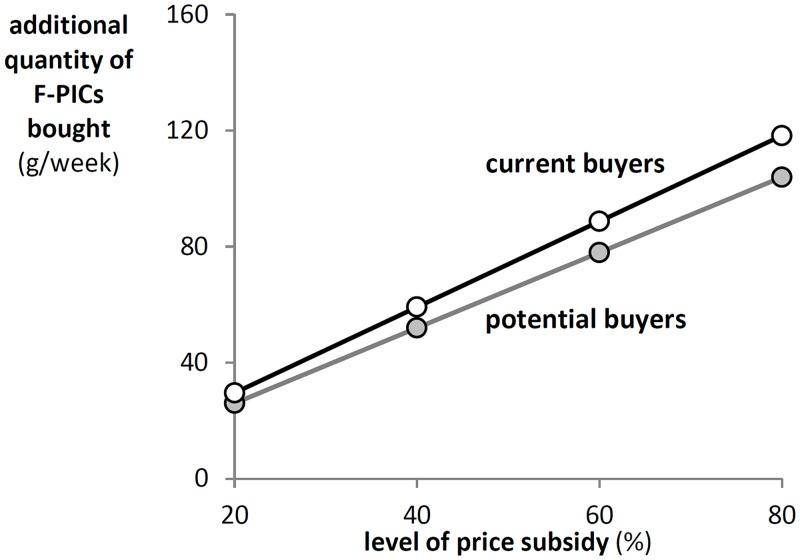
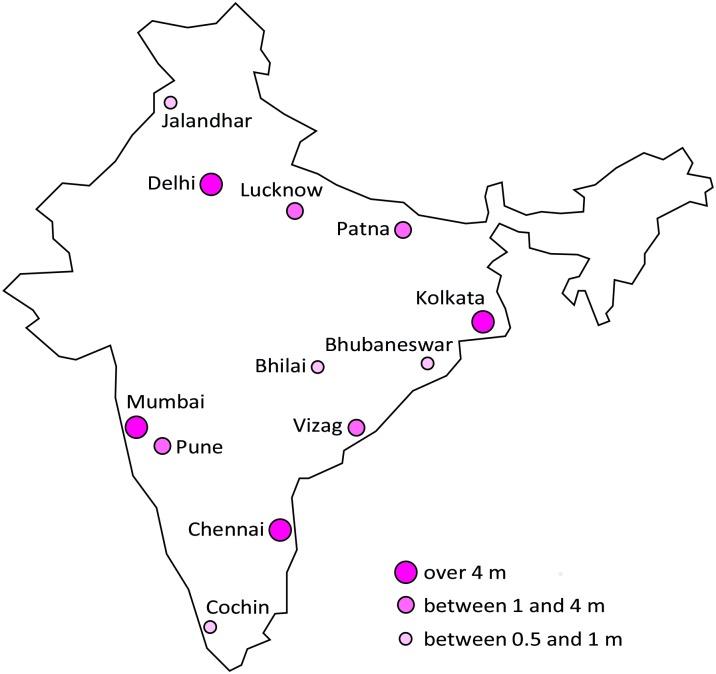
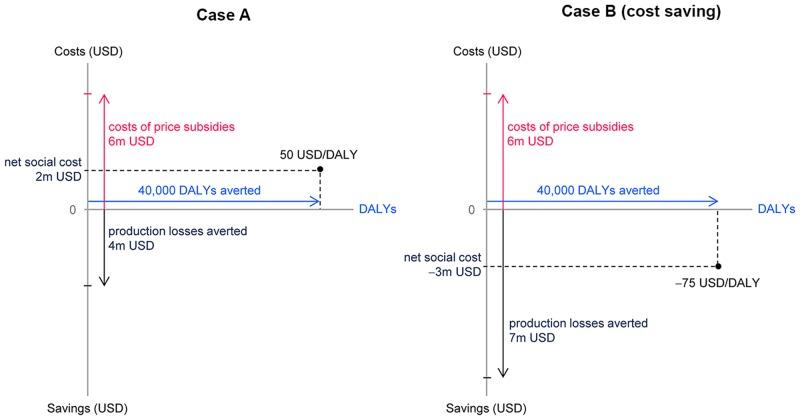
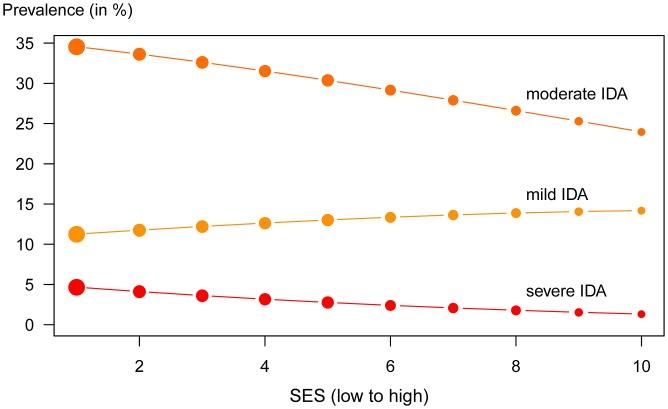
Cost-effectiveness is estimated by comparing the net social cost of price subsidies with the disability-adjusted life-years (DALYs) averted with price subsidies. The net social costs correspond to the cost of the subsidy minus the monetary costs saved by reducing IDA. The estimation proceeds in three steps: 1) the current lifetime costs of IDA are assessed with a health economic model combining the prevalence of anemia, derived from a large population survey, with information on the health consequences of IDA and their costs in terms of mortality, morbidity, and DALYs. 2) The effects of price subsidies on the demand for F-PICs are assessed with a market survey among 4801 households in 12 large Indian cities. 3) The cost-effectiveness is calculated by combining the findings of the first two steps with the results of a systematic review on the effectiveness of F-PICs in reducing IDA. We compare the cost-effectiveness of interventions that differ in the level of the subsidy and in the socio-economic strata (SES) eligible for the subsidy.
RESULTS
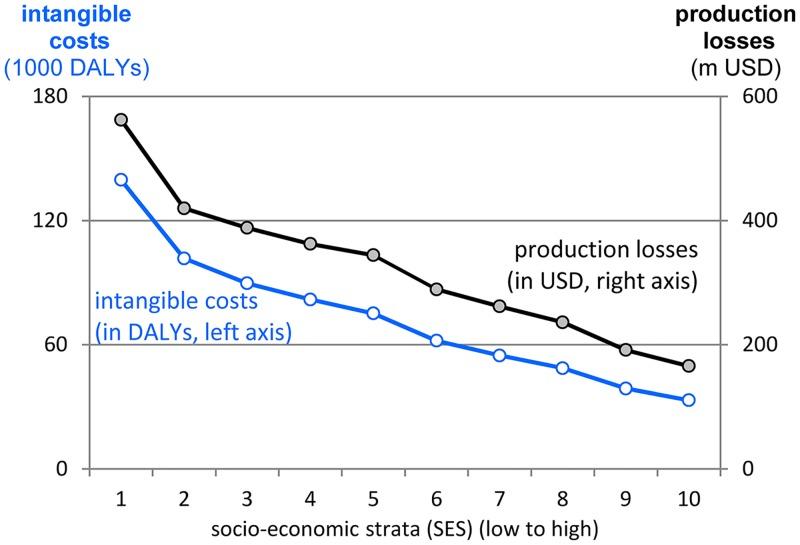
The lifetime social costs of IDA in 6-23-month-old children in large Indian cities amount to production losses of 3222 USD and to 726,000 DALYs. Poor households incur the highest costs, yet even wealthier households suffer substantial losses. The market survey reveals that few households currently buy F-PICs, with the share ranging from 14% to 36%. Wealthier households are generally more likely to buy FPICs. The costs of the subsidies per DALY averted range from 909 to 3649 USD. Interventions targeted at poorer households are most effective. Almost all interventions are cost saving from a societal perspective when taking into account the reduction of future production losses. Return per DALY averted ranges between gains of 1655 USD to a cost of 411 USD.
CONCLUSION
Price subsidies on F-PICs are a cost-effective way to reduce the social costs of IDA in 6-23-month-old children in large Indian cities. Interventions targeting poorer households are especially cost-effective.
引言
缺铁性贫血(IDA)是印度一个主要的公共卫生问题,在幼儿期尤其有害,因为它会影响认知发展并增加全因死亡率。我们估计了强化包装婴儿谷物(F-PICs)价格补贴在降低印度城市6至23个月大儿童缺铁性贫血方面的成本效益。
材料与方法
通过比较价格补贴的净社会成本与价格补贴避免的残疾调整生命年(DALYs)来估计成本效益。净社会成本相当于补贴成本减去因减少缺铁性贫血而节省的货币成本。估计分三步进行:1)使用健康经济模型评估缺铁性贫血的当前终身成本,该模型将来自大规模人口调查的贫血患病率与缺铁性贫血的健康后果及其在死亡率、发病率和残疾调整生命年方面的成本信息相结合。2)通过对印度12个大城市的4801户家庭进行市场调查,评估价格补贴对F-PICs需求的影响。3)将前两步的结果与关于F-PICs在降低缺铁性贫血有效性的系统评价结果相结合,计算成本效益。我们比较了补贴水平和有资格获得补贴的社会经济阶层(SES)不同的干预措施的成本效益。
结果
印度大城市6至23个月大儿童缺铁性贫血的终身社会成本相当于3222美元的生产损失和726,000个残疾调整生命年。贫困家庭承担的成本最高,但即使是较富裕的家庭也遭受了重大损失。市场调查显示,目前很少有家庭购买F-PICs,购买比例从14%到36%不等。较富裕的家庭通常更有可能购买F-PICs。每避免一个残疾调整生命年的补贴成本在909美元至3649美元之间。针对贫困家庭的干预措施最有效。从社会角度考虑未来生产损失的减少,几乎所有干预措施都节省成本。每避免一个残疾调整生命年的回报在收益1655美元到成本411美元之间。
结论
F-PICs价格补贴是降低印度大城市6至23个月大儿童缺铁性贫血社会成本的一种具有成本效益的方式。针对贫困家庭的干预措施尤其具有成本效益。


 Zotero 插件