
化疗药物诱导的Oct4表达导致膀胱癌的耐药性和肿瘤复发。
Chemotherapeutics-induced Oct4 expression contributes to drug resistance and tumor recurrence in bladder cancer.
作者信息
Lu Chia-Sing, Shieh Gia-Shing, Wang Chung-Teng, Su Bing-Hua, Su Yu-Chu, Chen Yi-Cheng, Su Wu-Chou, Wu Pensee, Yang Wen-Horng, Shiau Ai-Li, Wu Chao-Liang
机构信息
Institute of Basic Medical Sciences, College of Medicine, National Cheng Kung University, Tainan, Taiwan.
Department of Urology, Tainan Hospital, Ministry of Health and Welfare, Executive Yuan, Tainan, Taiwan.
出版信息
Oncotarget. 2017 May 9;8(19):30844-30858. doi: 10.18632/oncotarget.9602.
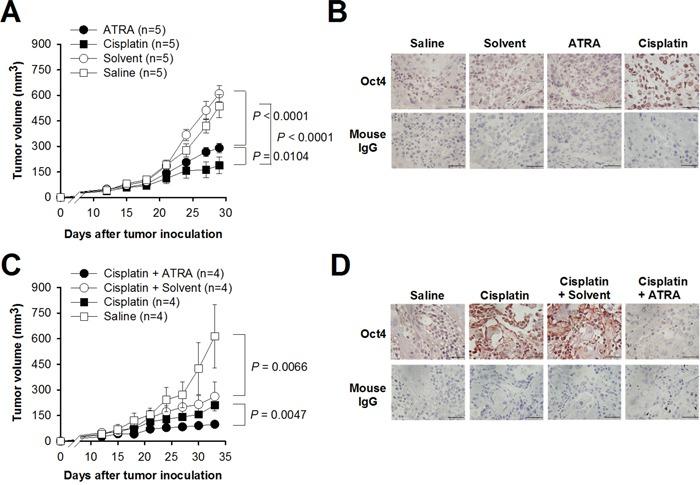
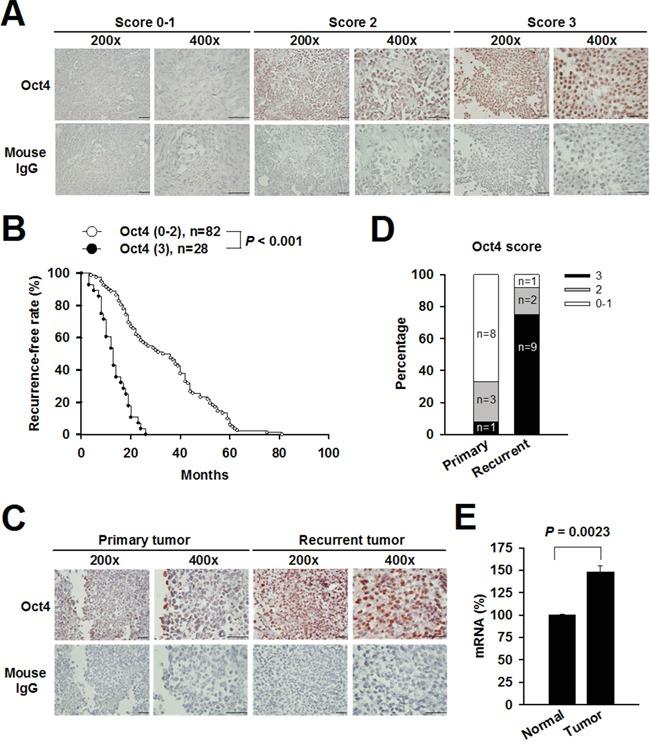
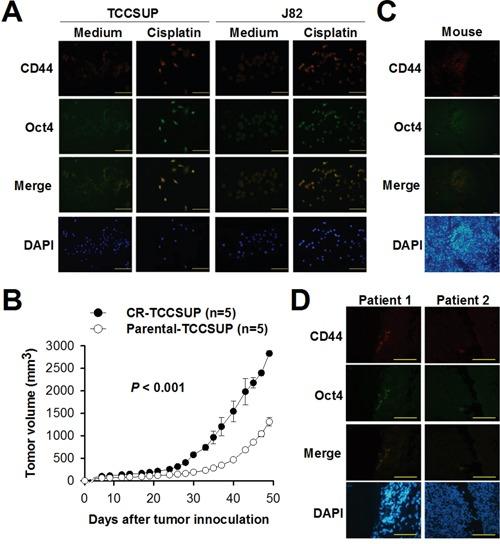
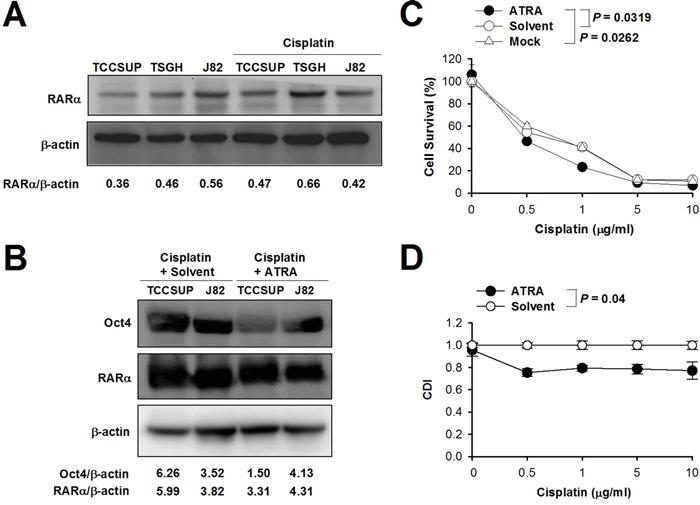
Cancer cells initially characterized as sensitive to chemotherapy may acquire resistance to chemotherapy and lead to tumor recurrence through the expansion of drug-resistant population. Acquisition of drug resistance to conventional chemotherapy is a major obstacle in the treatment of recurrent cancer. Here we investigated whether anticancer drugs induced Oct4 expression, thereby contributing to acquired drug resistance and tumor recurrence in bladder cancer. We identified a positive correlation of Oct4 expression with tumor recurrence in 122 clinical specimens of superficial high-grade (stages T1-2) bladder transitional cell carcinoma (TCC). Increased Oct4 levels in bladder tumors were associated with short recurrence-free intervals in the patients. Chemotherapy induced Oct4 expression in bladder cancer cells. Notably, treatment with cisplatin increased CD44-positive bladder cancer cells expressing Oct4, representing cancer stem-like cell subpopulation. Forced expression of Oct4 reduced, whereas knockdown of Oct4 enhanced, drug sensitivity in bladder cancer cells. Furthermore, tumor cells overexpressing Oct4 responded poorly to cisplatin in vivo. In regard to clinical relevance, inhibition of Oct4 by all-trans retinoic acid (ATRA) synergistically increased sensitivity to cisplatin in bladder cancer cells. Furthermore, the combination of cisplatin and ATRA was superior to cisplatin alone in suppressing tumor growth. Therefore, our results provide evidence that Oct4 increases drug resistance and implicate that inhibition of Oct4 may be a therapeutic strategy to circumvent drug resistance.
最初被表征为对化疗敏感的癌细胞可能会获得化疗耐药性,并通过耐药群体的扩增导致肿瘤复发。对传统化疗产生耐药性是复发性癌症治疗中的一个主要障碍。在此,我们研究了抗癌药物是否会诱导Oct4表达,从而导致膀胱癌获得性耐药和肿瘤复发。我们在122例浅表性高级别(T1-2期)膀胱移行细胞癌(TCC)临床标本中发现Oct4表达与肿瘤复发呈正相关。膀胱肿瘤中Oct4水平升高与患者无复发生存期短相关。化疗可诱导膀胱癌细胞中Oct4表达。值得注意的是,顺铂治疗可增加表达Oct4的CD44阳性膀胱癌细胞,这些细胞代表癌干细胞样亚群。Oct4的强制表达降低了膀胱癌细胞的药物敏感性,而Oct4的敲低则增强了药物敏感性。此外,过表达Oct4的肿瘤细胞在体内对顺铂反应不佳。就临床相关性而言,全反式维甲酸(ATRA)抑制Oct4可协同增加膀胱癌细胞对顺铂的敏感性。此外,顺铂与ATRA联合使用在抑制肿瘤生长方面优于单独使用顺铂。因此,我们的结果提供了证据表明Oct4增加耐药性,并暗示抑制Oct4可能是一种规避耐药性的治疗策略。


 Zotero 插件