
短暂的细胞外基质蛋白酶活性促进突触可塑性。
Transient ECM protease activity promotes synaptic plasticity.
作者信息
Magnowska Marta, Gorkiewicz Tomasz, Suska Anna, Wawrzyniak Marcin, Rutkowska-Wlodarczyk Izabela, Kaczmarek Leszek, Wlodarczyk Jakub
机构信息
Department of Molecular and Cellular Neurobiology, Nencki Institute, Pasteura 3, Warsaw, 02-093, Poland.
Department of Neurophysiology, Nencki Institute, Pasteura 3, Warsaw, 02-093, Poland.
出版信息
Sci Rep. 2016 Jun 10;6:27757. doi: 10.1038/srep27757.
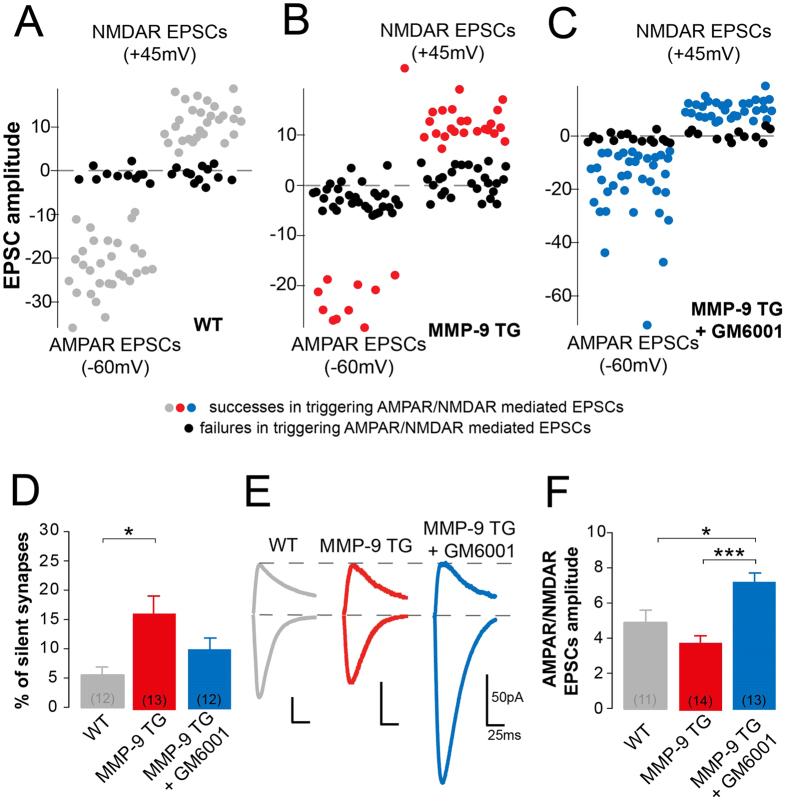
Activity-dependent proteolysis at a synapse has been recognized as a pivotal factor in controlling dynamic changes in dendritic spine shape and function; however, excessive proteolytic activity is detrimental to the cells. The exact mechanism of control of these seemingly contradictory outcomes of protease activity remains unknown. Here, we reveal that dendritic spine maturation is strictly controlled by the proteolytic activity, and its inhibition by the endogenous inhibitor (Tissue inhibitor of matrix metalloproteinases-1 - TIMP-1). Excessive proteolytic activity impairs long-term potentiation of the synaptic efficacy (LTP), and this impairment could be rescued by inhibition of protease activity. Moreover LTP is altered persistently when the ability of TIMP-1 to inhibit protease activity is abrogated, further demonstrating the role of such inhibition in the promotion of synaptic plasticity under well-defined conditions. We also show that dendritic spine maturation involves an intermediate formation of elongated spines, followed by their conversion into mushroom shape. The formation of mushroom-shaped spines is accompanied by increase in AMPA/NMDA ratio of glutamate receptors. Altogether, our results identify inhibition of protease activity as a critical regulatory mechanism for dendritic spines maturation.
突触处依赖活动的蛋白水解作用已被认为是控制树突棘形状和功能动态变化的关键因素;然而,过度的蛋白水解活性对细胞有害。蛋白酶活性的这些看似矛盾的结果的确切控制机制仍然未知。在这里,我们揭示树突棘成熟受到蛋白水解活性及其内源性抑制剂(基质金属蛋白酶组织抑制剂-1 - TIMP-1)抑制的严格控制。过度的蛋白水解活性损害突触效能的长时程增强(LTP),并且这种损害可以通过抑制蛋白酶活性来挽救。此外,当TIMP-1抑制蛋白酶活性的能力被消除时,LTP会持续改变,进一步证明了这种抑制在明确条件下促进突触可塑性中的作用。我们还表明,树突棘成熟涉及细长棘的中间形成,随后它们转变为蘑菇形状。蘑菇状棘的形成伴随着谷氨酸受体AMPA/NMDA比值的增加。总之,我们的结果确定蛋白酶活性的抑制是树突棘成熟的关键调节机制。




 Zotero 插件