
普通狨猴中mTOR的药物抑制:雷帕霉素对非人类灵长类动物蛋白质稳态调节因子的影响。
Pharmaceutical inhibition of mTOR in the common marmoset: effect of rapamycin on regulators of proteostasis in a non-human primate.
作者信息
Lelegren Matthew, Liu Yuhong, Ross Corinna, Tardif Suzette, Salmon Adam B
机构信息
Geriatric Research, Education and Clinical Center, South Texas Veterans Health Care System, San Antonio, TX, USA.
The Sam and Ann Barshop Institute for Longevity and Aging Studies, The University of Texas Health Science Center at San Antonio, San Antonio, TX, USA.
出版信息
Pathobiol Aging Age Relat Dis. 2016 Jun 23;6:31793. doi: 10.3402/pba.v6.31793. eCollection 2016.
BACKGROUND
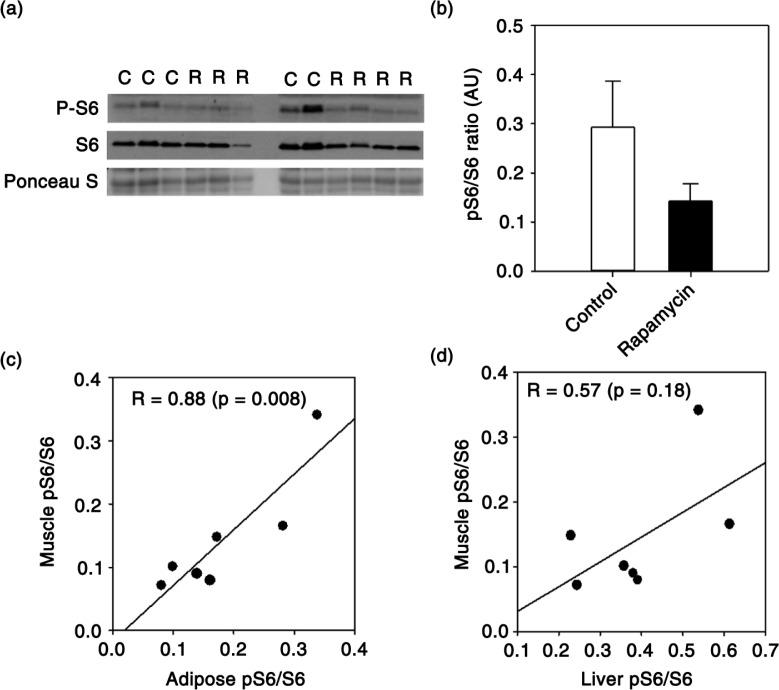
Inhibition of mechanistic target of rapamycin (mTOR) has emerged as a viable means to lengthen lifespan and healthspan in mice, although it is still unclear whether these benefits will extend to other mammalian species. We previously reported results from a pilot experiment wherein common marmosets (Callithrix jacchus) were treated orally with rapamycin to reduce mTOR signaling in vivo in line with previous reports in mice and humans. Further, long-term treatment did not significantly alter body weight, daily activity, blood lipid concentrations, or glucose metabolism in this cohort.
METHODS
In this study, we report on the molecular consequences of rapamycin treatment in marmosets on mechanisms that regulate protein homeostasis (proteostasis) in vivo. There is growing appreciation for the role of proteostasis in longevity and for the role that mTOR plays in regulating this process. Tissue samples of liver and skeletal muscle from marmosets in our pilot cohort were assessed for expression and activity of components of the ubiquitin-proteasome system, macroautophagy, and protein chaperones.
RESULTS
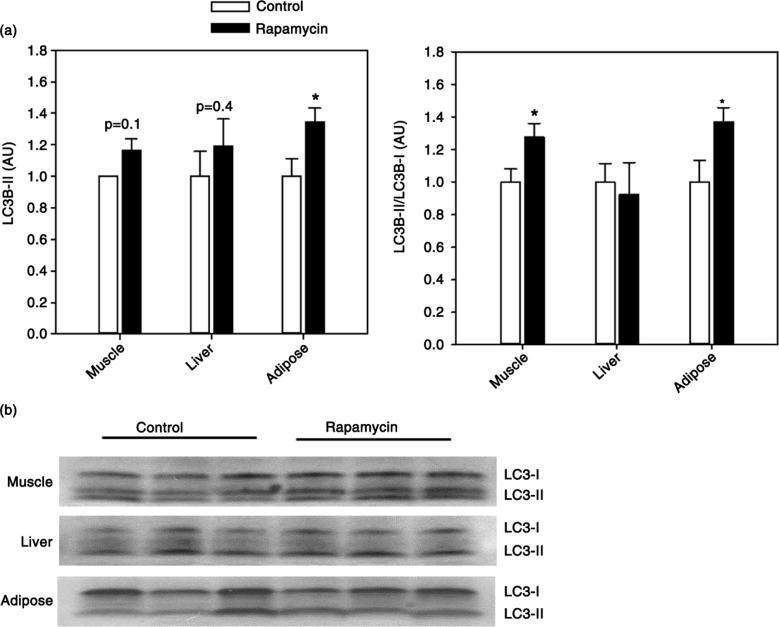
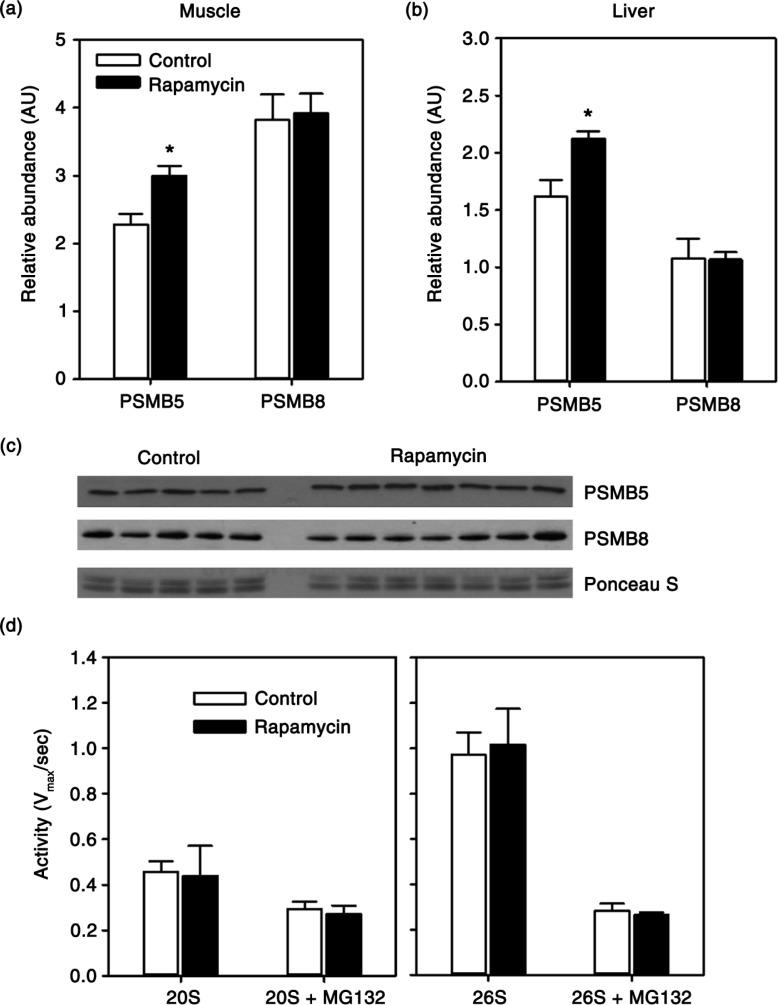
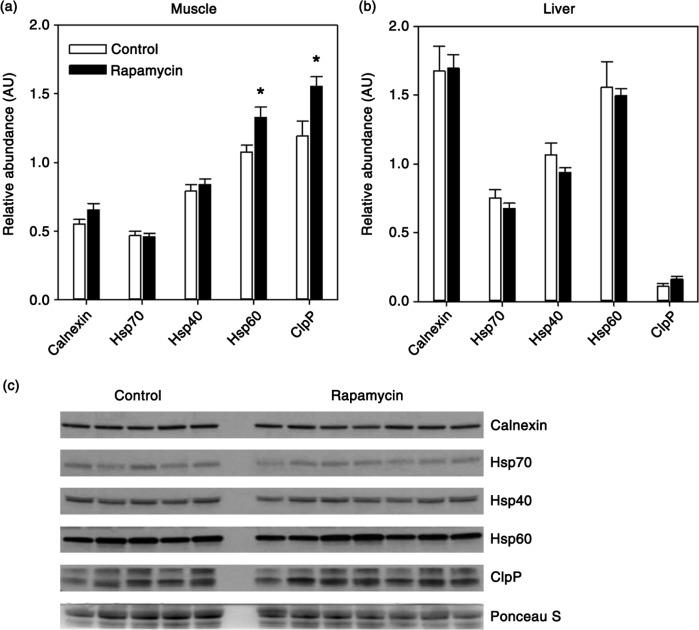
Rapamycin treatment was associated with increased expression of PSMB5, a core subunit of the 20S proteasome, but not PSMB8 which is involved in the formation of the immunoproteasome, in the skeletal muscle and liver. Surprisingly, proteasome activity measured in these tissues was not affected by rapamycin. Rapamycin treatment was associated with an increased expression of mitochondria-targeted protein chaperones in skeletal muscle, but not liver. Finally, autophagy was increased in skeletal muscle and adipose, but not liver, from rapamycin-treated marmosets.
CONCLUSIONS
Overall, these data show tissue-specific upregulation of some, but not all, components of the proteostasis network in common marmosets treated with a pharmaceutical inhibitor of mTOR.
背景
抑制雷帕霉素作用机制靶点(mTOR)已成为延长小鼠寿命和健康期的一种可行方法,尽管这些益处是否会扩展到其他哺乳动物物种仍不清楚。我们之前报道了一项初步实验的结果,其中普通狨猴(绢毛猴)按照之前小鼠和人类的报道,口服雷帕霉素以在体内降低mTOR信号传导。此外,长期治疗并未显著改变该队列中狨猴的体重、日常活动、血脂浓度或葡萄糖代谢。
方法
在本研究中,我们报告了雷帕霉素治疗狨猴对体内调节蛋白质稳态(蛋白稳态)机制的分子影响。人们越来越认识到蛋白稳态在长寿中的作用以及mTOR在调节这一过程中所起的作用。对我们初步队列中狨猴的肝脏和骨骼肌组织样本进行评估,以检测泛素 - 蛋白酶体系统、巨自噬和蛋白质伴侣的成分的表达和活性。
结果
雷帕霉素治疗与骨骼肌和肝脏中20S蛋白酶体的核心亚基PSMB5的表达增加有关,但与参与免疫蛋白酶体形成的PSMB8无关。令人惊讶的是,在这些组织中测得的蛋白酶体活性不受雷帕霉素影响。雷帕霉素治疗与骨骼肌中线粒体靶向蛋白伴侣的表达增加有关,但与肝脏无关。最后,雷帕霉素治疗的狨猴的骨骼肌和脂肪中的自噬增加,但肝脏中未增加。
结论
总体而言,这些数据表明,在用mTOR的药物抑制剂治疗的普通狨猴中,蛋白稳态网络的一些(但不是全部)成分存在组织特异性上调。
 Zotero 插件