
抑制Polo样激酶1可降低携带T790M突变的非小细胞肺癌对表皮生长因子受体抑制的获得性耐药。
Polo-like kinase 1 inhibition diminishes acquired resistance to epidermal growth factor receptor inhibition in non-small cell lung cancer with T790M mutations.
作者信息
Wang Yuehong, Singh Ratnakar, Wang Liguang, Nilsson Monique, Goonatilake Ruchitha, Tong Pan, Li Lerong, Giri Uma, Villalobos Pamela, Mino Barbara, Rodriguez-Canales Jaime, Wistuba Ignacio, Wang Jing, Heymach John V, Johnson Faye M
机构信息
Department of Respiratory Medicine, The First Affiliated Hospital, College of Medicine, Zhejiang University, Hangzhou, China.
Department of Thoracic/Head and Neck Medical Oncology, The University of Texas MD Anderson Cancer Center, Houston, Texas, USA.
出版信息
Oncotarget. 2016 Jul 26;7(30):47998-48010. doi: 10.18632/oncotarget.10332.
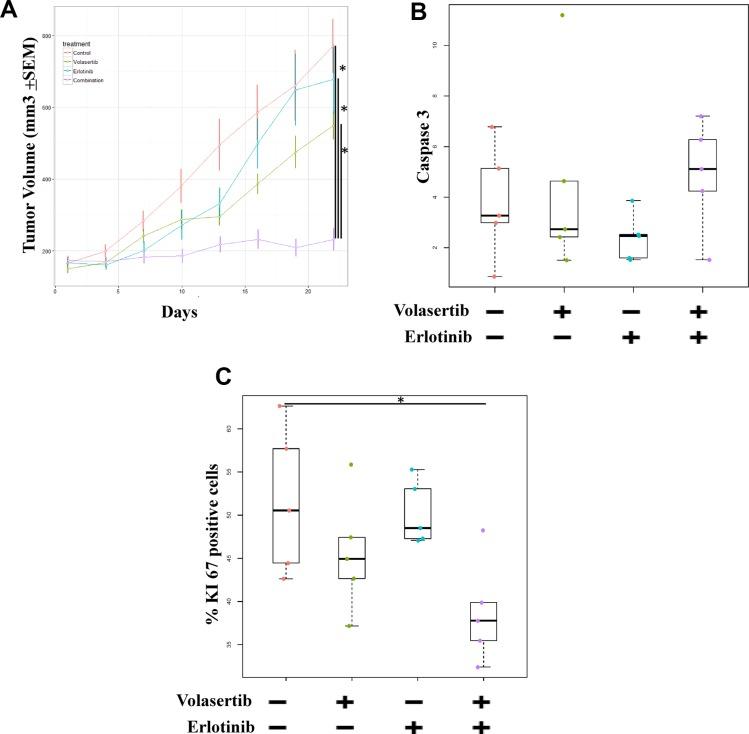
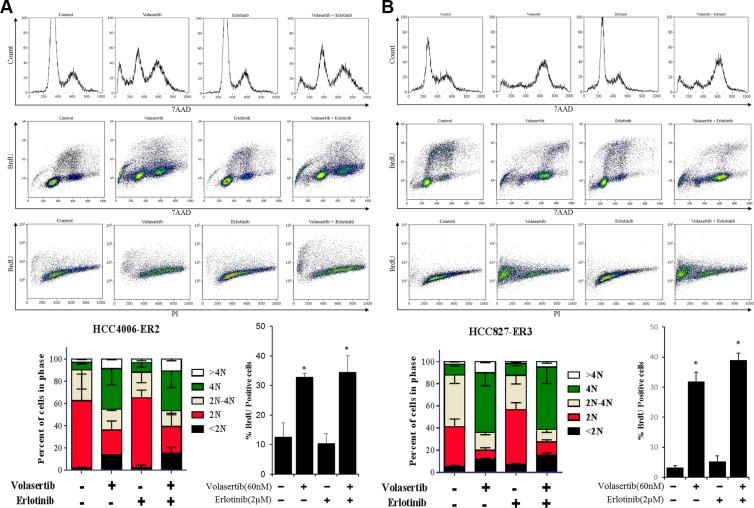
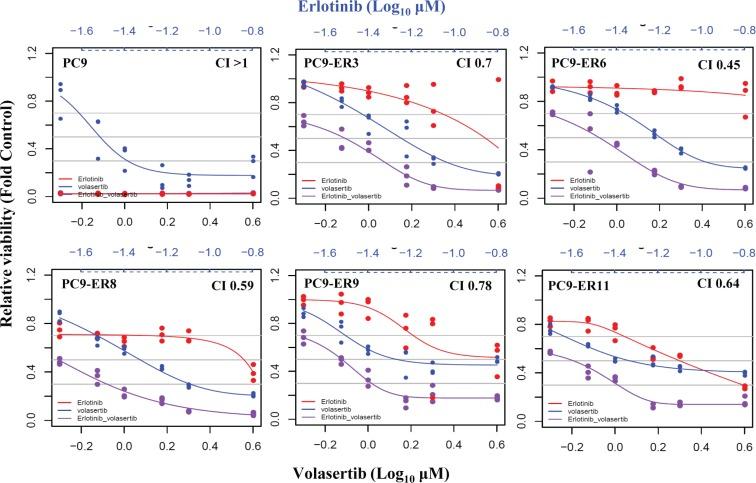
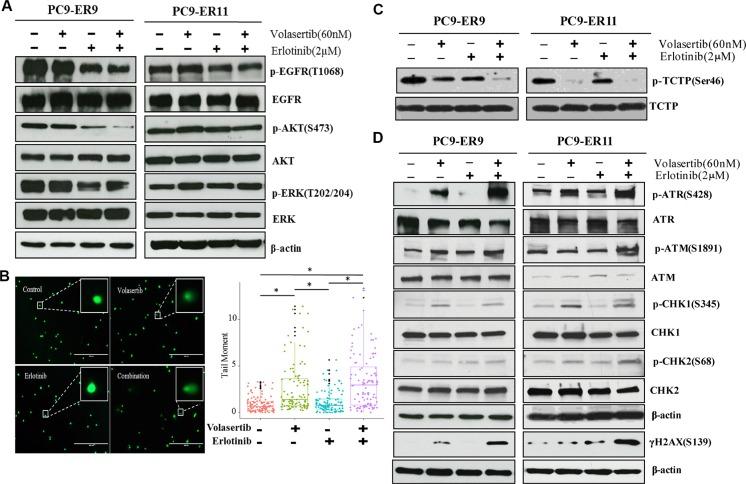
Epidermal growth factor receptor (EGFR) tyrosine kinase inhibitors (TKIs) are effective against non-small cell lung cancer (NSCLC) with activating EGFR mutations, but resistance is inevitable. Mechanisms of acquired resistance include T790M mutations and epithelial-mesenchymal transition (EMT). One potential strategy for overcoming this resistance is the inhibition of polo-like kinase 1 (PLK1) based on our previous studies showing that mesenchymal NSCLC cell lines are more sensitive to PLK1 inhibition than epithelial cell lines. To determine the extent to which PLK1 inhibition overcomes EGFR TKI resistance we measured the effects of the PLK1 inhibitor volasertib alone and in combination with the EGFR inhibitor erlotinib in vitro and in vivo in EGFR mutant NSCLC cell lines with acquired resistance to erlotinib. Two erlotinib-resistant cell lines that underwent EMT had higher sensitivity to volasertib, which caused G2/M arrest and apoptosis, than their parental cells. In all NSCLC cell lines with T790M mutations, volasertib markedly reduced erlotinib resistance. All erlotinib-resistant NSCLC cell lines with T790M mutations had higher sensitivity to erlotinib plus volasertib than to erlotinib alone, and the combination treatment caused G2/M arrest and apoptosis. Compared with either agent alone, the combination treatment also caused significantly more DNA damage and greater reductions in tumor size. Our results suggest that PLK1 inhibition is clinically effective against NSCLC that becomes resistant to EGFR inhibition through EMT or the acquisition of a T790M mutation. These results uncover new functions of PLK1 inhibition in the treatment of NSCLC with acquired resistance to EGFR TKIs.
表皮生长因子受体(EGFR)酪氨酸激酶抑制剂(TKIs)对具有激活型EGFR突变的非小细胞肺癌(NSCLC)有效,但耐药是不可避免的。获得性耐药机制包括T790M突变和上皮-间质转化(EMT)。基于我们之前的研究表明间充质NSCLC细胞系比上皮细胞系对PLK1抑制更敏感,克服这种耐药性的一种潜在策略是抑制polo样激酶1(PLK1)。为了确定PLK1抑制克服EGFR TKI耐药的程度,我们在体外和体内测量了PLK1抑制剂沃拉替尼单独以及与EGFR抑制剂厄洛替尼联合使用对已获得对厄洛替尼耐药的EGFR突变NSCLC细胞系的影响。两个发生EMT的厄洛替尼耐药细胞系对沃拉替尼的敏感性高于其亲代细胞,沃拉替尼可导致G2/M期阻滞和细胞凋亡。在所有具有T790M突变的NSCLC细胞系中,沃拉替尼显著降低了厄洛替尼耐药性。所有具有T790M突变的厄洛替尼耐药NSCLC细胞系对厄洛替尼加沃拉替尼的敏感性高于单独使用厄洛替尼,联合治疗导致G2/M期阻滞和细胞凋亡。与单独使用任一药物相比,联合治疗还导致更多的DNA损伤和更大程度的肿瘤缩小。我们的结果表明,PLK1抑制在临床上对通过EMT或获得T790M突变而对EGFR抑制产生耐药的NSCLC有效。这些结果揭示了PLK1抑制在治疗对EGFR TKIs获得性耐药的NSCLC中的新功能。


 Zotero 插件