
血清和肿瘤组织中MicroRNA-34a的表达水平可预测肝细胞癌患者的骨转移。
MicroRNA-34a expression levels in serum and intratumoral tissue can predict bone metastasis in patients with hepatocellular carcinoma.
作者信息
Xiang Zuo-Lin, Zhao Xiao-Mei, Zhang Li, Yang Ping, Fan Jia, Tang Zhao-You, Zeng Zhao-Chong
机构信息
Department of Radiation Oncology, Zhongshan Hospital, Fudan University, Shanghai, China.
Department of Liver Cancer Institute, Zhongshan Hospital, Fudan University, Shanghai, China.
出版信息
Oncotarget. 2016 Dec 27;7(52):87246-87256. doi: 10.18632/oncotarget.13531.
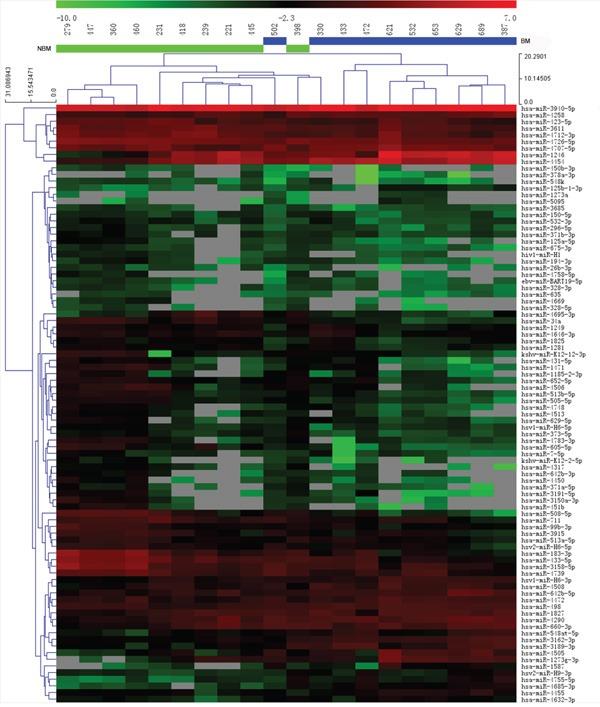
Hepatocellular carcinoma (HCC) patients with bone metastasis (BM) suffer from pain and other symptoms that significantly reduce their quality of life. We screened a microRNA (miRNA) microarray to identify potential serum biomarkers for BM in HCC patients. A miRNA microarray was used to screen for BM-related miRNAs in paired serum samples from HCC patients with BM and from HCC patients without BM. Real-time quantitative polymerase chain reaction (qRT-PCR) was used to quantify candidate miRNAs in serum samples from 106 independent HCC patients. Levels of candidate miRNAs in tissue samples from an independent cohort of 296 HCC patients were evaluated by in situ hybridization and intratumoral tissue microarray. The migration and invasion capabilities of HCCLM3 and SMMC-7721 cells were evaluated following treatment with a mimic and an inhibitor of miR-34a. Ninety miRNAs were differentially expressed in sera from HCC patients with BM when compared with sera from non-BM HCC patients (P < 0.05). Only miR-34a and miR-498 had false discovery rates (FDRs) < 0.05. In cohorts of 106 and 296 HCC patients, we found that reduced serum and intratumoral miR-34a expression levels were independent risk factors for developing BM. Migration and invasion experiments indicated that a reverse correlation existed between miR-34a and HCC tumor migration and invasion. This study demonstrates the potential for the use of miR-34a as a serum and intratumoral tissue biomarker for predicting the risk of BM in HCC patients.
发生骨转移(BM)的肝细胞癌(HCC)患者会遭受疼痛和其他症状的折磨,这些症状会显著降低他们的生活质量。我们筛选了一个微小RNA(miRNA)微阵列,以鉴定HCC患者中BM的潜在血清生物标志物。使用miRNA微阵列在来自伴有BM的HCC患者和不伴有BM的HCC患者的配对血清样本中筛选与BM相关的miRNA。采用实时定量聚合酶链反应(qRT-PCR)对106例独立HCC患者血清样本中的候选miRNA进行定量。通过原位杂交和瘤内组织微阵列评估来自296例HCC患者独立队列的组织样本中候选miRNA的水平。在用miR-34a模拟物和抑制剂处理后,评估HCCLM3和SMMC-7721细胞的迁移和侵袭能力。与非BM的HCC患者血清相比,伴有BM的HCC患者血清中有90种miRNA表达存在差异(P<0.05)。只有miR-34a和miR-498的错误发现率(FDR)<0.05。在106例和296例HCC患者队列中,我们发现血清和瘤内miR-34a表达水平降低是发生BM的独立危险因素。迁移和侵袭实验表明,miR-34a与HCC肿瘤迁移和侵袭呈负相关。本研究证明了miR-34a作为血清和瘤内组织生物标志物用于预测HCC患者BM风险的潜力。

 Zotero 插件