
盐胁迫下椰枣(Phoenix dactylifera L.)叶片和根系的全基因组表达谱分析
Genome-wide expression profiling in leaves and roots of date palm (Phoenix dactylifera L.) exposed to salinity.
作者信息
Yaish Mahmoud W, Patankar Himanshu V, Assaha Dekoum V M, Zheng Yun, Al-Yahyai Rashid, Sunkar Ramanjulu
机构信息
Department of Biology, College of Science, Sultan Qaboos University, Muscat, Oman.
Faculty of Life Science and Technology, Kunming University of Science and Technology, Kunming, Yunnan, 650500, China.
出版信息
BMC Genomics. 2017 Mar 22;18(1):246. doi: 10.1186/s12864-017-3633-6.
BACKGROUND
Date palm, as one of the most important fruit crops in North African and West Asian countries including Oman, is facing serious growth problems due to salinity, arising from persistent use of saline water for irrigation. Although date palm is a relatively salt-tolerant plant species, its adaptive mechanisms to salt stress are largely unknown.
RESULTS
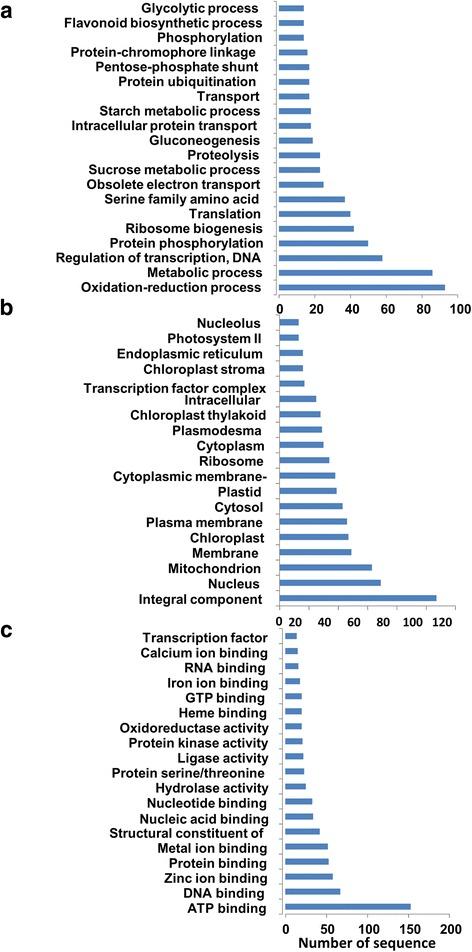
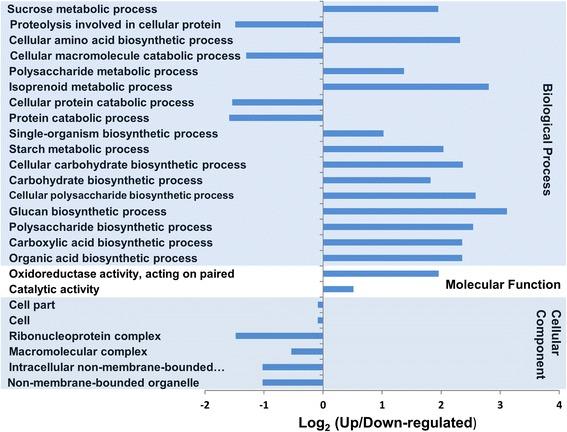
In order to get an insight into molecular mechanisms of salt tolerance, RNA was profiled in leaves and roots of date palm seedlings subjected to NaCl for 10 days. Under salt stress, photosynthetic parameters were differentially affected; all gas exchange parameters were decreased but the quantum yield of PSII was unaffected while non-photochemical quenching was increased. Analyses of gene expression profiles revealed 2630 and 4687 genes were differentially expressed in leaves and roots, respectively, under salt stress. Of these, 194 genes were identified as commonly responding in both the tissue sources. Gene ontology (GO) analysis in leaves revealed enrichment of transcripts involved in metabolic pathways including photosynthesis, sucrose and starch metabolism, and oxidative phosphorylation, while in roots genes involved in membrane transport, phenylpropanoid biosynthesis, purine, thiamine, and tryptophan metabolism, and casparian strip development were enriched. Differentially expressed genes (DEGs) common to both tissues included the auxin responsive gene, GH3, a putative potassium transporter 8 and vacuolar membrane proton pump.
CONCLUSIONS
Leaf and root tissues respond differentially to salinity stress and this study has revealed genes and pathways that are associated with responses to elevated NaCl levels and thus may play important roles in salt tolerance providing a foundation for functional characterization of salt stress-responsive genes in the date palm.
背景
海枣是包括阿曼在内的北非和西亚国家最重要的水果作物之一,由于长期使用盐水灌溉导致土壤盐碱化,海枣正面临严重的生长问题。尽管海枣是一种相对耐盐的植物物种,但其对盐胁迫的适应机制在很大程度上尚不清楚。
结果
为了深入了解耐盐分子机制,对经10天氯化钠处理的海枣幼苗的叶片和根系进行了RNA分析。在盐胁迫下,光合参数受到不同程度的影响;所有气体交换参数均下降,但PSII的量子产率未受影响,而非光化学猝灭增加。基因表达谱分析显示,在盐胁迫下,叶片和根系中分别有2630个和4687个基因差异表达。其中,194个基因被确定为在两种组织来源中均有共同响应。叶片中的基因本体(GO)分析显示,参与光合作用、蔗糖和淀粉代谢以及氧化磷酸化等代谢途径的转录本富集,而根系中参与膜转运、苯丙烷生物合成、嘌呤、硫胺素和色氨酸代谢以及凯氏带发育的基因富集。两种组织共有的差异表达基因(DEGs)包括生长素响应基因GH3、一个假定的钾转运蛋白8和液泡膜质子泵。
结论
叶片和根系组织对盐胁迫的反应不同,本研究揭示了与对升高的氯化钠水平的反应相关的基因和途径,因此可能在耐盐性中发挥重要作用,为海枣中盐胁迫响应基因的功能表征提供了基础。




 Zotero 插件