
世界卫生组织推荐的制剂对包括寨卡病毒、埃博拉病毒和新型冠状病毒在内的包膜病毒的杀病毒活性
Virucidal Activity of World Health Organization-Recommended Formulations Against Enveloped Viruses, Including Zika, Ebola, and Emerging Coronaviruses.
作者信息
Siddharta Anindya, Pfaender Stephanie, Vielle Nathalie Jane, Dijkman Ronald, Friesland Martina, Becker Britta, Yang Jaewon, Engelmann Michael, Todt Daniel, Windisch Marc P, Brill Florian H, Steinmann Joerg, Steinmann Jochen, Becker Stephan, Alves Marco P, Pietschmann Thomas, Eickmann Markus, Thiel Volker, Steinmann Eike
机构信息
Institute of Experimental Virology, Twincore, Centre for Experimental and Clinical Infection Research, Hannover, Germany.
Department of Infectious diseases and Pathobiology, Vetsuisse Faculty, University of Bern, Switzerland.
出版信息
J Infect Dis. 2017 Mar 15;215(6):902-906. doi: 10.1093/infdis/jix046.
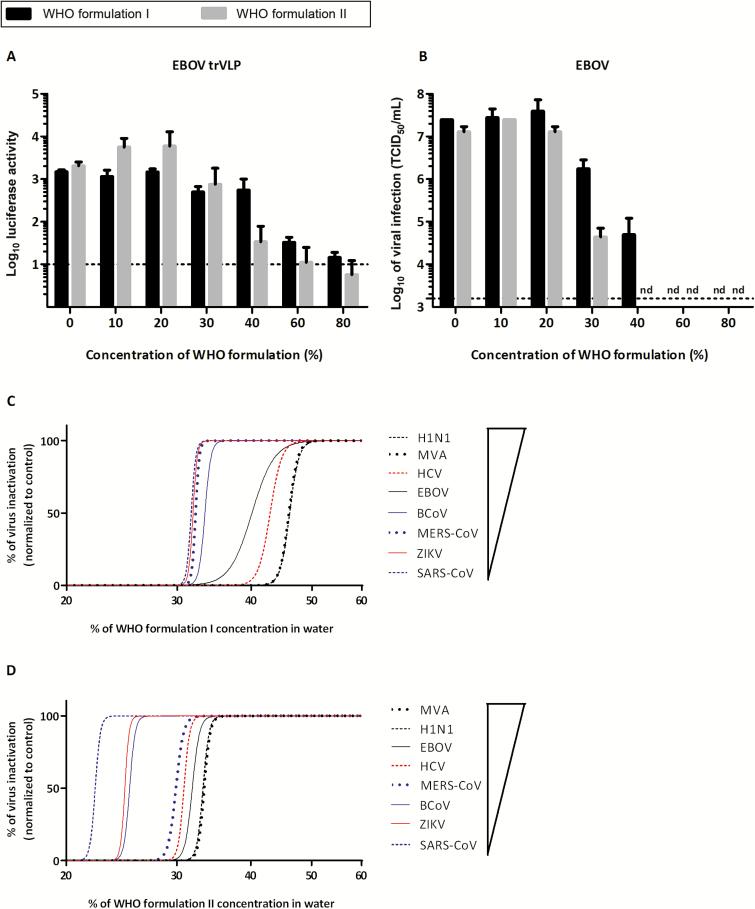
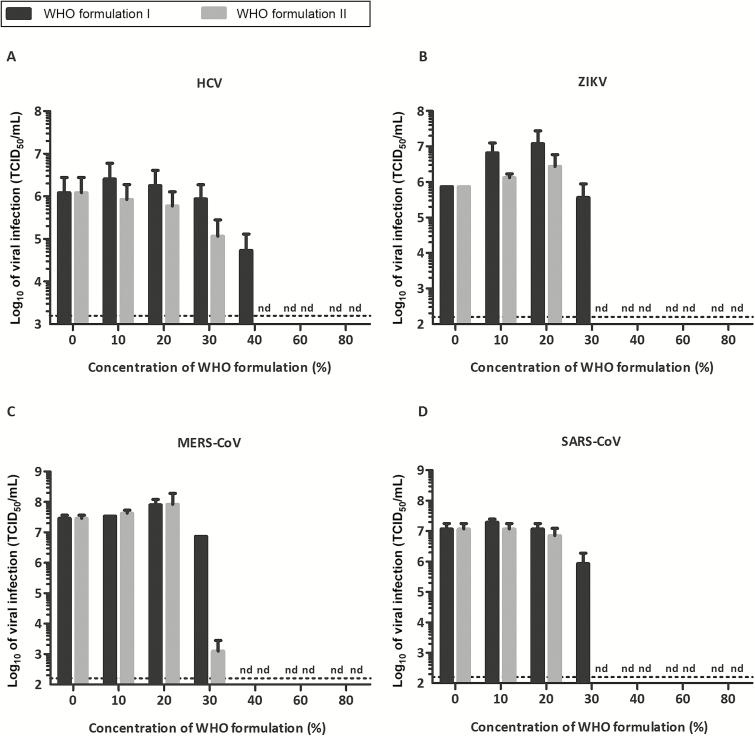
The World Health Organization (WHO) published 2 alcohol-based formulations to be used in healthcare settings and for outbreak-associated infections, but inactivation efficacies of these products have not been determined against (re-)emerging viruses. In this study, we evaluated the virucidal activity of these WHO products in a comparative analysis. Zika virus (ZIKV), Ebola virus (EBOV), severe acute respiratory syndrome coronavirus (SARS-CoV), and Middle East respiratory syndrome coronavirus (MERS-CoV) as (re-)emerging viral pathogens and other enveloped viruses could be efficiently inactivated by both WHO formulations, implicating their use in healthcare systems and viral outbreak situations.
世界卫生组织(WHO)发布了2种用于医疗机构和与疫情相关感染的酒精基制剂,但尚未确定这些产品对(再)出现的病毒的灭活效果。在本研究中,我们在一项对比分析中评估了这些WHO产品的杀病毒活性。寨卡病毒(ZIKV)、埃博拉病毒(EBOV)、严重急性呼吸综合征冠状病毒(SARS-CoV)和中东呼吸综合征冠状病毒(MERS-CoV)作为(再)出现的病毒病原体以及其他包膜病毒,均可被这两种WHO制剂有效灭活,这表明它们可用于医疗系统和病毒爆发情况。
 Zotero 插件