
人类衰老的分子和生理表现及测量
Molecular and physiological manifestations and measurement of aging in humans.
作者信息
Khan Sadiya S, Singer Benjamin D, Vaughan Douglas E
机构信息
Department of Medicine, Northwestern University Feinberg School of Medicine, Chicago, IL, 60611, USA.
出版信息
Aging Cell. 2017 Aug;16(4):624-633. doi: 10.1111/acel.12601. Epub 2017 May 23.
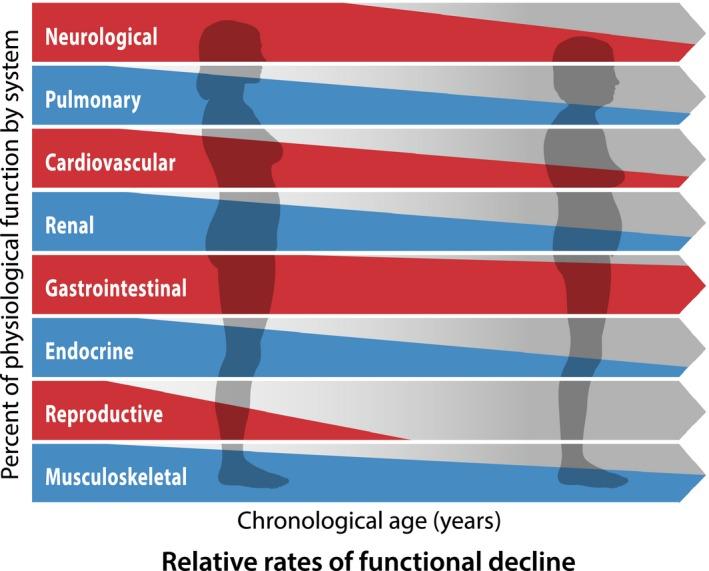
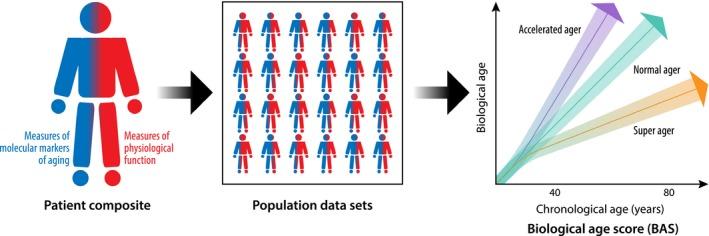
Biological aging is associated with a reduction in the reparative and regenerative potential in tissues and organs. This reduction manifests as a decreased physiological reserve in response to stress (termed homeostenosis) and a time-dependent failure of complex molecular mechanisms that cumulatively create disorder. Aging inevitably occurs with time in all organisms and emerges on a molecular, cellular, organ, and organismal level with genetic, epigenetic, and environmental modulators. Individuals with the same chronological age exhibit differential trajectories of age-related decline, and it follows that we should assess biological age distinctly from chronological age. In this review, we outline mechanisms of aging with attention to well-described molecular and cellular hallmarks and discuss physiological changes of aging at the organ-system level. We suggest methods to measure aging with attention to both molecular biology (e.g., telomere length and epigenetic marks) and physiological function (e.g., lung function and echocardiographic measurements). Finally, we propose a framework to integrate these molecular and physiological data into a composite score that measures biological aging in humans. Understanding the molecular and physiological phenomena that drive the complex and multifactorial processes underlying the variable pace of biological aging in humans will inform how researchers assess and investigate health and disease over the life course. This composite biological age score could be of use to researchers seeking to characterize normal, accelerated, and exceptionally successful aging as well as to assess the effect of interventions aimed at modulating human aging.
生物衰老与组织和器官的修复及再生潜能降低有关。这种降低表现为对应激的生理储备减少(称为内环境稳态失调)以及复杂分子机制随时间推移的功能衰竭,这些机制累积起来会造成紊乱。衰老在所有生物体中都会随着时间不可避免地发生,并在分子、细胞、器官和生物体水平上出现,受到遗传、表观遗传和环境调节因子的影响。具有相同实足年龄的个体表现出与年龄相关衰退的不同轨迹,因此我们应该将生物年龄与实足年龄区分开来进行评估。在这篇综述中,我们概述衰老机制,重点关注已充分描述的分子和细胞特征,并讨论器官系统水平上的衰老生理变化。我们提出测量衰老的方法,重点关注分子生物学(如端粒长度和表观遗传标记)和生理功能(如肺功能和超声心动图测量)。最后,我们提出一个框架,将这些分子和生理数据整合为一个综合评分,以衡量人类的生物衰老。了解驱动人类生物衰老速度变化的复杂多因素过程的分子和生理现象,将为研究人员在整个生命过程中评估和研究健康与疾病提供依据。这个综合生物年龄评分可能对寻求描述正常、加速和异常成功衰老特征的研究人员有用,也有助于评估旨在调节人类衰老的干预措施的效果。

 Zotero 插件