
通过生物信息学分析鉴定子痫前期中的关键微小RNA和基因。
Identification of key microRNAs and genes in preeclampsia by bioinformatics analysis.
作者信息
Luo Shouling, Cao Nannan, Tang Yao, Gu Weirong
机构信息
The Department of Obstetrics, Obstetrics and Gynecology Hospital of Fudan University, Shanghai, China.
Shanghai Key Laboratory of Female Reproductive Endocrine Related Diseases, Huangpu Area, Shanghai, China.
出版信息
PLoS One. 2017 Jun 8;12(6):e0178549. doi: 10.1371/journal.pone.0178549. eCollection 2017.
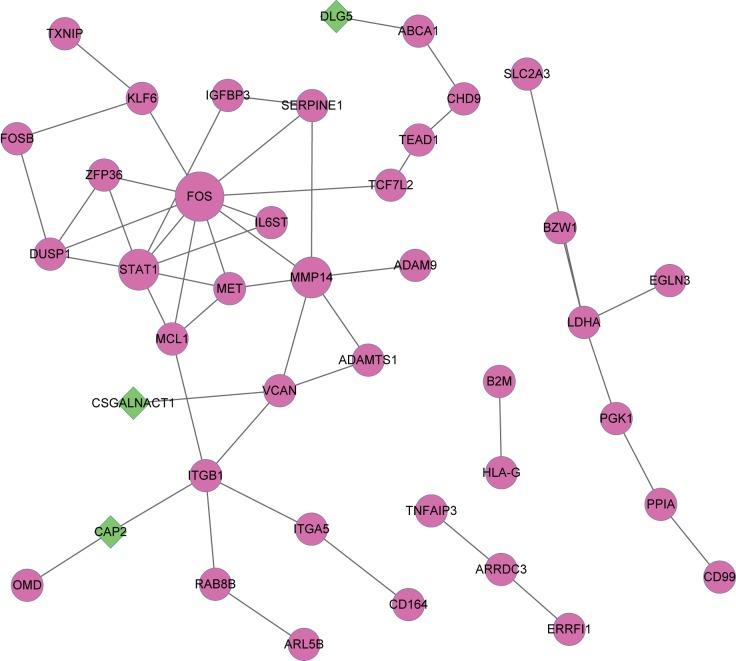
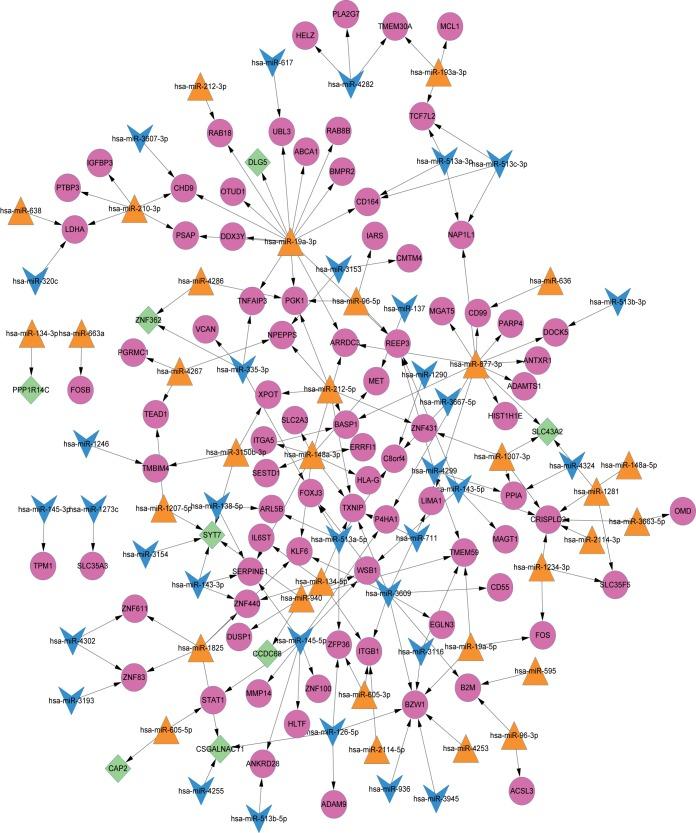
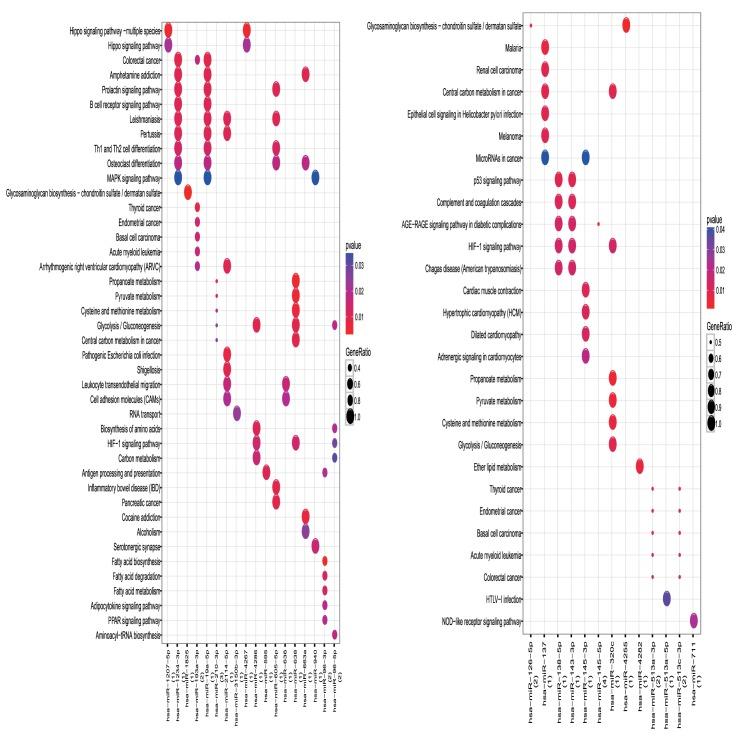
Preeclampsia is a leading cause of perinatal maternal-foetal mortality and morbidity. The aim of this study is to identify the key microRNAs and genes in preeclampsia and uncover their potential functions. We downloaded the miRNA expression profile of GSE84260 and the gene expression profile of GSE73374 from the Gene Expression Omnibus database. Differentially expressed miRNAs and genes were identified and compared to miRNA-target information from MiRWalk 2.0, and a total of 65 differentially expressed miRNAs (DEMIs), including 32 up-regulated miRNAs and 33 down-regulated miRNAs, and 91 differentially expressed genes (DEGs), including 83 up-regulated genes and 8 down-regulated genes, were identified. The pathway enrichment analyses of the DEMIs showed that the up-regulated DEMIs were enriched in the Hippo signalling pathway and MAPK signalling pathway, and the down-regulated DEMIs were enriched in HTLV-I infection and miRNAs in cancers. The gene ontology (GO) and Kyoto Encyclopedia of Genes and Genomes pathway (KEGG) enrichment analyses of the DEGs were performed using Multifaceted Analysis Tool for Human Transcriptome. The up-regulated DEGs were enriched in biological processes (BPs), including the response to cAMP, response to hydrogen peroxide and cell-cell adhesion mediated by integrin; no enrichment of down-regulated DEGs was identified. KEGG analysis showed that the up-regulated DEGs were enriched in the Hippo signalling pathway and pathways in cancer. A PPI network of the DEGs was constructed by using Cytoscape software, and FOS, STAT1, MMP14, ITGB1, VCAN, DUSP1, LDHA, MCL1, MET, and ZFP36 were identified as the hub genes. The current study illustrates a characteristic microRNA profile and gene profile in preeclampsia, which may contribute to the interpretation of the progression of preeclampsia and provide novel biomarkers and therapeutic targets for preeclampsia.
子痫前期是围产期母婴死亡和发病的主要原因。本研究的目的是鉴定子痫前期中的关键微小RNA和基因,并揭示它们的潜在功能。我们从基因表达综合数据库下载了GSE84260的微小RNA表达谱和GSE73374的基因表达谱。鉴定出差异表达的微小RNA和基因,并与来自MiRWalk 2.0的微小RNA-靶标信息进行比较,共鉴定出65个差异表达的微小RNA(DEMIs),包括32个上调的微小RNA和33个下调的微小RNA,以及91个差异表达的基因(DEGs),包括83个上调的基因和8个下调的基因。对DEMIs的通路富集分析表明,上调的DEMIs富集于Hippo信号通路和MAPK信号通路,而下调的DEMIs富集于HTLV-I感染和癌症中的微小RNA。使用人类转录组多方面分析工具对DEGs进行基因本体(GO)和京都基因与基因组百科全书通路(KEGG)富集分析。上调的DEGs富集于生物学过程(BPs),包括对cAMP的反应、对过氧化氢的反应以及整合素介导的细胞间粘附;未鉴定出下调的DEGs有富集。KEGG分析表明,上调的DEGs富集于Hippo信号通路和癌症中的通路。使用Cytoscape软件构建了DEGs的蛋白质-蛋白质相互作用(PPI)网络,并鉴定出FOS、STAT1、MMP14、ITGB1、VCAN、DUSP1、LDHA、MCL1、MET和ZFP36为枢纽基因。当前研究阐明了子痫前期的特征性微小RNA谱和基因谱,这可能有助于解释子痫前期的进展,并为子痫前期提供新的生物标志物和治疗靶点。
 Zotero 插件