
1型糖尿病中表达自身反应性T细胞受体的人调节性T细胞的亲和力及旁观者抑制能力
Avidity and Bystander Suppressive Capacity of Human Regulatory T Cells Expressing Autoreactive T-Cell Receptors in Type 1 Diabetes.
作者信息
Yeh Wen-I, Seay Howard R, Newby Brittney, Posgai Amanda L, Moniz Filipa Botelho, Michels Aaron, Mathews Clayton E, Bluestone Jeffrey A, Brusko Todd M
机构信息
Department of Pathology, Immunology, and Laboratory Medicine, University of Florida, Gainesville, FL, United States.
Barbara Davis Center for Diabetes, University of Colorado School of Medicine, Aurora, CO, United States.
出版信息
Front Immunol. 2017 Oct 26;8:1313. doi: 10.3389/fimmu.2017.01313. eCollection 2017.
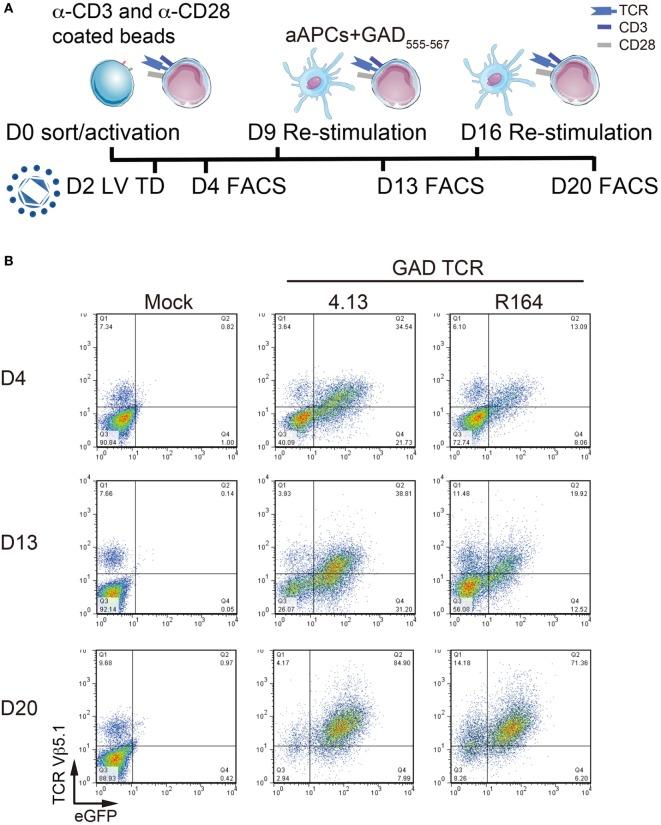
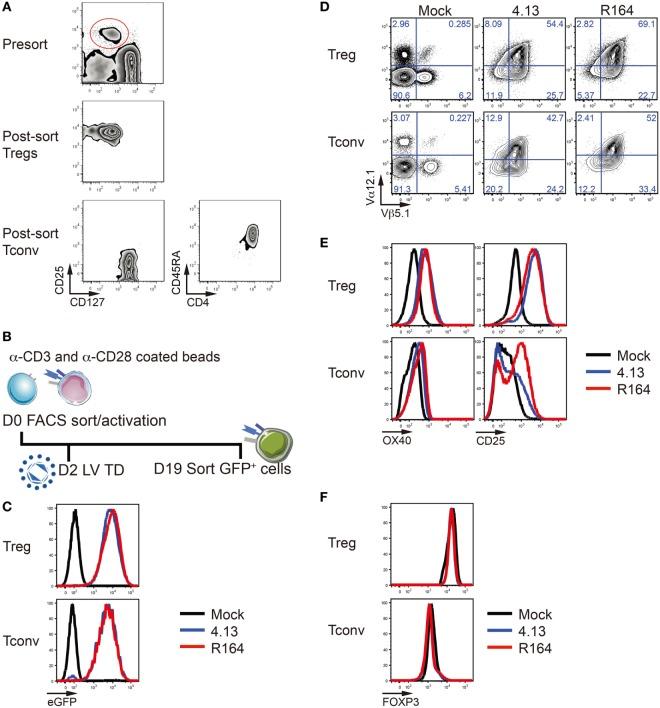
The ability to alter antigen specificity by T-cell receptor (TCR) or chimeric antigen receptor (CAR) gene transfer has facilitated personalized cellular immune therapies in cancer. Inversely, this approach can be harnessed in autoimmune settings to attenuate inflammation by redirecting the specificity of regulatory T cells (Tregs). Herein, we demonstrate efficient protocols for lentiviral gene transfer of TCRs that recognize type 1 diabetes-related autoantigens with the goal of tissue-targeted induction of antigen-specific tolerance to halt β-cell destruction. We generated human Tregs expressing a high-affinity GAD-reactive TCR (clone R164), as well as the lower affinity clone 4.13 specific for the same peptide. We demonstrated that Treg avatars potently suppress antigen-specific and bystander responder T-cell (Tresp) proliferation in a process that requires Treg activation ( < 0.001 versus unactivated Tregs). When Tresp were also glutamic acid decarboxylase (GAD)-reactive, the high-affinity R164 Tregs exhibited increased suppression ( < 0.01) with lower Tresp-division index ( < 0.01) than the lower affinity 4.13 Tregs. These data demonstrate the feasibility of rapid expansion of antigen-specific Tregs for applications in attenuating β-cell autoimmunity and emphasize further opportunities for engineering cellular specificities, affinities, and phenotypes to tailor Treg activity in adoptive cell therapies for the treatment of type 1 diabetes.
通过T细胞受体(TCR)或嵌合抗原受体(CAR)基因转移改变抗原特异性的能力推动了癌症个性化细胞免疫疗法的发展。相反,这种方法可用于自身免疫性疾病,通过重定向调节性T细胞(Tregs)的特异性来减轻炎症。在此,我们展示了用于慢病毒基因转移TCR的有效方案,这些TCR识别与1型糖尿病相关的自身抗原,目的是在组织靶向诱导抗原特异性耐受性以阻止β细胞破坏。我们生成了表达高亲和力谷氨酸脱羧酶(GAD)反应性TCR(克隆R164)以及对同一肽具有较低亲和力的克隆4.13的人Tregs。我们证明,Treg替身能有效抑制抗原特异性和旁观者反应性T细胞(Tresp)增殖,这一过程需要Treg激活(与未激活的Tregs相比,P<0.001)。当Tresp也对谷氨酸脱羧酶(GAD)有反应时,高亲和力的R164 Tregs表现出更强的抑制作用(P<0.01),且Tresp分裂指数更低(P<0.01),低于低亲和力的4.13 Tregs。这些数据证明了快速扩增抗原特异性Tregs用于减轻β细胞自身免疫的可行性,并强调了在细胞疗法中进一步设计细胞特异性、亲和力和表型以调整Treg活性用于治疗1型糖尿病的机会。



 Zotero 插件