
一项比较四种抗疟药物方案诱导人体疟疾感染模型配子体血症的随机可行性试验。
A randomized feasibility trial comparing four antimalarial drug regimens to induce gametocytemia in the controlled human malaria infection model.
机构信息
Department of Medical Microbiology, Radboud university medical center, Nijmegen, Netherlands.
Department of Public Health, Erasmus MC, University Medical Center Rotterdam, Rotterdam, Netherlands.
出版信息
Elife. 2018 Feb 27;7:e31549. doi: 10.7554/eLife.31549.
BACKGROUND
Malaria elimination strategies require a thorough understanding of parasite transmission from human to mosquito. A clinical model to induce gametocytes to understand their dynamics and evaluate transmission-blocking interventions (TBI) is currently unavailable. Here, we explore the use of the well-established Controlled Human Malaria Infection model (CHMI) to induce gametocyte carriage with different antimalarial drug regimens.
METHODS
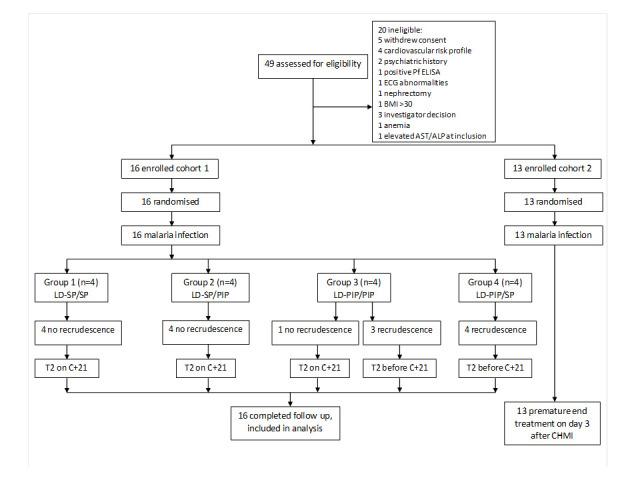
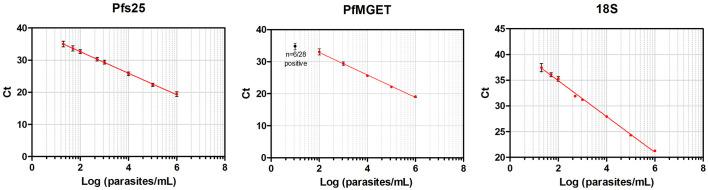
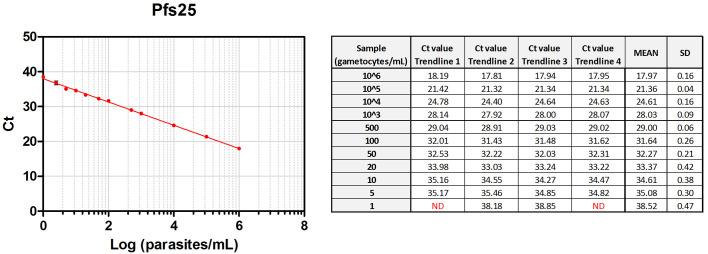
In a single centre, open-label randomised trial, healthy malaria-naive participants (aged 18–35 years) were infected with by bites of infected mosquitoes. Participants were randomly allocated to four different treatment arms (n = 4 per arm) comprising low-dose (LD) piperaquine (PIP) or sulfadoxine-pyrimethamine (SP), followed by a curative regimen upon recrudescence. Male and female gametocyte densities were determined by molecular assays.
RESULTS
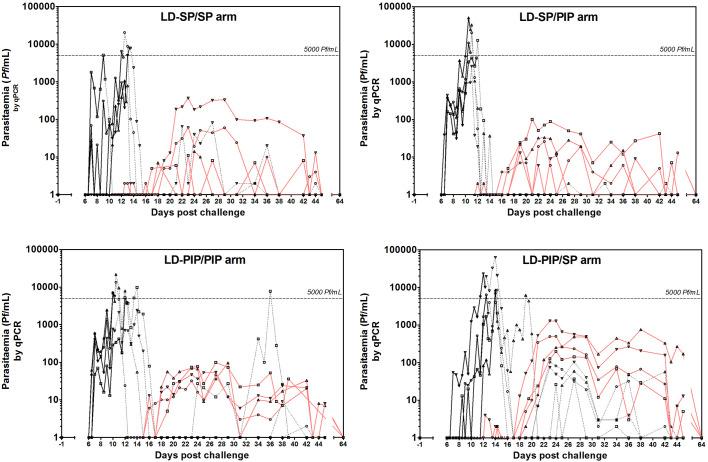
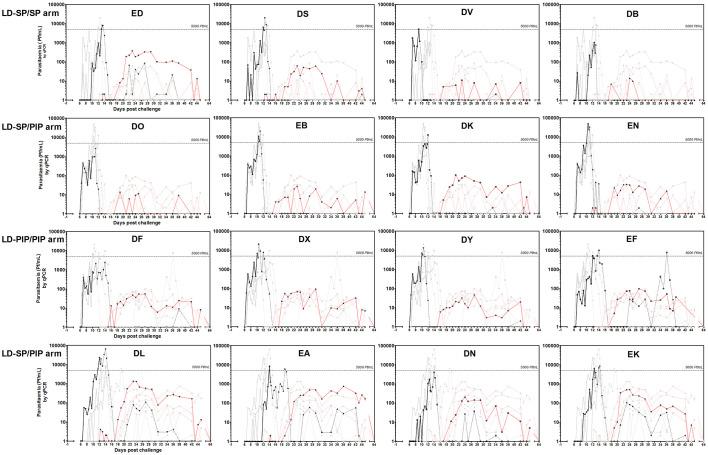
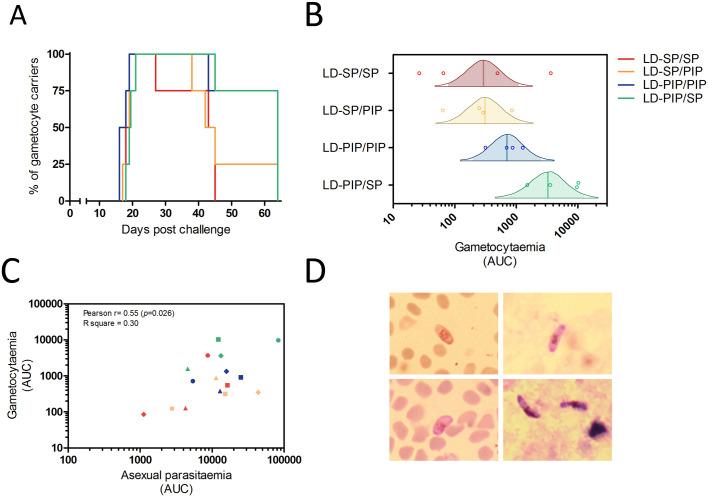
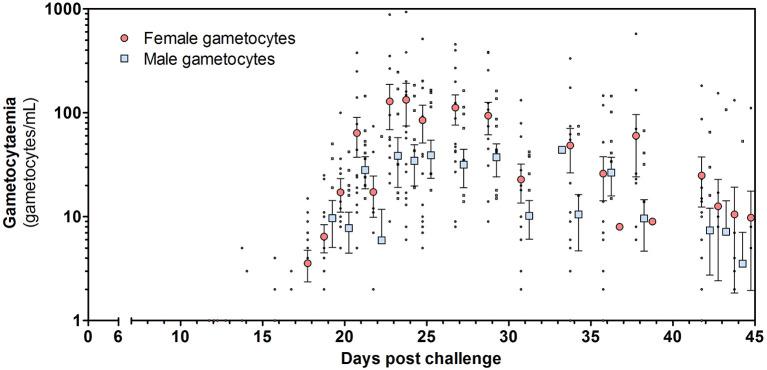
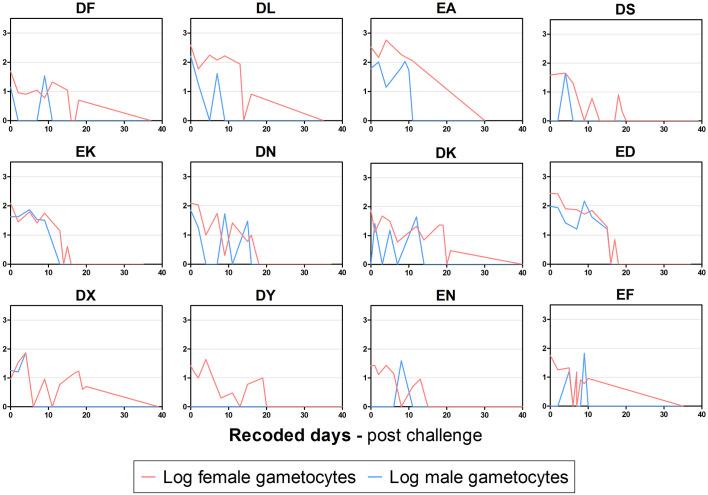
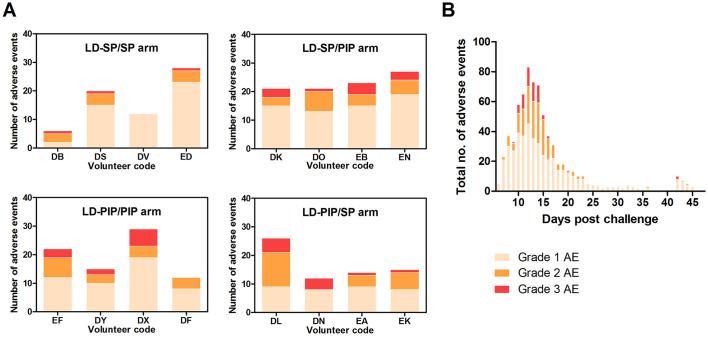
Mature gametocytes were observed in all participants (16/16, 100%). Gametocytes appeared 8.5–12 days after the first detection of asexual parasites. Peak gametocyte densities and gametocyte burden was highest in the LD-PIP/SP arm, and associated with the preceding asexual parasite biomass (p=0.026). Male gametocytes had a mean estimated circulation time of 2.7 days (95% CI 1.5–3.9) compared to 5.1 days (95% CI 4.1–6.1) for female gametocytes. Exploratory mosquito feeding assays showed successful sporadic mosquito infections. There were no serious adverse events or significant differences in the occurrence and severity of adverse events between study arms (p=0.49 and p=0.28).
CONCLUSIONS
The early appearance of gametocytes indicates gametocyte commitment during the first wave of asexual parasites emerging from the liver. Treatment by LD-PIP followed by a curative SP regimen, results in the highest gametocyte densities and the largest number of gametocyte-positive days. This model can be used to evaluate the effect of drugs and vaccines on gametocyte dynamics, and lays the foundation for fulfilling the critical unmet need to evaluate transmission-blocking interventions against malaria for downstream selection and clinical development.
FUNDING
Funded by PATH Malaria Vaccine Initiative (MVI).
CLINICAL TRIAL NUMBER
NCT02836002.
背景
消除疟疾策略需要深入了解从人类到蚊子的寄生虫传播。目前尚不存在一种临床模型来诱导配子体,以了解其动力学并评估阻断传播干预措施(TBI)。在这里,我们探索使用成熟的人体疟疾感染控制模型(CHMI)来诱导不同抗疟药物方案的配子体携带。
方法
在一项单中心、开放性标签、随机试验中,健康的无疟疾参与者(年龄 18-35 岁)通过感染蚊子的叮咬感染 。参与者被随机分配到四个不同的治疗臂(每组 4 人),包括低剂量(LD)哌喹(PIP)或磺胺多辛-乙胺嘧啶(SP),随后在复发时进行治愈性治疗。通过分子检测确定成熟配子体的密度。
结果
所有参与者(16/16,100%)均观察到成熟配子体。配子体在首次检测到无性寄生虫后 8.5-12 天出现。LD-PIP/SP 臂中的配子体密度和配子体负荷最高,与之前的无性寄生虫生物量相关(p=0.026)。雄性配子体的平均循环时间估计为 2.7 天(95%CI 1.5-3.9),而雌性配子体的循环时间为 5.1 天(95%CI 4.1-6.1)。探索性的蚊子喂养试验表明,成功地进行了零星的蚊子感染。在研究臂之间,严重不良事件的发生或不良事件的发生和严重程度没有差异(p=0.49 和 p=0.28)。
结论
配子体的早期出现表明,在从肝脏中出现的第一批无性寄生虫中,配子体已经决定产生。LD-PIP 治疗后进行治愈性 SP 治疗,可导致最高的配子体密度和最长的配子体阳性天数。该模型可用于评估药物和疫苗对配子体动力学的影响,为评估针对疟疾的阻断传播干预措施奠定了基础,以满足下游选择和临床开发的关键未满足需求。
资金
由 PATH 疟疾疫苗倡议(MVI)资助。
临床试验编号
NCT02836002。





 Zotero 插件