
星形胶质细胞中的 Alpha/Beta 干扰素 (IFN-α/β) 信号转导介导对病毒性脑脊髓炎的保护作用,并调节 IFN-γ 依赖性反应。
Alpha/Beta Interferon (IFN-α/β) Signaling in Astrocytes Mediates Protection against Viral Encephalomyelitis and Regulates IFN-γ-Dependent Responses.
机构信息
Department of Neurosciences, Lerner Research Institute, Cleveland Clinic Foundation, Cleveland, Ohio, USA.
Department of Neurosciences, Lerner Research Institute, Cleveland Clinic Foundation, Cleveland, Ohio, USA
出版信息
J Virol. 2018 Apr 27;92(10). doi: 10.1128/JVI.01901-17. Print 2018 May 15.
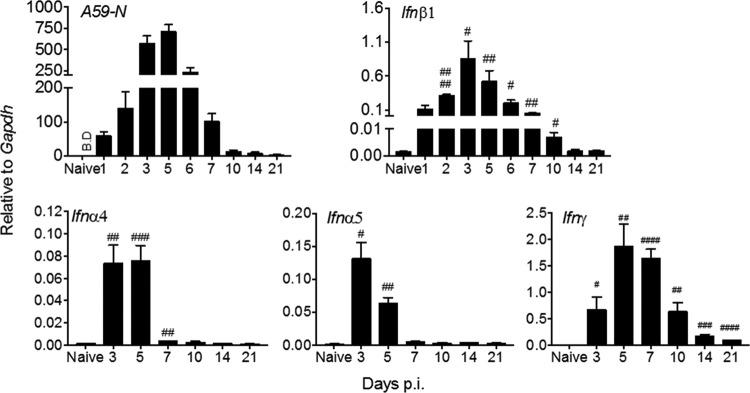
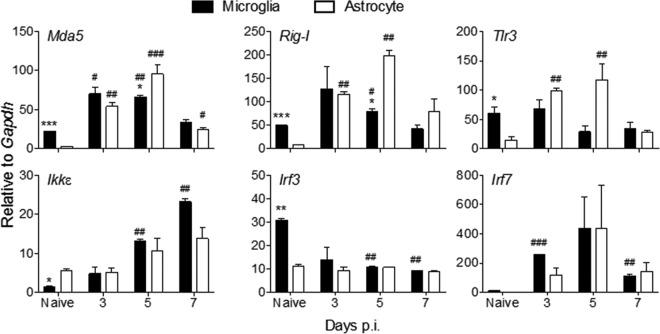
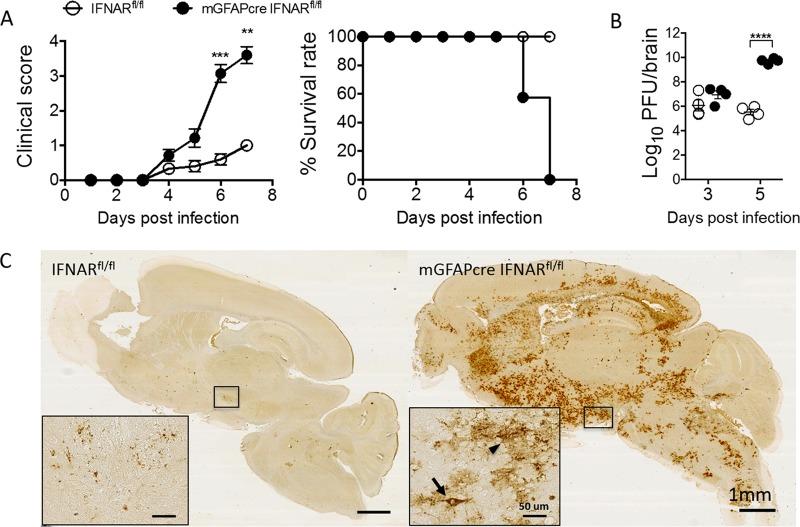
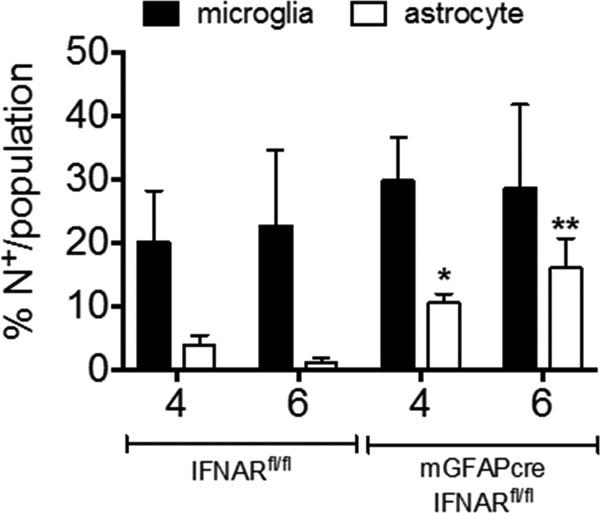
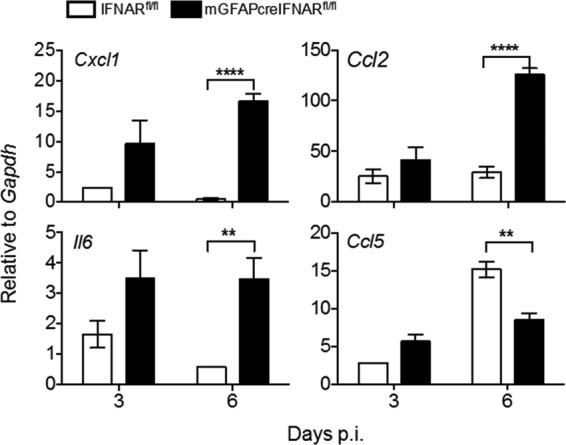
The contribution of distinct central nervous system (CNS) resident cells to protective alpha/beta interferon (IFN-α/β) function following viral infections is poorly understood. Based on numerous immune regulatory functions of astrocytes, we evaluated the contribution of astrocyte IFN-α/β signaling toward protection against the nonlethal glia- and neuronotropic mouse hepatitis virus (MHV) strain A59. Analysis of gene expression associated with IFN-α/β function, e.g., pattern recognition receptors (PRRs) and interferon-stimulated genes (ISGs), revealed lower basal mRNA levels in brain-derived astrocytes than in microglia. Although astrocytes poorly induced β mRNA following infection, they upregulated various mRNAs in the IFN-α/β pathway to a higher extent than microglia, supporting effective IFN-α/β responsiveness. Ablation of the IFN-α/β receptor (IFNAR) in astrocytes using mGFAPcre IFNAR mice resulted in severe encephalomyelitis and mortality, coincident with uncontrolled virus replication. Further, virus spread was not restricted to astrocytes but also affected microglia and neurons, despite increased and sustained α/β and ISG mRNA levels within the CNS. IFN-γ, a crucial mediator for MHV control, was not impaired in infected mGFAPcre IFNAR mice despite reduced T cell CNS infiltration. Unexpectedly however, poor induction of IFN-γ-dependent major histocompatibility complex (MHC) class II expression on microglia supported that defective IFN-γ signaling contributes to uncontrolled virus replication. A link between sustained elevated IFN-α/β and impaired responsiveness to IFN-γ supports the novel concept that temporally limited early IFN-α/β responses are critical for effective antiviral IFN-γ function. Overall, our results imply that IFN-α/β signaling in astrocytes is not only critical in limiting early CNS viral spread but also promotes protective antiviral IFN-γ function. An antiviral state established by IFN-α/β contains initial viral spread as adaptive immunity develops. While it is apparent that the CNS lacks professional IFN-α/β producers and that resident cells have distinct abilities to elicit innate IFN-α/β responses, protective interactions between inducer and responder cells require further investigation. Infection with a glia- and neuronotropic coronavirus demonstrates that astrocytes mount a delayed but more robust response to infection than microglia, despite their lower basal mRNA levels of IFN-α/β-inducing components. Lethal, uncontrolled viral dissemination following ablation of astrocyte IFN-α/β signaling revealed the importance of IFN-α/β responses in a single cell type for protection. Sustained global IFN-α/β expression associated with uncontrolled virus did not suffice to protect neurons and further impaired responsiveness to protective IFN-γ. The results support astrocytes as critical contributors to innate immunity and the concept that limited IFN-α/β responses are critical for effective subsequent antiviral IFN-γ function.
中枢神经系统(CNS)中不同的固有细胞在病毒感染后对保护性的α/β干扰素(IFN-α/β)功能的贡献尚不清楚。基于星形胶质细胞的许多免疫调节功能,我们评估了星形胶质细胞 IFN-α/β信号通路对抵抗非致死性胶质和神经元嗜性鼠肝炎病毒(MHV)A59 株的保护作用。与 IFN-α/β功能相关的基因表达分析,例如模式识别受体(PRRs)和干扰素刺激基因(ISGs),显示脑源性星形胶质细胞的基础 mRNA 水平低于小胶质细胞。尽管星形胶质细胞在感染后β mRNA 的诱导作用较差,但它们在 IFN-α/β通路中上调了各种 mRNA,其程度高于小胶质细胞,表明它们对 IFN-α/β具有有效的反应性。使用 mGFAPcre IFNAR 小鼠对星形胶质细胞中的 IFN-α/β受体(IFNAR)进行消融会导致严重的脑脊髓炎和死亡率,同时伴有病毒复制失控。此外,尽管中枢神经系统内的 α/β 和 ISG mRNA 水平增加且持续,但病毒的传播不仅局限于星形胶质细胞,还影响小胶质细胞和神经元。感染的 mGFAPcre IFNAR 小鼠中 IFN-γ,一种控制 MHV 的关键介质并未受损,尽管 T 细胞中枢神经系统浸润减少。然而出人意料的是,小胶质细胞上 IFN-γ依赖性主要组织相容性复合物(MHC)Ⅱ类表达的诱导作用不佳表明,IFN-γ信号传导的缺陷导致病毒复制失控。持续升高的 IFN-α/β与对 IFN-γ反应性降低之间的联系支持了一个新的概念,即早期 IFN-α/β 反应的时间限制对于有效的抗病毒 IFN-γ功能至关重要。总的来说,我们的研究结果表明,星形胶质细胞中的 IFN-α/β 信号通路不仅对限制中枢神经系统内的早期病毒扩散至关重要,而且还促进了保护性的抗病毒 IFN-γ功能。由 IFN-α/β 建立的抗病毒状态包含适应性免疫发展时的初始病毒扩散。虽然中枢神经系统缺乏专业的 IFN-α/β 产生细胞,并且固有细胞具有引发先天 IFN-α/β 反应的不同能力,但诱导剂和反应细胞之间的保护性相互作用需要进一步研究。感染具有胶质和神经元嗜性的冠状病毒表明,星形胶质细胞对感染的反应比小胶质细胞延迟但更强烈,尽管它们的 IFN-α/β 诱导成分的基础 mRNA 水平较低。星形胶质细胞 IFN-α/β 信号通路消融后,病毒的致死性、失控性传播揭示了 IFN-α/β 反应在单一细胞类型中对保护的重要性。与失控性病毒相关的持续的全身性 IFN-α/β 表达不足以保护神经元,并进一步损害对保护性 IFN-γ 的反应性。结果支持星形胶质细胞作为固有免疫的关键贡献者,并支持有限的 IFN-α/β 反应对于有效的后续抗病毒 IFN-γ 功能至关重要的概念。






 Zotero 插件