
甘草查尔酮 A:一种有效且低毒的抗弓形虫化合物,在体外用和体内实验中均有效。
Licochalcone A: An effective and low-toxicity compound against Toxoplasma gondii in vitro and in vivo.
机构信息
College of Animal Science and Veterinary Medicine, Heilongjiang Bayi Agricultural University, Daqing 163319, Heilongjiang, China; Lanzhou Institute of Husbandry and Pharmaceutical Sciences of CAAS, Lanzhou 730050, Gansu, China.
College of Veterinary Medicine, China Agricultural University, Beijing 100193, China.
出版信息
Int J Parasitol Drugs Drug Resist. 2018 Aug;8(2):238-245. doi: 10.1016/j.ijpddr.2018.02.006. Epub 2018 Mar 1.
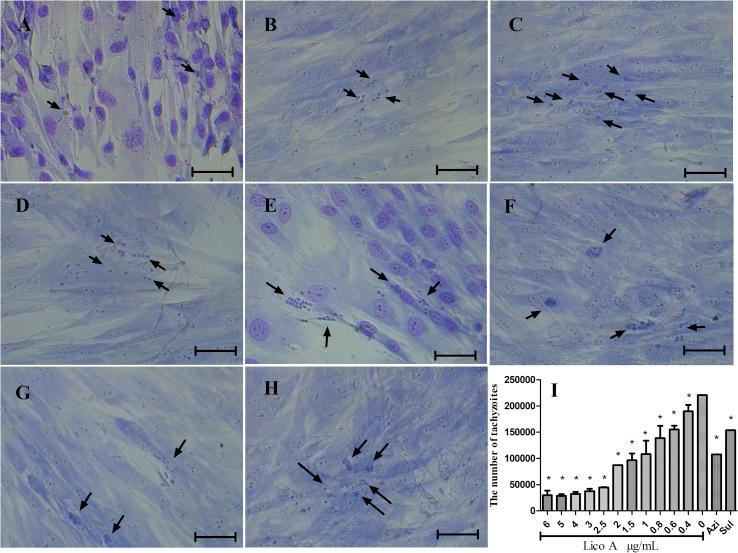
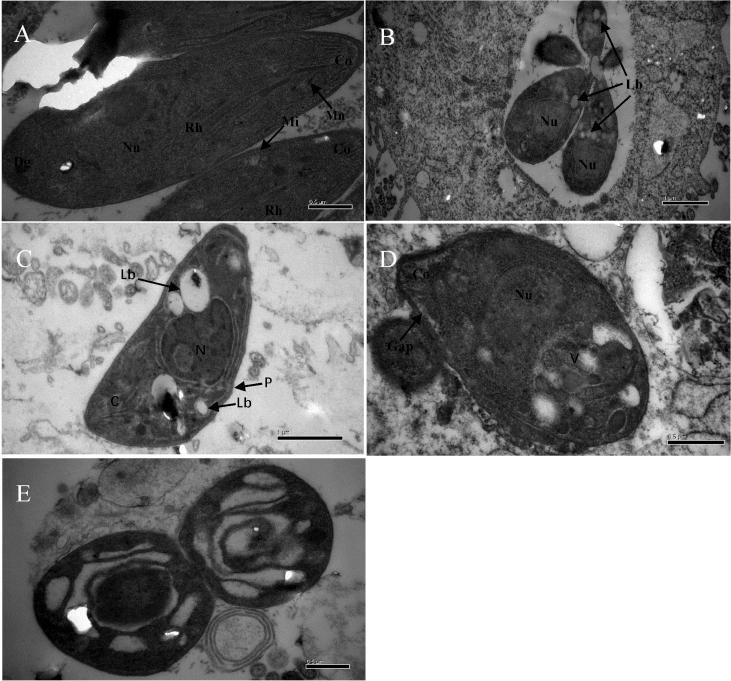
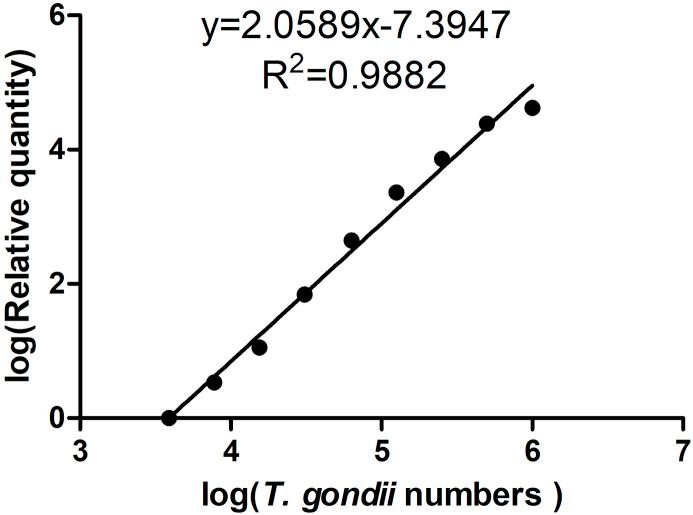
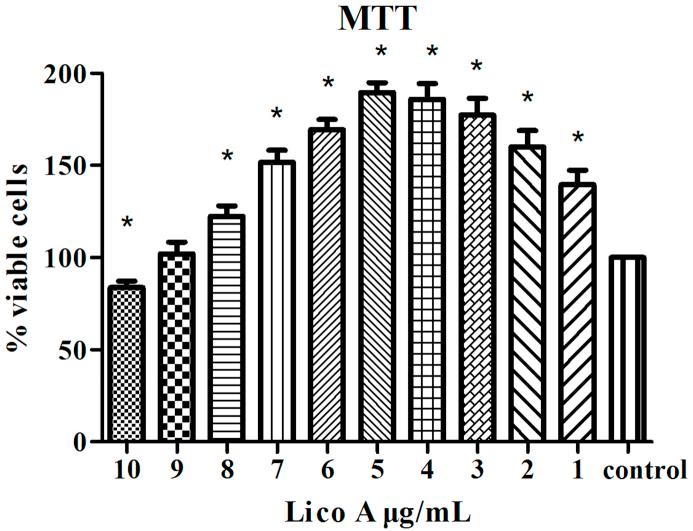
Toxoplasma gondii, an obligate intracellular protozoan, is the causative agent of toxoplasmosis, which can cause serious public health problems. The current drugs used to treat toxoplasmosis have many limitations. This study evaluated the anti-T. gondii activity and potential mechanism of Licochalcone A (Lico A) in vitro and in vivo. The safe concentration of Lico A in HFF cells was determined by MTT cell viability assays. The presence of T. gondii was assessed by qPCR and Giemsa staining. Azithromycin and sulfadiazine, commonly used effective treatments, served as drug controls. T. gondii ultrastructural alterations were observed by electron microscopy. The anti-T. gondii activity of Lico A was evaluated using an in vivo mouse infection model. In vitro, Lico A had no negative effect on host cell viability at concentrations below 9 μg/mL; however, it did inhibit T. gondii proliferation in a dose-dependent manner, with a 50% inhibitory concentration (IC) of 0.848 μg/mL. Electron microscopy analyses indicated substantial structural and ultrastructural changes in tachyzoites after Lico A treatment. Nile Red staining assays demonstrated that Lico A caused lipid accumulation. Lico A treatment significantly increased the survival rate of BALB/c mice infected with T. gondii. Lico A achieved the same therapeutic effect as a commonly used clinical drugs (combination of sulfadiazine, pyrimethamine and folinic acid). In conclusion, Lico A has strong anti-T. gondii activity in vitro and in vivo and might be developed into a new anti-T. gondii drug. Moreover, Lico A may exert these effects by interfering with lipid metabolism in the parasite.
刚地弓形虫是一种专性细胞内原生动物,是弓形体病的病原体,可导致严重的公共卫生问题。目前用于治疗弓形体病的药物有许多局限性。本研究评估了甘草查尔酮 A(Lico A)在体外和体内的抗弓形体活性和潜在机制。通过 MTT 细胞活力测定法确定 Lico A 在 HFF 细胞中的安全浓度。通过 qPCR 和吉姆萨染色评估弓形体的存在。阿奇霉素和磺胺嘧啶作为常用的有效治疗药物作为药物对照。通过电子显微镜观察弓形体的超微结构变化。使用体内小鼠感染模型评估 Lico A 的抗弓形体活性。在体外,Lico A 在低于 9μg/mL 的浓度下对宿主细胞活力没有负面影响;然而,它确实以剂量依赖性方式抑制弓形体的增殖,其 50%抑制浓度(IC)为 0.848μg/mL。电子显微镜分析表明,Lico A 处理后速殖子的结构和超微结构发生了显著变化。尼罗红染色试验表明 Lico A 导致脂质积累。Lico A 处理可显著提高感染弓形体的 BALB/c 小鼠的存活率。Lico A 达到了与常用临床药物(磺胺嘧啶、乙胺嘧啶和甲氨蝶呤)相同的治疗效果。总之,Lico A 在体外和体内具有很强的抗弓形体活性,可能开发成一种新的抗弓形体药物。此外,Lico A 可能通过干扰寄生虫的脂质代谢发挥这些作用。






 Zotero 插件