
糖尿病性神经病变发展过程中的外周神经胶质细胞
Peripheral Glial Cells in the Development of Diabetic Neuropathy.
作者信息
Gonçalves Nádia Pereira, Vægter Christian Bjerggaard, Pallesen Lone Tjener
机构信息
Department of Biomedicine, Nordic-EMBL Partnership for Molecular Medicine, Danish Research Institute of Translational Neuroscience (DANDRITE), Aarhus University, Aarhus, Denmark.
The International Diabetic Neuropathy Consortium (IDNC), Aarhus University, Aarhus, Denmark.
出版信息
Front Neurol. 2018 May 2;9:268. doi: 10.3389/fneur.2018.00268. eCollection 2018.
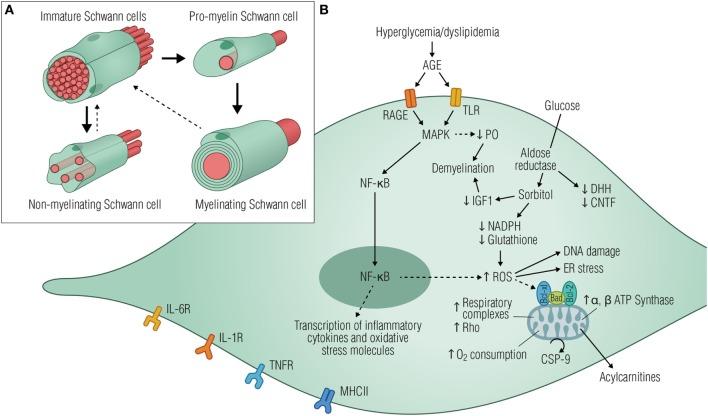
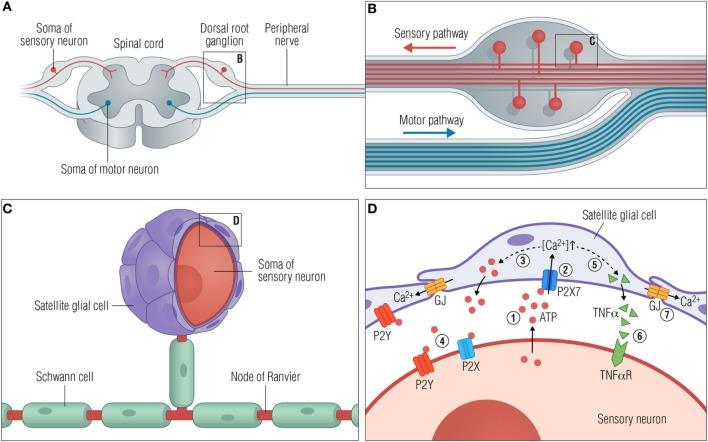
The global prevalence of diabetes is rapidly increasing, affecting more than half a billion individuals within the next few years. As diabetes negatively affects several physiological systems, this dramatic increase represents not only impaired quality of life on the individual level but also a huge socioeconomic challenge. One of the physiological consequences affecting up to half of diabetic patients is the progressive deterioration of the peripheral nervous system, resulting in spontaneous pain and eventually loss of sensory function, motor weakness, and organ dysfunctions. Despite intense research on the consequences of hyperglycemia on nerve functions, the biological mechanisms underlying diabetic neuropathy are still largely unknown, and treatment options lacking. Research has mainly focused directly on the neuronal component, presumably from the perspective that this is the functional signal-transmitting unit of the nerve. However, it is noteworthy that each single peripheral sensory neuron is intimately associated with numerous glial cells; the neuronal soma is completely enclosed by satellite glial cells and the length of the longest axons covered by at least 1,000 Schwann cells. The glial cells are vital for the neuron, but very little is still known about these cells in general and especially how they respond to diabetes in terms of altered neuronal support. We will discuss current knowledge of peripheral glial cells and argue that increased research in these cells is imperative for a better understanding of the mechanisms underlying diabetic neuropathy.
全球糖尿病患病率正在迅速上升,预计在未来几年内将影响超过5亿人。由于糖尿病会对多个生理系统产生负面影响,这种显著增长不仅意味着个人生活质量的下降,也带来了巨大的社会经济挑战。糖尿病患者中高达一半的人会出现一种生理后果,即周围神经系统逐渐恶化,导致自发疼痛,最终出现感觉功能丧失、运动无力和器官功能障碍。尽管对高血糖对神经功能的影响进行了深入研究,但糖尿病神经病变的生物学机制仍大多未知,且缺乏有效的治疗方法。研究主要直接聚焦于神经元成分,推测是因为认为神经元是神经的功能信号传递单元。然而,值得注意的是,每一个外周感觉神经元都与众多神经胶质细胞密切相关;神经元胞体完全被卫星神经胶质细胞包围,最长的轴突长度至少被1000个施万细胞覆盖。神经胶质细胞对神经元至关重要,但总体而言,我们对这些细胞仍知之甚少,尤其是它们在神经元支持功能改变方面如何应对糖尿病。我们将讨论关于外周神经胶质细胞的现有知识,并认为加强对这些细胞的研究对于更好地理解糖尿病神经病变的潜在机制至关重要。
 Zotero 插件