
尾噬菌体用于突破细菌细胞屏障的酶和机制。
Enzymes and Mechanisms Employed by Tailed Bacteriophages to Breach the Bacterial Cell Barriers.
机构信息
Research Institute for Medicines (iMed.ULisboa), Faculty of Pharmacy, Universidade de Lisboa, Av. Prof. Gama Pinto, 1649-003 Lisboa, Portugal.
出版信息
Viruses. 2018 Jul 27;10(8):396. doi: 10.3390/v10080396.
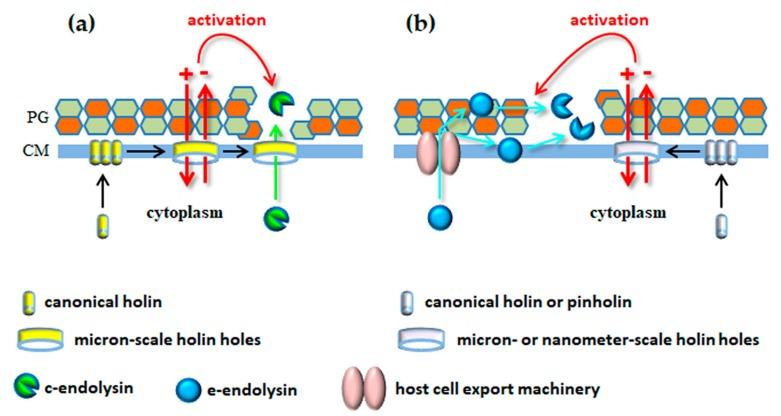
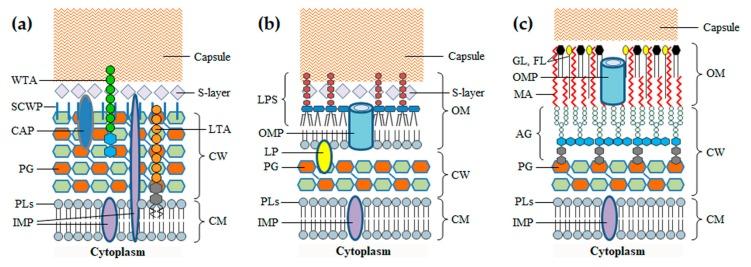
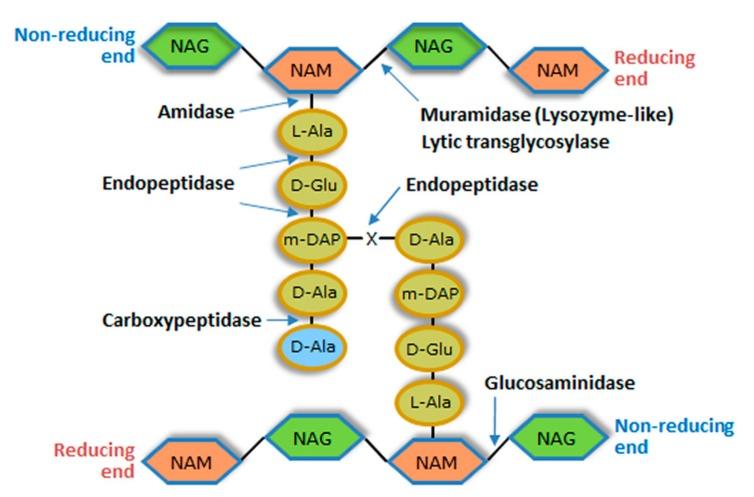
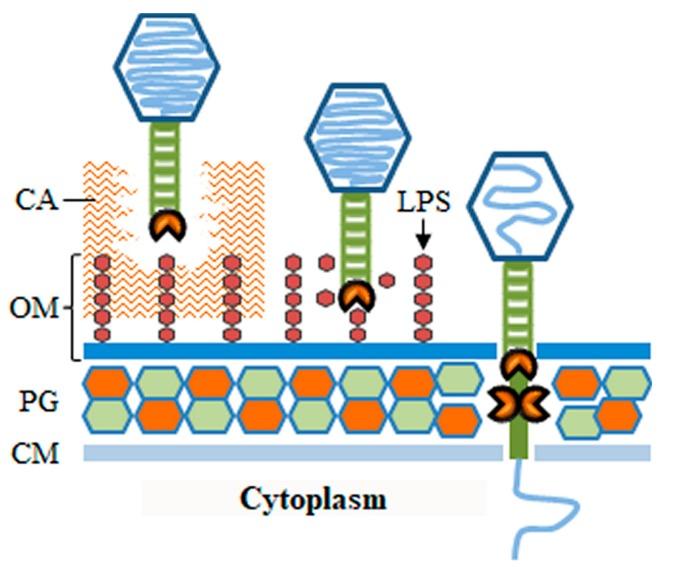
Monoderm bacteria possess a cell envelope made of a cytoplasmic membrane and a cell wall, whereas diderm bacteria have and extra lipid layer, the outer membrane, covering the cell wall. Both cell types can also produce extracellular protective coats composed of polymeric substances like, for example, polysaccharidic capsules. Many of these structures form a tight physical barrier impenetrable by phage virus particles. Tailed phages evolved strategies/functions to overcome the different layers of the bacterial cell envelope, first to deliver the genetic material to the host cell cytoplasm for virus multiplication, and then to release the virion offspring at the end of the reproductive cycle. There is however a major difference between these two crucial steps of the phage infection cycle: virus entry cannot compromise cell viability, whereas effective virion progeny release requires host cell lysis. Here we present an overview of the viral structures, key protein players and mechanisms underlying phage DNA entry to bacteria, and then escape of the newly-formed virus particles from infected hosts. Understanding the biological context and mode of action of the phage-derived enzymes that compromise the bacterial cell envelope may provide valuable information for their application as antimicrobials.
单胞菌具有由细胞质膜和细胞壁组成的细胞包膜,而双胞菌具有覆盖细胞壁的额外脂质层,即外膜。这两种细胞类型还可以产生由聚合物质组成的细胞外保护套,例如多糖胶囊。许多这些结构形成了一个紧密的物理屏障,噬菌体病毒颗粒无法穿透。有尾噬菌体进化出了策略/功能来克服细菌细胞包膜的不同层,首先将遗传物质递送到宿主细胞质中进行病毒繁殖,然后在生殖周期结束时释放出病毒粒子后代。然而,噬菌体感染周期的这两个关键步骤之间存在一个主要区别:病毒进入不能损害细胞活力,而有效释放病毒粒子后代需要宿主细胞裂解。在这里,我们概述了噬菌体进入细菌的病毒结构、关键蛋白参与者和机制,然后是新形成的病毒粒子从受感染宿主中逃逸。了解破坏细菌细胞包膜的噬菌体衍生酶的生物学背景和作用模式可能为将它们用作抗菌剂提供有价值的信息。
 Zotero 插件