
单细胞 RNA 速度。
RNA velocity of single cells.
机构信息
Laboratory of Molecular Neurobiology, Department of Medical Biochemistry and Biophysics, Karolinska Institutet, Stockholm, Sweden.
Science for Life Laboratory, Solna, Sweden.
出版信息
Nature. 2018 Aug;560(7719):494-498. doi: 10.1038/s41586-018-0414-6. Epub 2018 Aug 8.
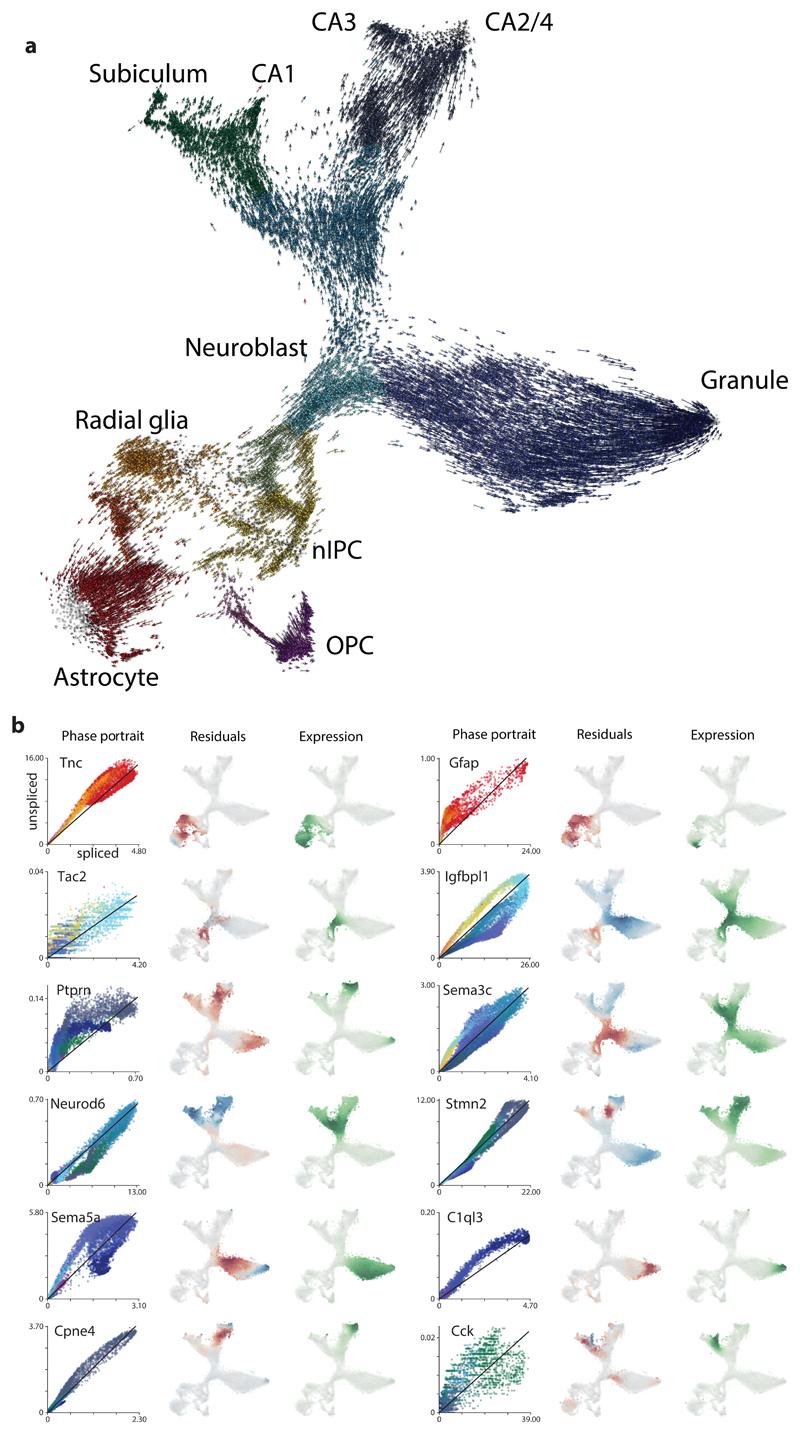
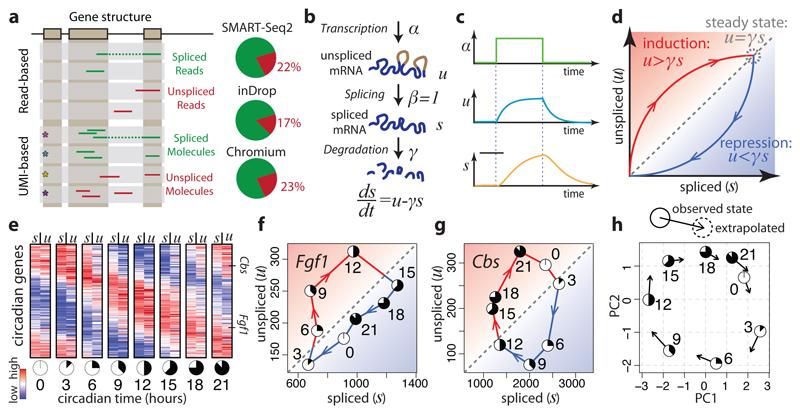
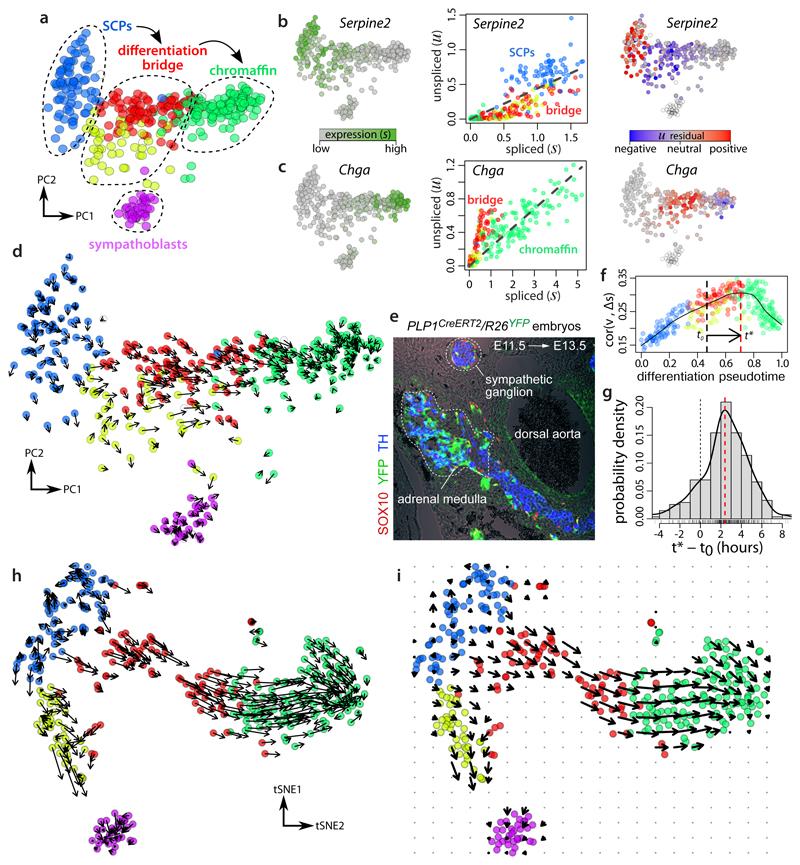
RNA abundance is a powerful indicator of the state of individual cells. Single-cell RNA sequencing can reveal RNA abundance with high quantitative accuracy, sensitivity and throughput. However, this approach captures only a static snapshot at a point in time, posing a challenge for the analysis of time-resolved phenomena such as embryogenesis or tissue regeneration. Here we show that RNA velocity-the time derivative of the gene expression state-can be directly estimated by distinguishing between unspliced and spliced mRNAs in common single-cell RNA sequencing protocols. RNA velocity is a high-dimensional vector that predicts the future state of individual cells on a timescale of hours. We validate its accuracy in the neural crest lineage, demonstrate its use on multiple published datasets and technical platforms, reveal the branching lineage tree of the developing mouse hippocampus, and examine the kinetics of transcription in human embryonic brain. We expect RNA velocity to greatly aid the analysis of developmental lineages and cellular dynamics, particularly in humans.
RNA 丰度是个体细胞状态的有力指标。单细胞 RNA 测序可以以高精度、高灵敏度和高通量的方式揭示 RNA 的丰度。然而,这种方法仅在时间点捕获静态快照,这对分析胚胎发生或组织再生等时间分辨现象构成了挑战。在这里,我们表明可以通过在常见的单细胞 RNA 测序方案中区分未剪接和剪接的 mRNA,直接估计 RNA 速度(基因表达状态的时间导数)。RNA 速度是一个高维向量,可以在数小时的时间尺度上预测单个细胞的未来状态。我们在神经嵴谱系中验证了其准确性,证明了其在多个已发表数据集和技术平台上的用途,揭示了发育中的小鼠海马回的分支谱系树,并研究了人类胚胎大脑中转录的动力学。我们预计 RNA 速度将极大地帮助分析发育谱系和细胞动力学,特别是在人类中。





 Zotero 插件