
炎症性疾病中的损伤相关分子模式
Damage-Associated Molecular Patterns in Inflammatory Diseases.
作者信息
Roh Jong Seong, Sohn Dong Hyun
机构信息
Department of Microbiology and Immunology, Pusan National University School of Medicine, Yangsan 50612, Korea.
出版信息
Immune Netw. 2018 Aug 13;18(4):e27. doi: 10.4110/in.2018.18.e27. eCollection 2018 Aug.
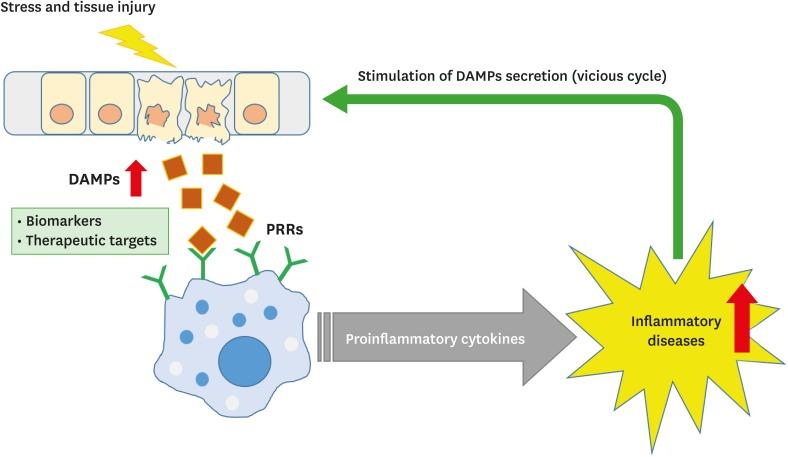
Damage-associated molecular patterns (DAMPs) are endogenous danger molecules that are released from damaged or dying cells and activate the innate immune system by interacting with pattern recognition receptors (PRRs). Although DAMPs contribute to the host's defense, they promote pathological inflammatory responses. Recent studies have suggested that various DAMPs, such as high-mobility group box 1 (HMGB1), S100 proteins, and heat shock proteins (HSPs), are increased and considered to have a pathogenic role in inflammatory diseases. Here, we review current research on the role of DAMPs in inflammatory diseases, including rheumatoid arthritis, systemic lupus erythematosus, osteoarthritis, atherosclerosis, Alzheimer's disease, Parkinson's disease, and cancer. We also discuss the possibility of DAMPs as biomarkers and therapeutic targets for these diseases.
损伤相关分子模式(DAMPs)是从受损或濒死细胞释放的内源性危险分子,通过与模式识别受体(PRRs)相互作用激活先天免疫系统。尽管DAMPs有助于宿主防御,但它们会促进病理性炎症反应。最近的研究表明,各种DAMPs,如高迁移率族蛋白B1(HMGB1)、S100蛋白和热休克蛋白(HSPs)水平升高,并被认为在炎症性疾病中具有致病作用。在此,我们综述了目前关于DAMPs在炎症性疾病中的作用的研究,包括类风湿性关节炎、系统性红斑狼疮、骨关节炎、动脉粥样硬化、阿尔茨海默病、帕金森病和癌症。我们还讨论了DAMPs作为这些疾病的生物标志物和治疗靶点的可能性。
 Zotero 插件