
人类癌症进展中 MAGE 家族的表观遗传调控 - DNA 甲基化、组蛋白修饰和非编码 RNA。
Epigenetic regulation of MAGE family in human cancer progression-DNA methylation, histone modification, and non-coding RNAs.
机构信息
Research Center, the Fourth Affiliated Hospital of Hebei Medical University, Shijiazhuang, 050017, Hebei, People's Republic of China.
Tumor Research Institute, the Fourth Affiliated Hospital of Hebei Medical University, Shijiazhuang, 050017, Hebei, People's Republic of China.
出版信息
Clin Epigenetics. 2018 Sep 5;10(1):115. doi: 10.1186/s13148-018-0550-8.
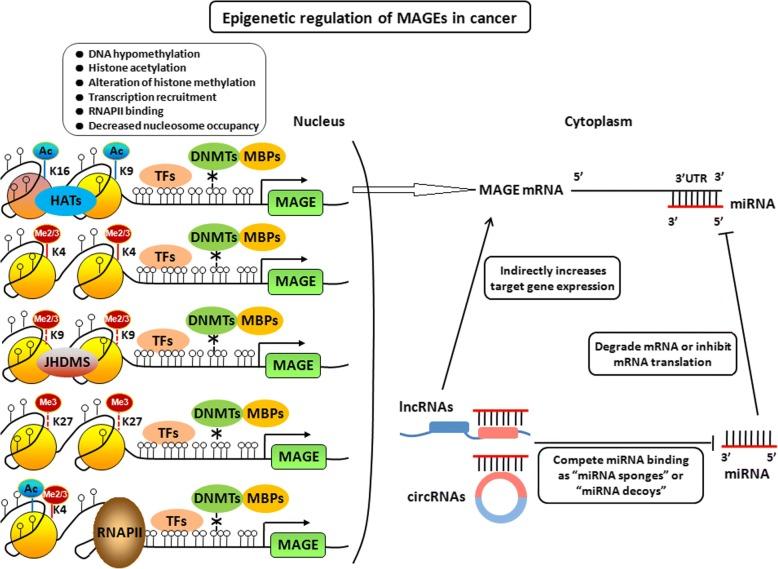
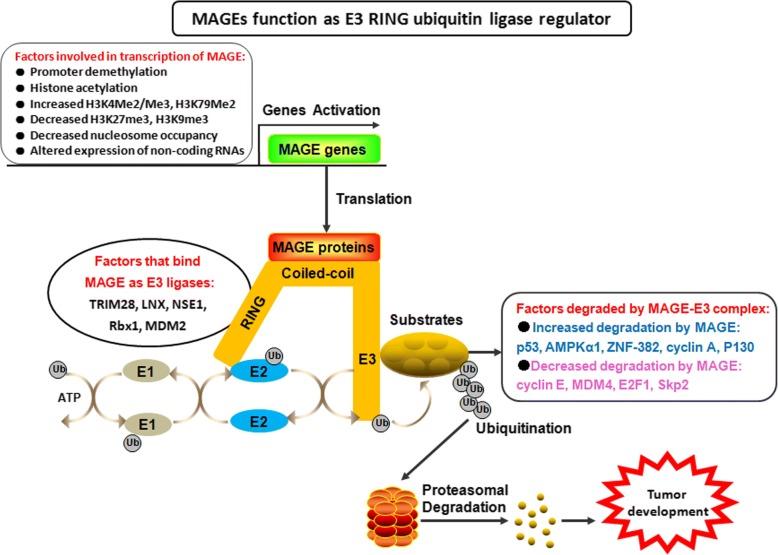
The melanoma antigen gene (MAGE) proteins are a group of highly conserved family members that contain a common MAGE homology domain. Type I MAGEs are relevant cancer-testis antigens (CTAs), and originally considered as attractive targets for cancer immunotherapy due to their typically high expression in tumor tissues but restricted expression in normal adult tissues. Here, we reviewed the recent discoveries and ideas that illustrate the biological functions of MAGE family in cancer progression. Furthermore, we also highlighted the current understanding of the epigenetic mechanism of MAGE family expression in human cancers.
黑素瘤相关抗原基因(MAGE)蛋白是一组高度保守的家族成员,包含一个共同的 MAGE 同源结构域。I 型 MAGE 是相关的肿瘤睾丸抗原(CTA),最初由于其在肿瘤组织中的高表达而在正常成人组织中受限表达而被认为是癌症免疫治疗的有吸引力的靶标。在这里,我们回顾了最近的发现和想法,这些发现和想法说明了 MAGE 家族在癌症进展中的生物学功能。此外,我们还强调了目前对人类癌症中 MAGE 家族表达的表观遗传机制的理解。

 Zotero 插件