
线粒体来源的 ROS 通过间接方式激活 AMP 激活的蛋白激酶(AMPK)。
Mitochondria-derived ROS activate AMP-activated protein kinase (AMPK) indirectly.
机构信息
From the MRC Mitochondrial Biology Unit, University of Cambridge, Wellcome Trust/MRC Building, Cambridge Biomedical Campus, Hills Road, Cambridge, CB2 0XY.
the University Department of Surgery and Cambridge NIHR Biomedical Research Centre Addenbrooke's Hospital, Cambridge CB2 0QQ.
出版信息
J Biol Chem. 2018 Nov 2;293(44):17208-17217. doi: 10.1074/jbc.RA118.002579. Epub 2018 Sep 19.
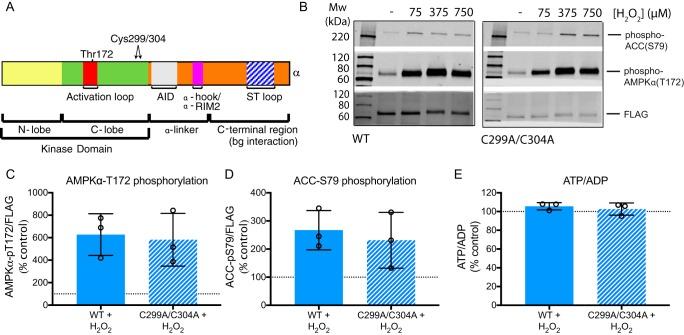
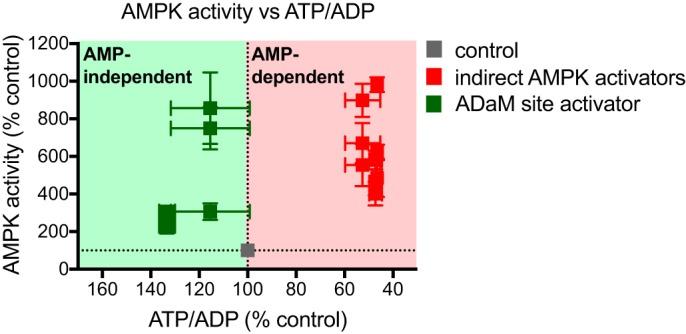
Mitochondrial reactive oxygen species (ROS) production is a tightly regulated redox signal that transmits information from the organelle to the cell. Other mitochondrial signals, such as ATP, are sensed by enzymes, including the key metabolic sensor and regulator, AMP-activated protein kinase (AMPK). AMPK responds to the cellular ATP/AMP and ATP/ADP ratios by matching mitochondrial ATP production to demand. Previous reports proposed that AMPK activity also responds to ROS, by ROS acting on redox-sensitive cysteine residues (Cys-299/Cys-304) on the AMPK α subunit. This suggests an appealing model in which mitochondria fine-tune AMPK activity by both adenine nucleotide-dependent mechanisms and by redox signals. Here we assessed whether physiological levels of ROS directly alter AMPK activity. To this end we added exogenous hydrogen peroxide (HO) to cells and utilized the mitochondria-targeted redox cycler MitoParaquat to generate ROS within mitochondria without disrupting oxidative phosphorylation. Mitochondrial and cytosolic thiol oxidation was assessed by measuring peroxiredoxin dimerization and by redox-sensitive fluorescent proteins. Replacing the putative redox-active cysteine residues on AMPK α1 with alanines did not alter the response of AMPK to HO In parallel with measurements of AMPK activity, we measured the cell ATP/ADP ratio. This allowed us to separate the effects on AMPK activity due to ROS production from those caused by changes in this ratio. We conclude that AMPK activity in response to redox changes is not due to direct action on AMPK itself, but is a secondary consequence of redox effects on other processes, such as mitochondrial ATP production.
线粒体活性氧(ROS)的产生是一种严格调控的氧化还原信号,它将细胞器的信息传递到细胞中。其他线粒体信号,如 ATP,被包括关键代谢传感器和调节剂 AMP 激活蛋白激酶(AMPK)在内的酶所感知。AMPK 通过匹配线粒体 ATP 的产生与需求,对细胞内的 ATP/AMP 和 ATP/ADP 比值做出反应。先前的报道提出,ROS 通过作用于 AMPKα亚基上的氧化还原敏感半胱氨酸残基(Cys-299/Cys-304)来调节 AMPK 活性。这表明了一个吸引人的模型,即线粒体通过腺嘌呤核苷酸依赖的机制和氧化还原信号来微调 AMPK 活性。在这里,我们评估了生理水平的 ROS 是否直接改变 AMPK 活性。为此,我们向细胞中添加外源性过氧化氢(HO),并利用线粒体靶向氧化还原循环剂 MitoParaquat 在不破坏氧化磷酸化的情况下在线粒体中产生 ROS。通过测量过氧化物酶二聚化和氧化还原敏感的荧光蛋白来评估线粒体和细胞质硫醇氧化。用丙氨酸取代 AMPKα1 上假定的氧化还原活性半胱氨酸残基,不会改变 AMPK 对 HO 的反应。与 AMPK 活性的测量平行,我们测量了细胞内的 ATP/ADP 比值。这使我们能够将由于 ROS 产生而对 AMPK 活性的影响与由于该比值变化而引起的影响区分开来。我们的结论是,AMPK 活性对氧化还原变化的反应不是由于对 AMPK 本身的直接作用,而是氧化还原对其他过程(如线粒体 ATP 产生)的影响的次要后果。




 Zotero 插件