
铜绿假单胞菌生物膜基质内 CdrA 相互作用可防止其被蛋白水解并促进细胞堆积。
CdrA Interactions within the Pseudomonas aeruginosa Biofilm Matrix Safeguard It from Proteolysis and Promote Cellular Packing.
机构信息
Department of Microbiology, University of Washington, Seattle, Washington, USA.
Departments of Microbial Infection and Immunity, Microbiology, The Ohio State University, Columbus, Ohio, USA.
出版信息
mBio. 2018 Sep 25;9(5):e01376-18. doi: 10.1128/mBio.01376-18.
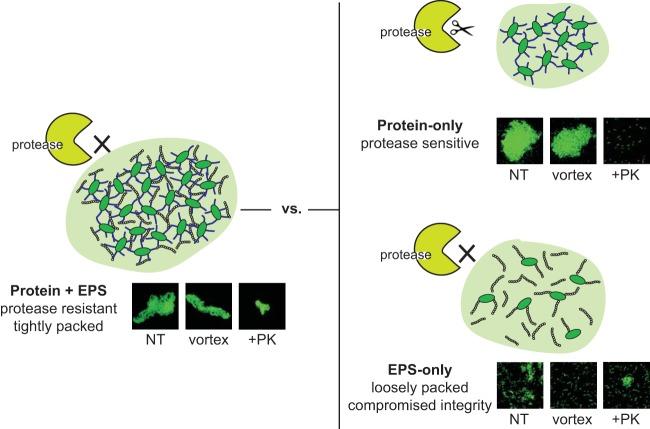
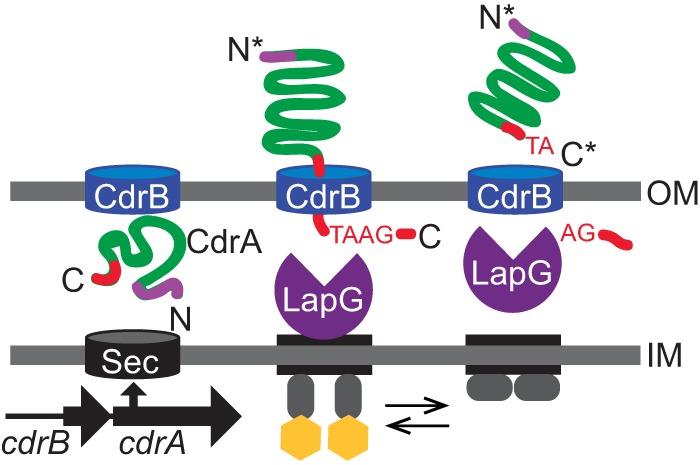
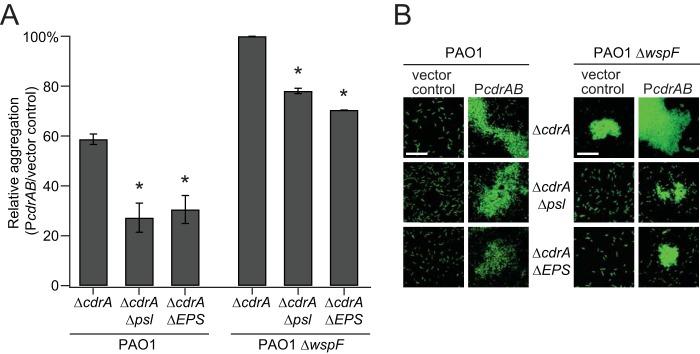
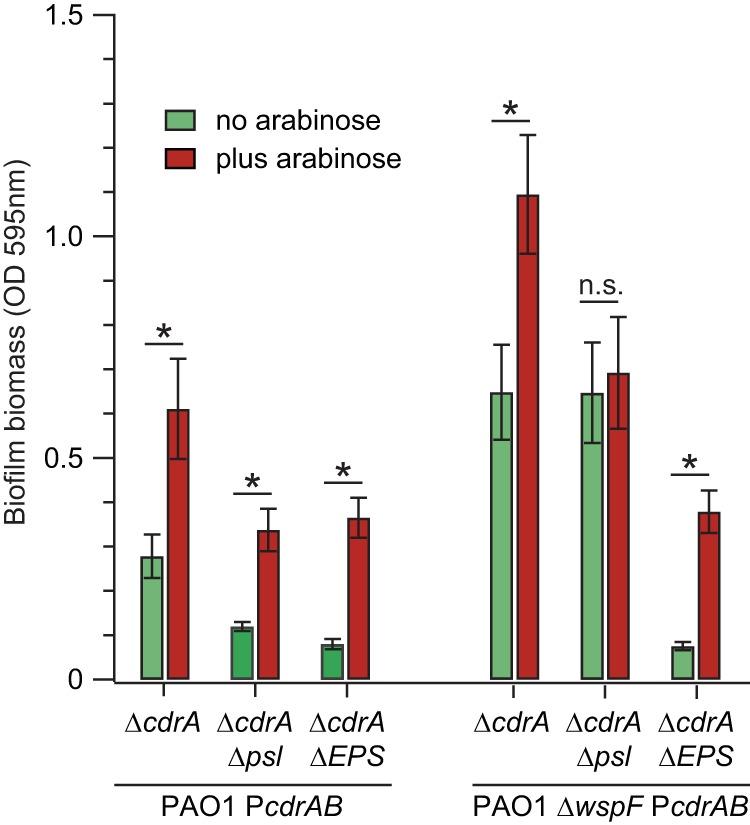
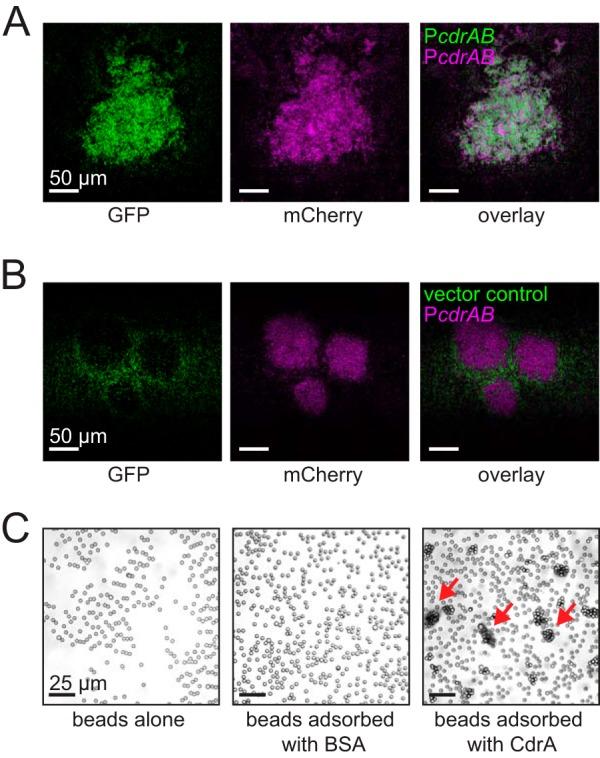
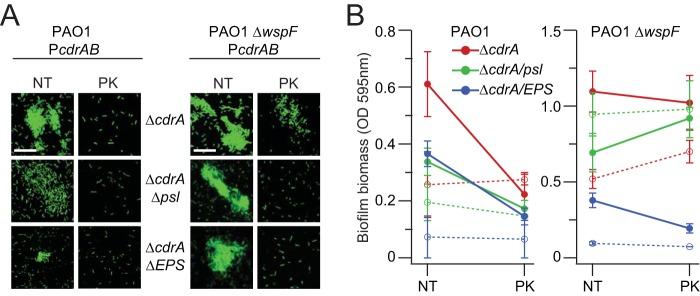
Biofilms are robust multicellular aggregates of bacteria that are encased in an extracellular matrix. Different bacterial species have been shown to use a range of biopolymers to build their matrices. is a model organism for the laboratory study of biofilms, and past work has suggested that exopolysaccharides are a required matrix component. However, we found that expression of the matrix protein CdrA, in the absence of biofilm exopolysaccharides, allowed biofilm formation through the production of a CdrA-rich proteinaceous matrix. This represents a novel function for CdrA. Similar observations have been made for other species such as and , which can utilize protein-dominant biofilm matrices. However, we found that these CdrA-containing matrices were susceptible to both exogenous and self-produced proteases. We previously reported that CdrA directly binds the biofilm matrix exopolysaccharide Psl. Now we have found that when CdrA bound to Psl, it was protected from proteolysis. Together, these results support the idea of the importance of multibiomolecular components in matrix stability and led us to propose a model in which CdrA-CdrA interactions can enhance cell-cell packing in an aggregate that is resistant to physical shear, while Psl-CdrA interactions enhance aggregate integrity in the presence of self-produced and exogenous proteases. forms multicellular aggregates or biofilms using both exopolysaccharides and the CdrA matrix adhesin. We showed for the first time that can use CdrA to build biofilms that do not require known matrix exopolysaccharides. It is appreciated that biofilm growth is protective against environmental assaults. However, little is known about how the interactions between individual matrix components aid in this protection. We found that interactions between CdrA and the exopolysaccharide Psl fortify the matrix by preventing CdrA proteolysis. When both components-CdrA and Psl-are part of the matrix, robust aggregates form that are tightly packed and protease resistant. These findings provide insight into how biofilms persist in protease-rich host environments.
生物膜是由细菌组成的坚固的多细胞聚集体,被包裹在细胞外基质中。不同的细菌物种已被证明使用一系列生物聚合物来构建它们的基质。 是生物膜实验室研究的模式生物,过去的工作表明,胞外多糖是基质的必需组成部分。然而,我们发现,在没有生物膜胞外多糖的情况下,基质蛋白 CdrA 的表达允许通过产生富含 CdrA 的蛋白质基质来形成生物膜。这代表了 CdrA 的一个新功能。类似的观察结果也在其他物种如 和 中得到了证实,它们可以利用以蛋白质为主的生物膜基质。然而,我们发现这些含有 CdrA 的基质容易受到外源性和内源性蛋白酶的影响。我们之前报道过 CdrA 直接结合生物膜基质胞外多糖 Psl。现在我们发现,当 CdrA 与 Psl 结合时,它可以免受蛋白酶的水解。综上所述,这些结果支持了多生物分子成分在基质稳定性中的重要性的观点,并促使我们提出了一个模型,即 CdrA-CdrA 相互作用可以增强聚集物中细胞间的包装,使其抵抗物理剪切,而 Psl-CdrA 相互作用可以增强聚集物在存在内源性和外源性蛋白酶时的完整性。 使用胞外多糖和 CdrA 基质黏附蛋白形成多细胞聚集体或生物膜。我们首次表明, 可以使用 CdrA 构建不需要已知基质胞外多糖的生物膜。人们认识到,生物膜的生长可以保护免受环境攻击。然而,人们对单个基质成分之间的相互作用如何有助于这种保护知之甚少。我们发现,CdrA 与胞外多糖 Psl 之间的相互作用通过防止 CdrA 蛋白水解来增强基质。当基质的组成部分包括 CdrA 和 Psl 时,会形成紧密堆积且具有抗蛋白酶的坚固聚集体。这些发现提供了对生物膜如何在富含蛋白酶的宿主环境中持续存在的深入了解。

 Zotero 插件