
迷迭香酸,迷迭香茶的一种成分,通过调节前列腺癌细胞系中 HDAC2 的表达诱导细胞周期停滞和细胞凋亡。
Rosmarinic Acid, a Component of Rosemary Tea, Induced the Cell Cycle Arrest and Apoptosis through Modulation of HDAC2 Expression in Prostate Cancer Cell Lines.
机构信息
Laboratory of Biochemistry and Immunology, College of Veterinary Medicine, Chungbuk National University, Cheongju 28644, Chungbuk, Korea.
出版信息
Nutrients. 2018 Nov 16;10(11):1784. doi: 10.3390/nu10111784.
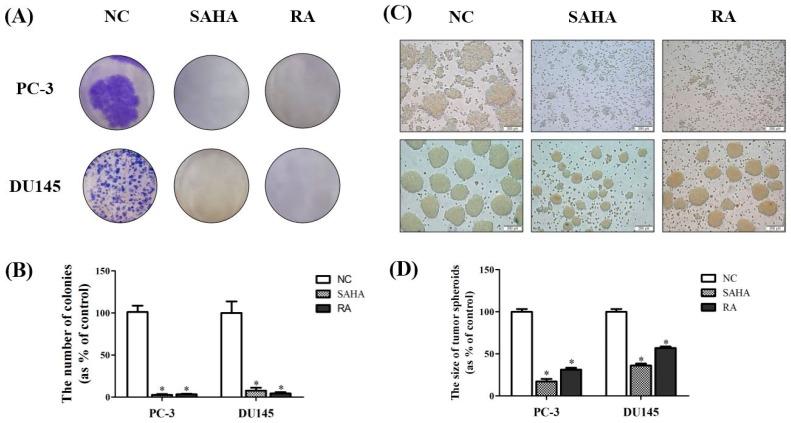
Rosmarinic acid (RA), a main phenolic compound contained in rosemary which is used as tea, oil, medicine and so on, has been known to present anti-inflammatory, anti-oxidant and anti-cancer effects. Histone deacetylases (HDACs) are enzymes that play important roles in gene expression by removing the acetyl group from histone. The aberrant expression of HDAC in human tumors is related with the onset of human cancer. Especially, HDAC2, which belongs to HDAC class I composed of HDAC 1, 2, 3 and 8, has been reported to be highly expressed in prostate cancer (PCa) where it downregulates the expression of p53, resulting in an inhibition of apoptosis. The purpose of this study is to investigate the effect of RA in comparison with suberoylanilide hydroxamic acid (SAHA), an HDAC inhibitor used as an anti-cancer agent, on survival and apoptosis of PCa cell lines, PC-3 and DU145, and the expression of HDAC. RA decreased the cell proliferation in cell viability assay, and inhibited the colony formation and tumor spheroid formation. Additionally, RA induced early- and late-stage apoptosis of PC-3 and DU145 cells in Annexin V assay and terminal deoxynucleotidyl transferase dUTP nick end labeling (TUNEL) assay, respectively. In western blot analysis, RA inhibited the expression of HDAC2, as SAHA did. Proliferating cell nuclear antigen (PCNA), cyclin D1 and cyclin E1 were downregulated by RA, whereas p21 was upregulated. In addition, RA modulated the protein expression of intrinsic mitochondrial apoptotic pathway-related genes, such as Bax, Bcl-2, caspase-3 and poly (ADP-ribose) polymerase 1 () (cleaved) via the upregulation of p53 derived from HDAC2 downregulation, leading to the increased apoptosis of PC-3 and DU145 cells. Taken together, treatment of RA to PCa cell lines inhibits the cell survival and induces cell apoptosis, and it can be used as a novel therapeutic agent toward PCa.
迷迭香酸(RA)是迷迭香中一种主要的酚类化合物,被用作茶、油、药物等,具有抗炎、抗氧化和抗癌作用。组蛋白去乙酰化酶(HDACs)是通过从组蛋白上去除乙酰基来发挥重要作用的酶。HDAC 在人类肿瘤中的异常表达与人类癌症的发生有关。特别是属于 HDAC 类 I 的 HDAC2,由 HDAC1、2、3 和 8 组成,已被报道在前列腺癌(PCa)中高度表达,它下调 p53 的表达,从而抑制细胞凋亡。本研究的目的是研究 RA 与作为抗癌剂的 HDAC 抑制剂 suberoylanilide hydroxamic acid(SAHA)相比对 PCa 细胞系 PC-3 和 DU145 的生存和凋亡以及 HDAC 表达的影响。RA 在细胞活力测定中降低了细胞增殖,并抑制了集落形成和肿瘤球体形成。此外,RA 在 Annexin V 测定和末端脱氧核苷酸转移酶 dUTP 缺口末端标记(TUNEL)测定中分别诱导了 PC-3 和 DU145 细胞的早期和晚期凋亡。在 Western blot 分析中,RA 抑制了 HDAC2 的表达,就像 SAHA 一样。RA 下调了增殖细胞核抗原(PCNA)、细胞周期蛋白 D1 和细胞周期蛋白 E1 的表达,而上调了 p21 的表达。此外,RA 通过上调由 HDAC2 下调引起的 p53,调节与内在线粒体凋亡途径相关的基因的蛋白表达,如 Bax、Bcl-2、caspase-3 和多聚(ADP-核糖)聚合酶 1(cleaved),导致 PC-3 和 DU145 细胞凋亡增加。总之,RA 处理 PCa 细胞系可抑制细胞存活并诱导细胞凋亡,可作为治疗前列腺癌的新型治疗剂。




 Zotero 插件