
在钙成像数据中检测神经组合。
Detecting neural assemblies in calcium imaging data.
机构信息
Queensland Brian Institute, The University of Queensland, Brisbane, 4072, Australia.
School of Mathematics and Physics, The University of Queensland, Brisbane, 4072, Australia.
出版信息
BMC Biol. 2018 Nov 28;16(1):143. doi: 10.1186/s12915-018-0606-4.
BACKGROUND
Activity in populations of neurons often takes the form of assemblies, where specific groups of neurons tend to activate at the same time. However, in calcium imaging data, reliably identifying these assemblies is a challenging problem, and the relative performance of different assembly-detection algorithms is unknown.
RESULTS
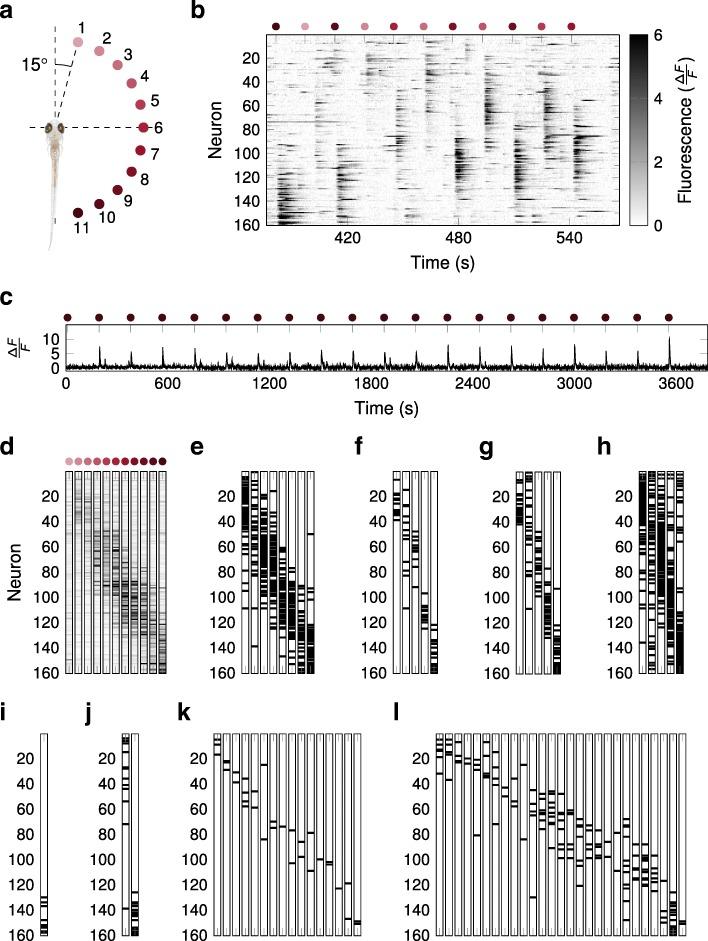
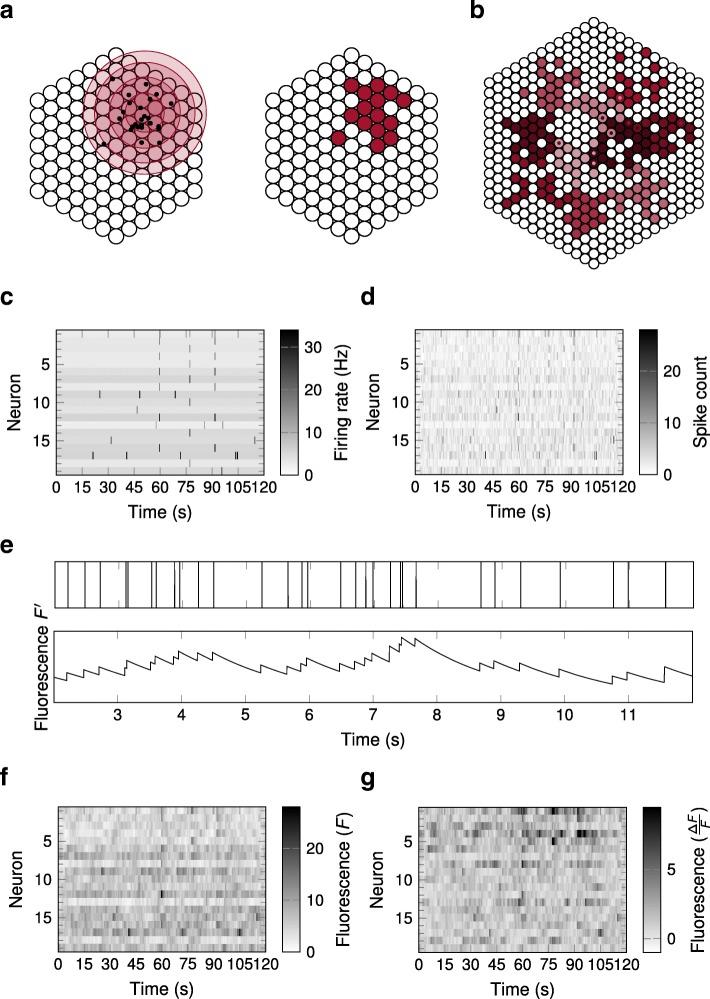
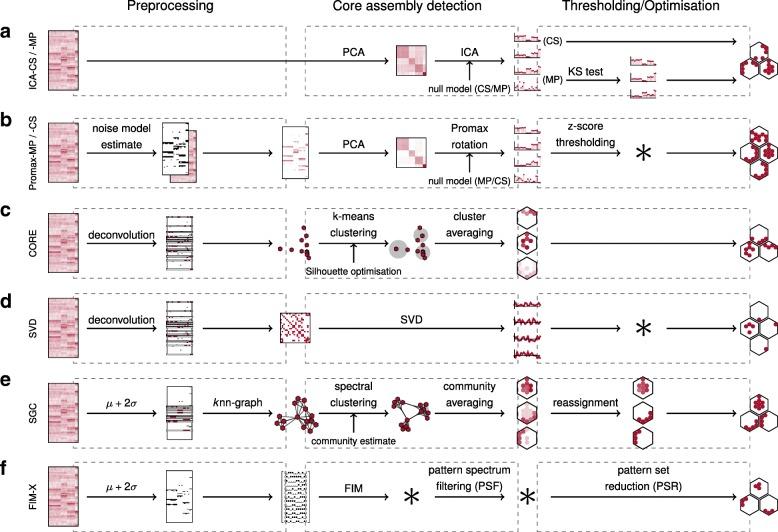
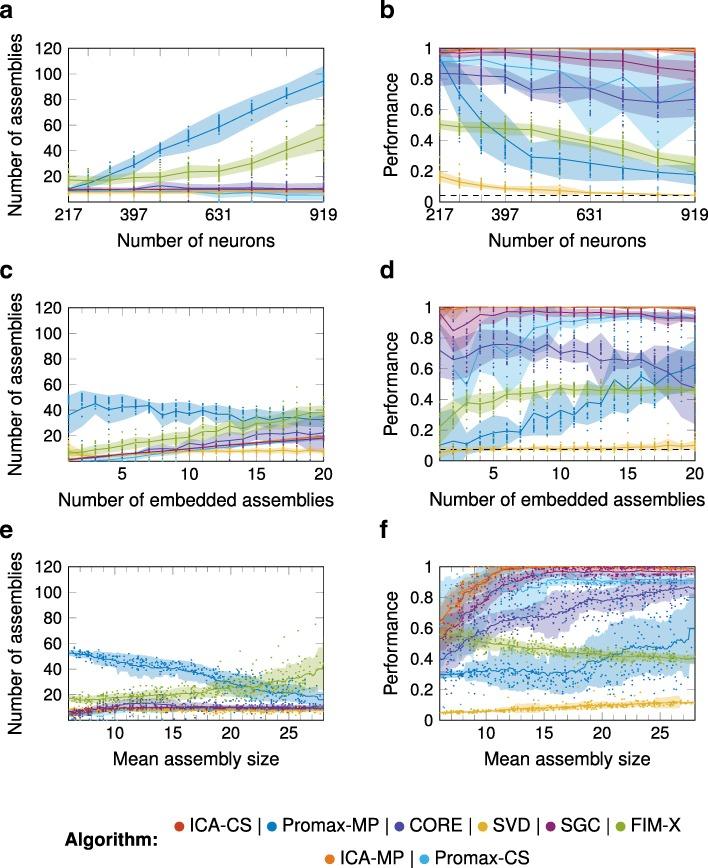
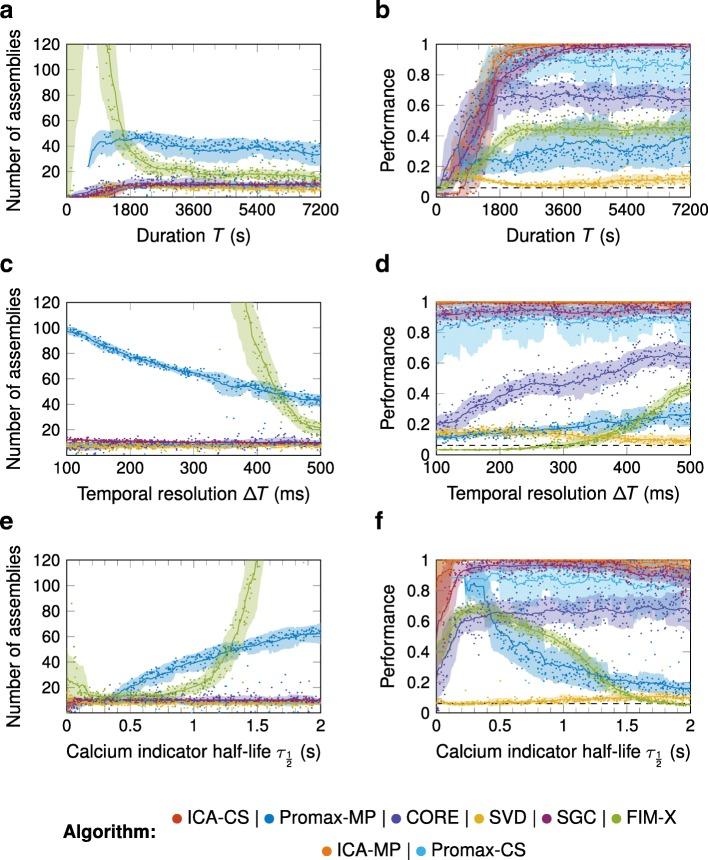
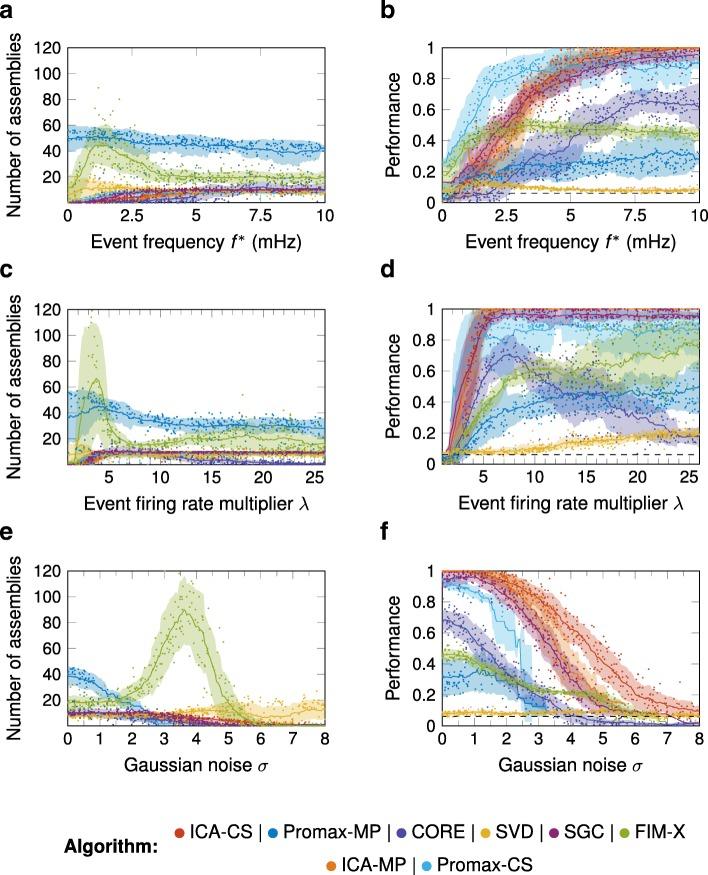
To test the performance of several recently proposed assembly-detection algorithms, we first generated large surrogate datasets of calcium imaging data with predefined assembly structures and characterised the ability of the algorithms to recover known assemblies. The algorithms we tested are based on independent component analysis (ICA), principal component analysis (Promax), similarity analysis (CORE), singular value decomposition (SVD), graph theory (SGC), and frequent item set mining (FIM-X). When applied to the simulated data and tested against parameters such as array size, number of assemblies, assembly size and overlap, and signal strength, the SGC and ICA algorithms and a modified form of the Promax algorithm performed well, while PCA-Promax and FIM-X did less well, for instance, showing a strong dependence on the size of the neural array. Notably, we identified additional analyses that can improve their importance. Next, we applied the same algorithms to a dataset of activity in the zebrafish optic tectum evoked by simple visual stimuli, and found that the SGC algorithm recovered assemblies closest to the averaged responses.
CONCLUSIONS
Our findings suggest that the neural assemblies recovered from calcium imaging data can vary considerably with the choice of algorithm, but that some algorithms reliably perform better than others. This suggests that previous results using these algorithms may need to be reevaluated in this light.
背景
神经元群体的活动通常表现为集合,其中特定的神经元群往往会同时激活。然而,在钙成像数据中,可靠地识别这些集合是一个具有挑战性的问题,并且不同集合检测算法的相对性能尚不清楚。
结果
为了测试几种最近提出的集合检测算法的性能,我们首先生成了具有预定义集合结构的大型钙成像数据替代数据集,并对算法识别已知集合的能力进行了特征描述。我们测试的算法基于独立成分分析(ICA)、主成分分析(Promax)、相似性分析(CORE)、奇异值分解(SVD)、图论(SGC)和频繁项集挖掘(FIM-X)。当应用于模拟数据并针对数组大小、集合数量、集合大小和重叠以及信号强度等参数进行测试时,SGC 和 ICA 算法以及 Promax 算法的一种修改形式表现良好,而 PCA-Promax 和 FIM-X 的表现则较差,例如,它们对神经数组的大小表现出很强的依赖性。值得注意的是,我们确定了可以提高它们重要性的其他分析。接下来,我们将相同的算法应用于由简单视觉刺激引起的斑马鱼视顶盖活动数据集,发现 SGC 算法恢复的集合最接近平均响应。
结论
我们的研究结果表明,从钙成像数据中恢复的神经集合可能会因算法的选择而有很大差异,但有些算法确实比其他算法表现更好。这表明,之前使用这些算法的结果可能需要根据这一观点进行重新评估。
 Zotero 插件