
在体内通过电子晶体学断层分析技术分析 Dam1C/DASH 在动粒-纺锤体界面的情况。
Electron cryotomography analysis of Dam1C/DASH at the kinetochore-spindle interface in situ.
机构信息
Department of Biological Sciences and Centre for BioImaging Sciences, National University of Singapore, Singapore.
Institute of Molecular and Cell Biology Agency for Science Technology and Research, Singapore.
出版信息
J Cell Biol. 2019 Feb 4;218(2):455-473. doi: 10.1083/jcb.201809088. Epub 2018 Nov 30.
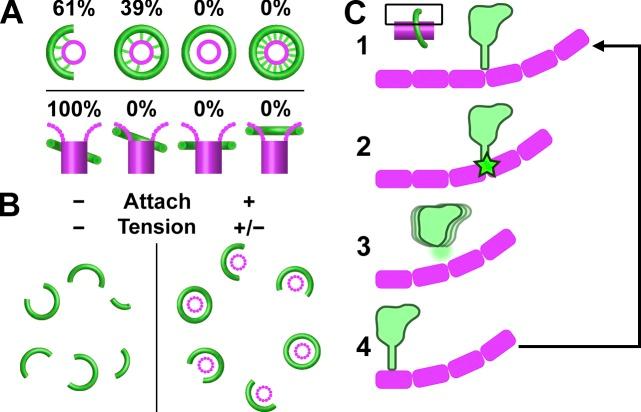
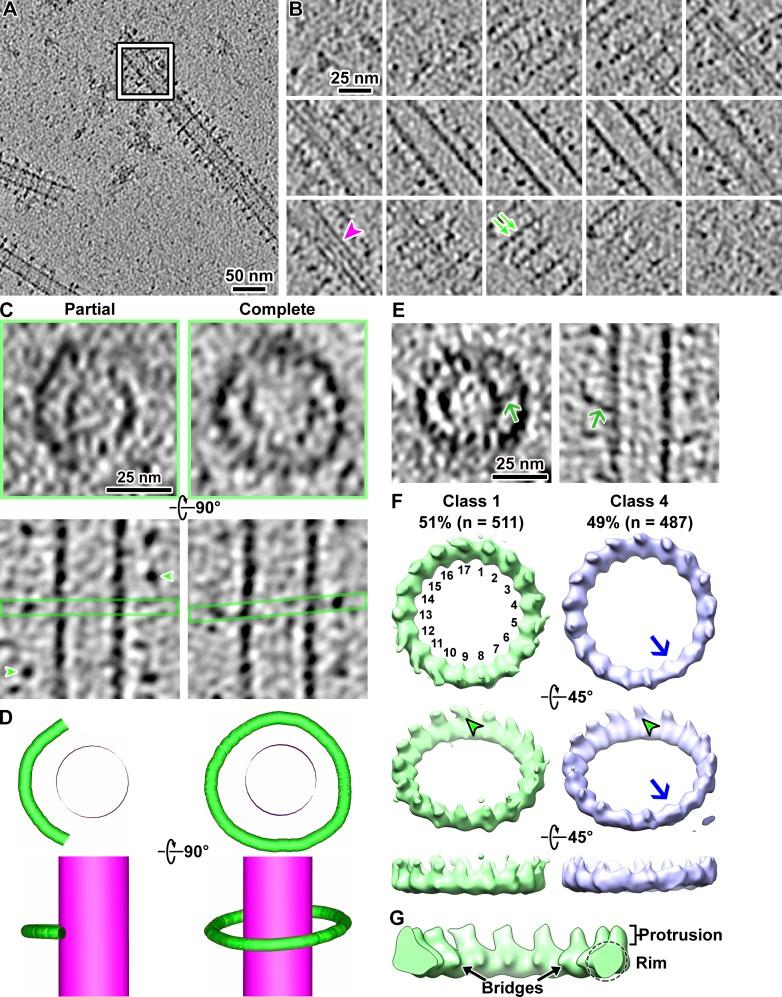
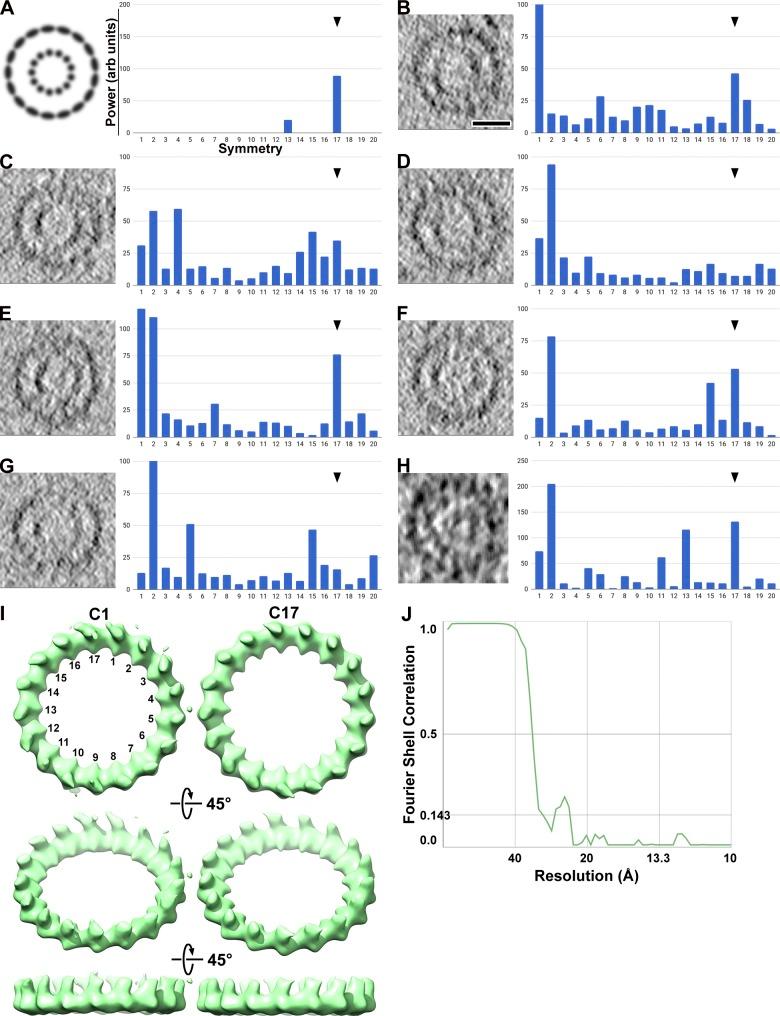
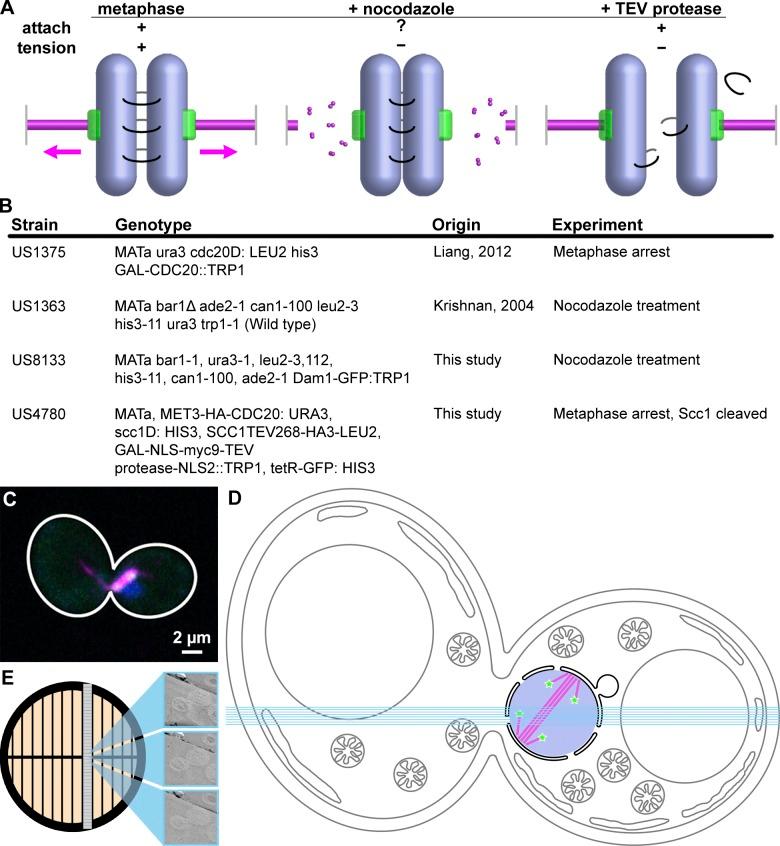
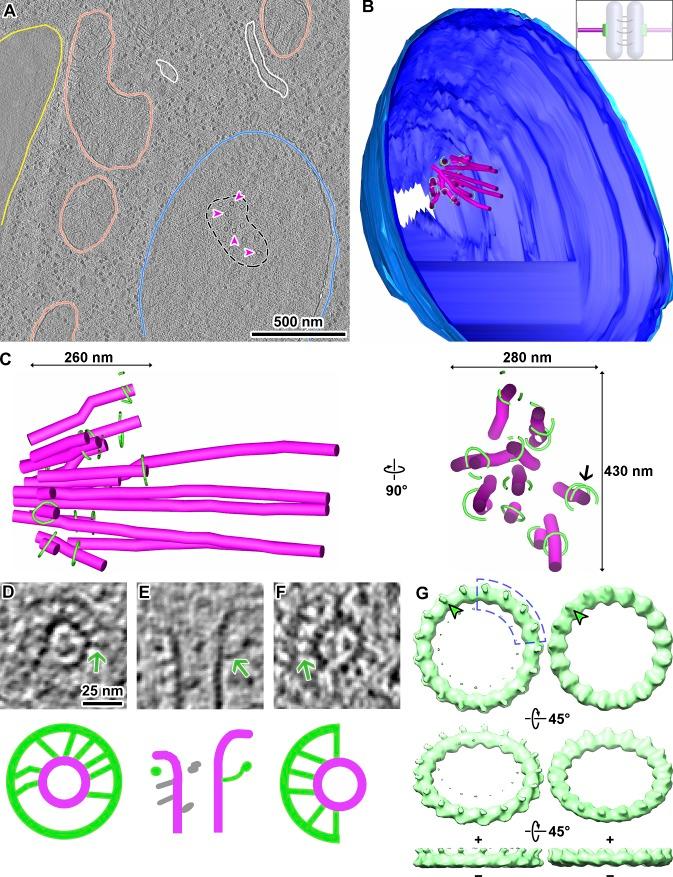
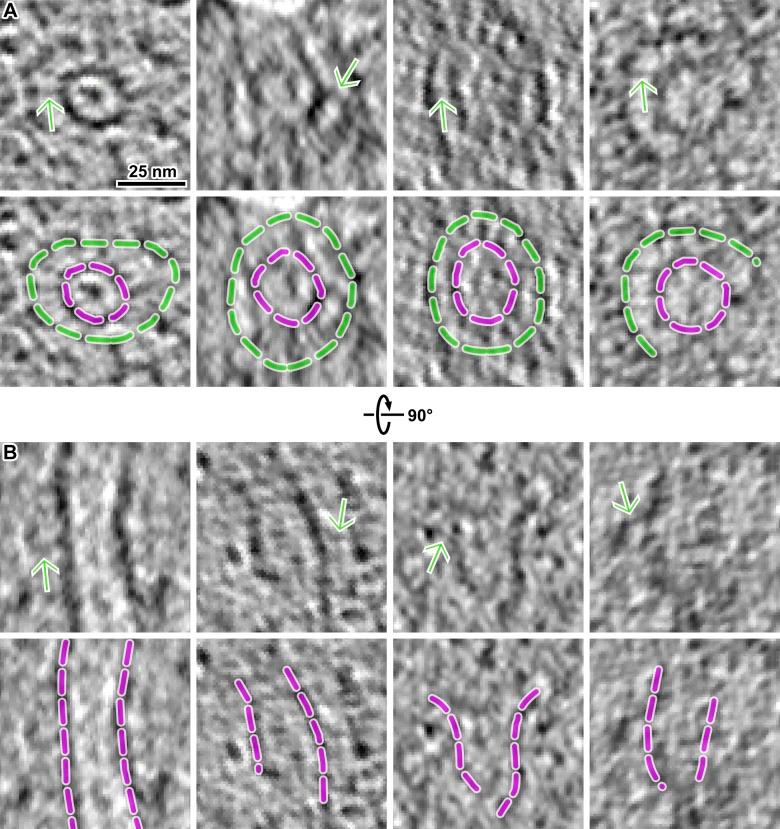
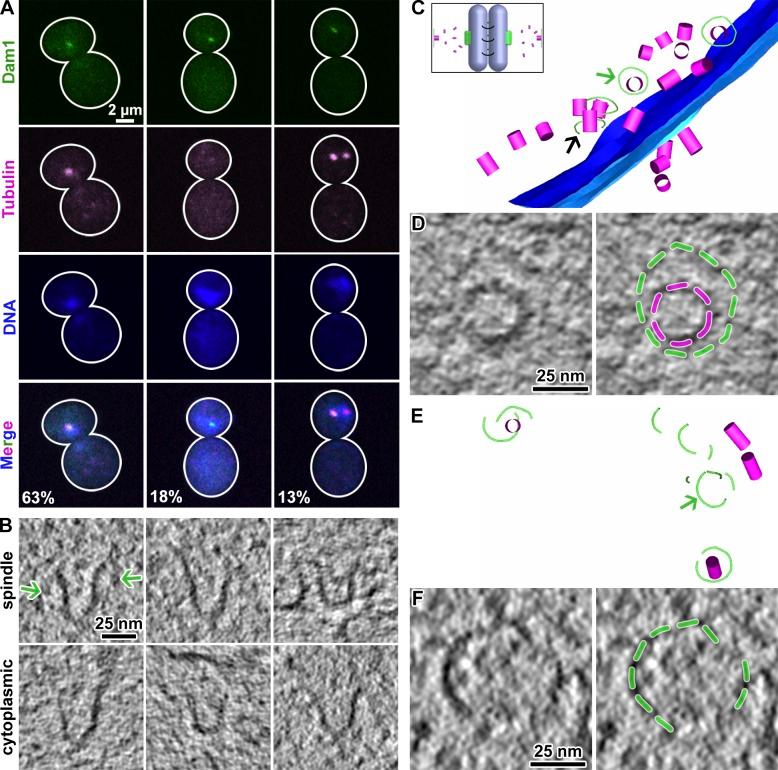
In dividing cells, depolymerizing spindle microtubules move chromosomes by pulling at their kinetochores. While kinetochore subcomplexes have been studied extensively in vitro, little is known about their in vivo structure and interactions with microtubules or their response to spindle damage. Here we combine electron cryotomography of serial cryosections with genetic and pharmacological perturbation to study the yeast chromosome segregation machinery in vivo. Each kinetochore microtubule has one (rarely, two) Dam1C/DASH outer kinetochore assemblies. Dam1C/DASH contacts the microtubule walls and does so with its flexible "bridges"; there are no contacts with the protofilaments' curved tips. In metaphase, ∼40% of the Dam1C/DASH assemblies are complete rings; the rest are partial rings. Ring completeness and binding position along the microtubule are sensitive to kinetochore attachment and tension, respectively. Our study and those of others support a model in which each kinetochore must undergo cycles of conformational change to couple microtubule depolymerization to chromosome movement.
在细胞分裂过程中,解聚的纺锤体微管通过拉动着丝粒来移动染色体。虽然着丝粒亚基复合物在体外已经得到了广泛的研究,但对于它们在体内的结构及其与微管的相互作用,或者对纺锤体损伤的反应,我们知之甚少。在这里,我们结合电子断层扫描和遗传及药理学干扰,研究了酵母染色体分离机制在体内的情况。每个着丝粒微管都有一个(很少有两个)Dam1C/DASH 外着丝粒组件。Dam1C/DASH 与微管壁接触,通过其灵活的“桥”进行接触;与原纤维的弯曲尖端没有接触。在中期,大约 40%的 Dam1C/DASH 组件是完整的环;其余的是部分环。环的完整性和沿微管的结合位置分别对着丝粒的附着和张力敏感。我们的研究和其他研究都支持这样一种模型,即每个着丝粒都必须经历构象变化的循环,以将微管解聚与染色体运动偶联起来。


 Zotero 插件