
脑类器官——一种用于研究人类神经发育的自下而上的方法。
Brain Organoids-A Bottom-Up Approach for Studying Human Neurodevelopment.
作者信息
Karzbrun Eyal, Reiner Orly
机构信息
Kavli Institute for Theoretical Physics and Department of Physics, University of California, Santa Barbara, CA 93106, USA.
Department of Molecular Genetics, The Weizmann Institute of Science, Rehovot 76100, Israel.
出版信息
Bioengineering (Basel). 2019 Jan 18;6(1):9. doi: 10.3390/bioengineering6010009.
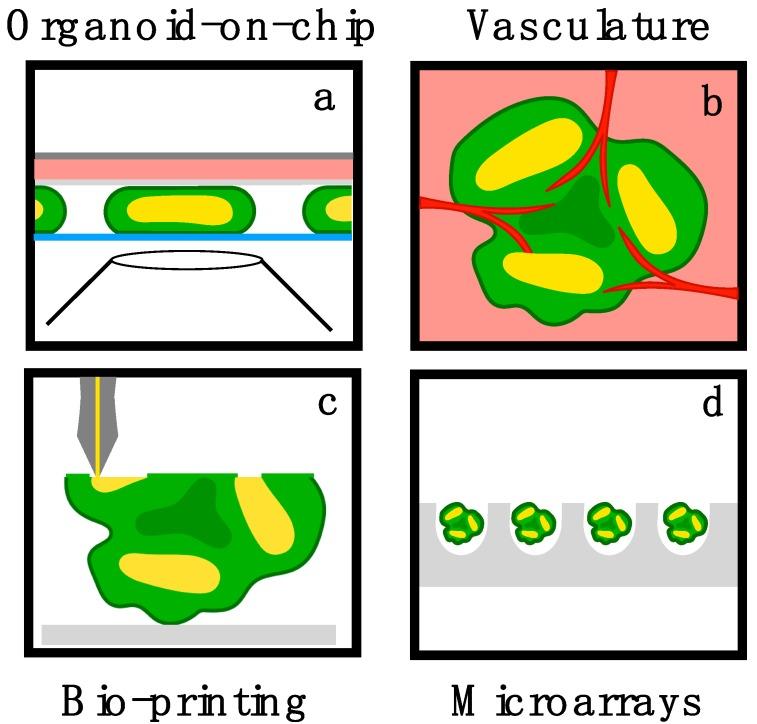
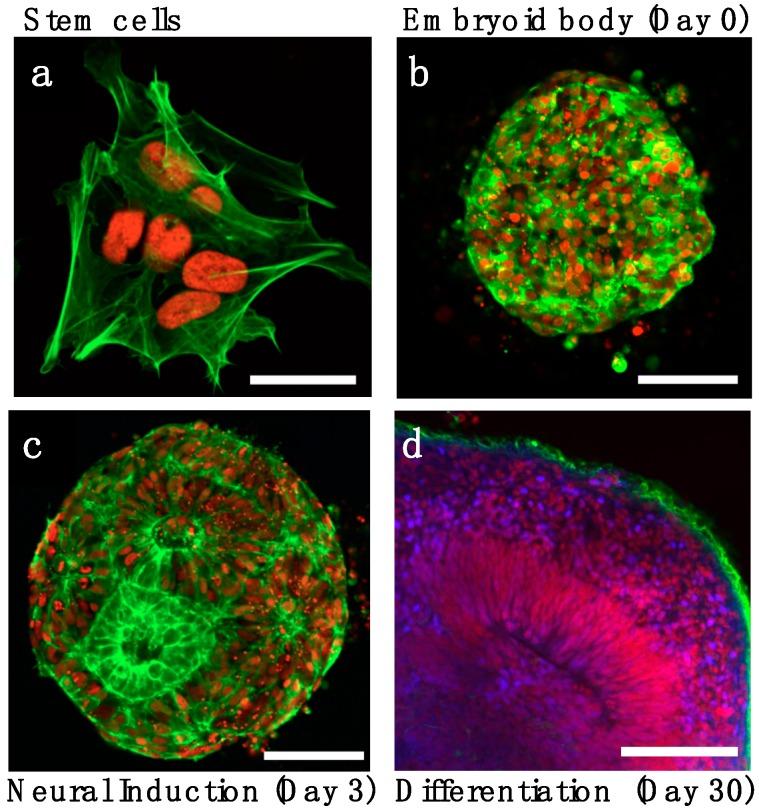
Brain organoids have recently emerged as a three-dimensional tissue culture platform to study the principles of neurodevelopment and morphogenesis. Importantly, brain organoids can be derived from human stem cells, and thus offer a model system for early human brain development and human specific disorders. However, there are still major differences between the in vitro systems and in vivo development. This is in part due to the challenge of engineering a suitable culture platform that will support proper development. In this review, we discuss the similarities and differences of human brain organoid systems in comparison to embryonic development. We then describe how organoids are used to model neurodevelopmental diseases. Finally, we describe challenges in organoid systems and how to approach these challenges using complementary bioengineering techniques.
脑类器官最近已成为一种三维组织培养平台,用于研究神经发育和形态发生的原理。重要的是,脑类器官可以从人类干细胞中获得,因此为早期人类大脑发育和人类特有的疾病提供了一个模型系统。然而,体外系统和体内发育之间仍然存在重大差异。这部分是由于构建一个能够支持正常发育的合适培养平台面临挑战。在这篇综述中,我们讨论了人类脑类器官系统与胚胎发育相比的异同。然后我们描述了类器官如何用于模拟神经发育疾病。最后,我们描述了类器官系统中的挑战以及如何使用互补的生物工程技术来应对这些挑战。

 Zotero 插件