
深度学习在验证和估计冷冻电子显微镜密度图分辨率中的应用
Deep Learning for Validating and Estimating Resolution of Cryo-Electron Microscopy Density Maps .
机构信息
Computing and Software Systems, University of Washington, Bothell, WA 98011, USA.
Department of Anatomy and Cell Biology, McGill University, Montreal, QC H3A 0C7, Canada.
出版信息
Molecules. 2019 Mar 26;24(6):1181. doi: 10.3390/molecules24061181.
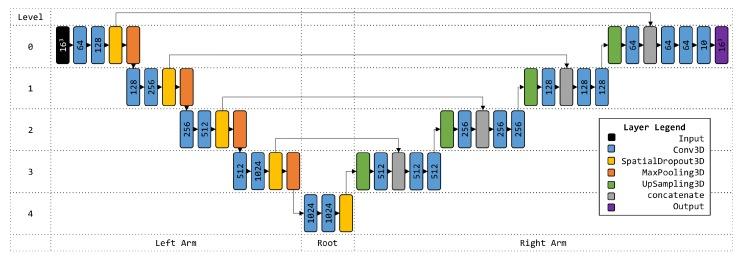
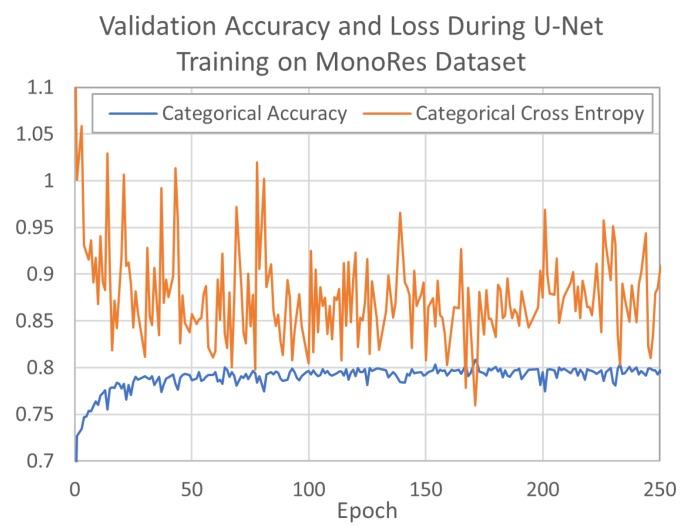
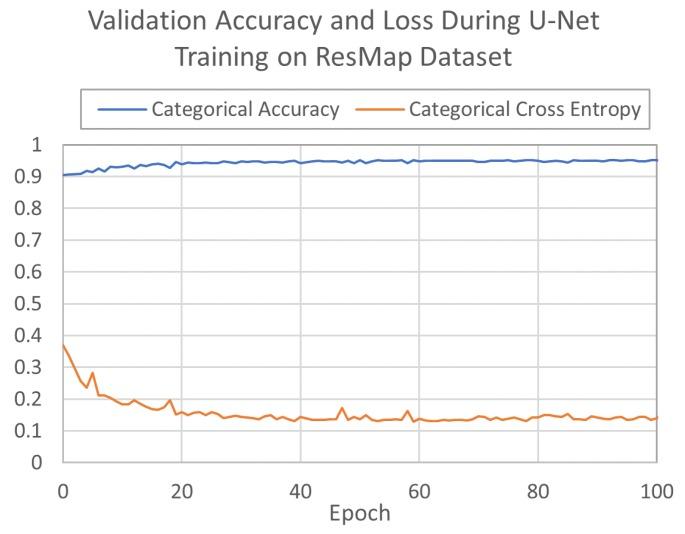
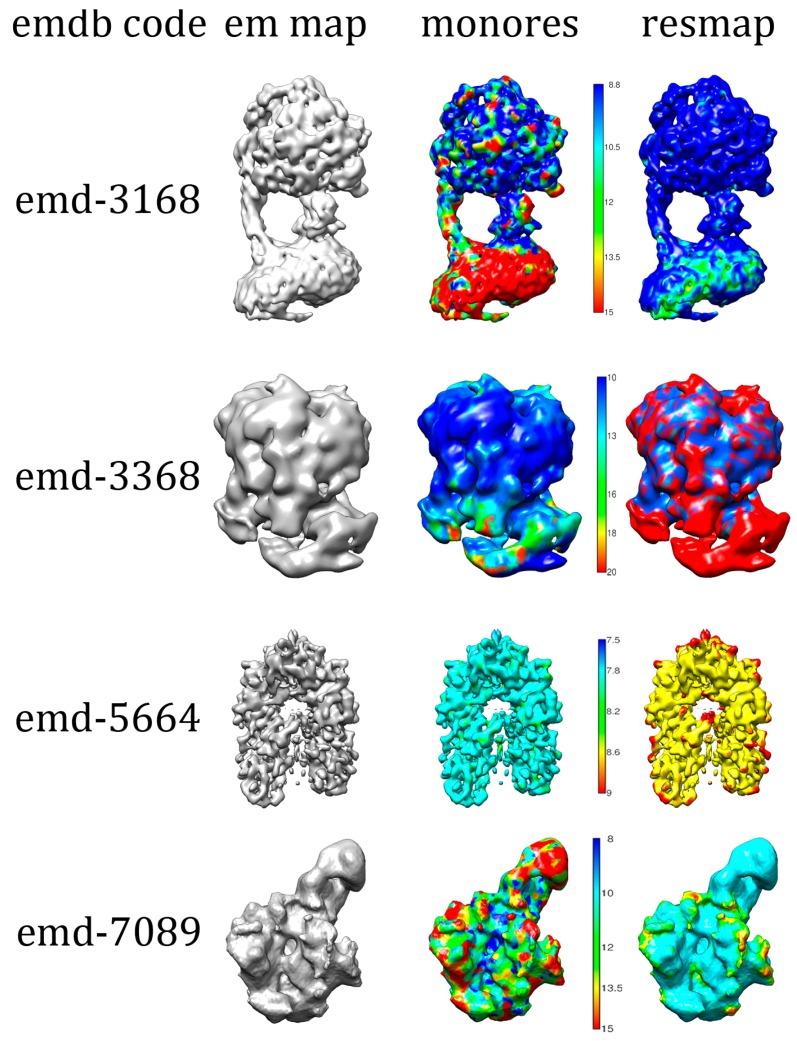
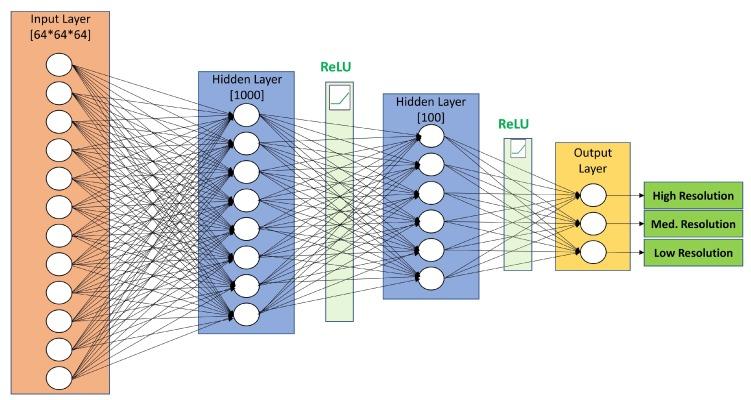
Cryo-electron microscopy (cryo-EM) is becoming the imaging method of choice for determining protein structures. Many atomic structures have been resolved based on an exponentially growing number of published three-dimensional (3D) high resolution cryo-EM density maps. However, the resolution value claimed for the reconstructed 3D density map has been the topic of scientific debate for many years. The Fourier Shell Correlation (FSC) is the currently accepted cryo-EM resolution measure, but it can be subjective, manipulated, and has its own limitations. In this study, we first propose supervised deep learning methods to extract representative 3D features at high, medium and low resolutions from simulated protein density maps and build classification models that objectively validate resolutions of experimental 3D cryo-EM maps. Specifically, we build classification models based on dense artificial neural network (DNN) and 3D convolutional neural network (3D CNN) architectures. The trained models can classify a given 3D cryo-EM density map into one of three resolution levels: high, medium, low. The preliminary DNN and 3D CNN models achieved 92.73% accuracy and 99.75% accuracy on simulated test maps, respectively. Applying the DNN and 3D CNN models to thirty experimental cryo-EM maps achieved an agreement of 60.0% and 56.7%, respectively, with the author published resolution value of the density maps. We further augment these previous techniques and present preliminary results of a 3D U-Net model for local resolution classification. The model was trained to perform voxel-wise classification of 3D cryo-EM density maps into one of ten resolution classes, instead of a single global resolution value. The U-Net model achieved 88.3% and 94.7% accuracy when evaluated on experimental maps with local resolutions determined by MonoRes and ResMap methods, respectively. Our results suggest deep learning can potentially improve the resolution evaluation process of experimental cryo-EM maps.
冷冻电镜(cryo-EM)正在成为确定蛋白质结构的首选成像方法。许多原子结构都是基于不断增加的已发表的三维(3D)高分辨率冷冻电镜密度图而得到解析的。然而,重构的 3D 密度图的分辨率值一直是多年来科学争论的话题。傅立叶壳相关(FSC)是目前公认的冷冻电镜分辨率测量方法,但它可能具有主观性、可操作性,并且存在自身的局限性。在这项研究中,我们首先提出了监督深度学习方法,从模拟的蛋白质密度图中提取高、中、低分辨率的代表性 3D 特征,并构建分类模型,客观地验证实验 3D 冷冻电镜图的分辨率。具体来说,我们基于密集人工神经网络(DNN)和 3D 卷积神经网络(3D CNN)架构构建分类模型。训练好的模型可以将给定的 3D 冷冻电镜密度图分类为高、中、低分辨率之一。初步的 DNN 和 3D CNN 模型在模拟测试图上的准确率分别达到了 92.73%和 99.75%。将 DNN 和 3D CNN 模型应用于 30 张实验冷冻电镜图,与作者发表的密度图分辨率值的一致性分别为 60.0%和 56.7%。我们进一步扩展了这些先前的技术,并展示了 3D U-Net 模型用于局部分辨率分类的初步结果。该模型被训练为对 3D 冷冻电镜密度图进行体素分类,分为十个分辨率类别之一,而不是单个全局分辨率值。当使用 MonoRes 和 ResMap 方法确定的局部分辨率评估实验图时,U-Net 模型的准确率分别达到了 88.3%和 94.7%。我们的结果表明,深度学习有可能改进实验冷冻电镜图的分辨率评估过程。



 Zotero 插件