
真核起始因子 4E 结合蛋白作为乳腺癌的致癌基因。
Eukaryotic initiation factor 4E-binding protein as an oncogene in breast cancer.
机构信息
Department of Pathology and Laboratory Medicine, Medical University of South Carolina, 171 Ashley Avenue, MSC 908, Charleston, SC, 29425, USA.
Hollings Cancer Center, Medical University of South Carolina, 86 Jonathan Lucas Street, Charleston, SC, 29425, USA.
出版信息
BMC Cancer. 2019 May 23;19(1):491. doi: 10.1186/s12885-019-5667-4.
BACKGROUND
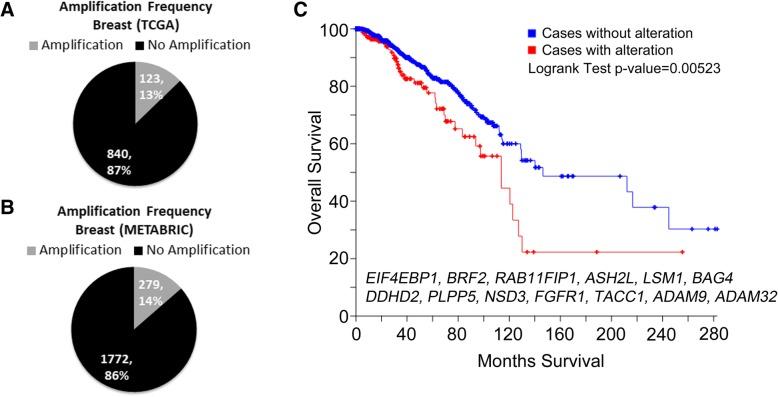
Eukaryotic Initiation Factor 4E-Binding Protein (EIF4EBP1, 4EBP1) is overexpressed in many human cancers including breast cancer, yet the role of 4EBP1 in breast cancer remains understudied. Despite the known role of 4EBP1 as a negative regulator of cap-dependent protein translation, 4EBP1 is predicted to be an essential driving oncogene in many cancer cell lines in vitro, and can act as a driver of cancer cell proliferation. EIF4EBP1 is located within the 8p11-p12 genomic locus, which is frequently amplified in breast cancer and is known to predict poor prognosis and resistance to endocrine therapy.
METHODS
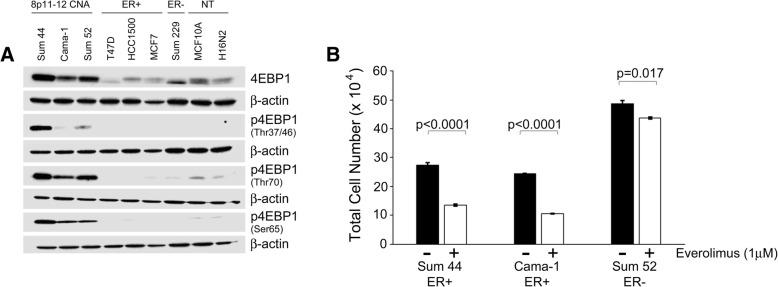
Here we evaluated the effect of 4EBP1 targeting using shRNA knock-down of expression of 4EBP1, as well as response to the mTORC targeted drug everolimus in cell lines representing different breast cancer subtypes, including breast cancer cells with the 8p11-p12 amplicon, to better define a context and mechanism for oncogenic 4EBP1.
RESULTS
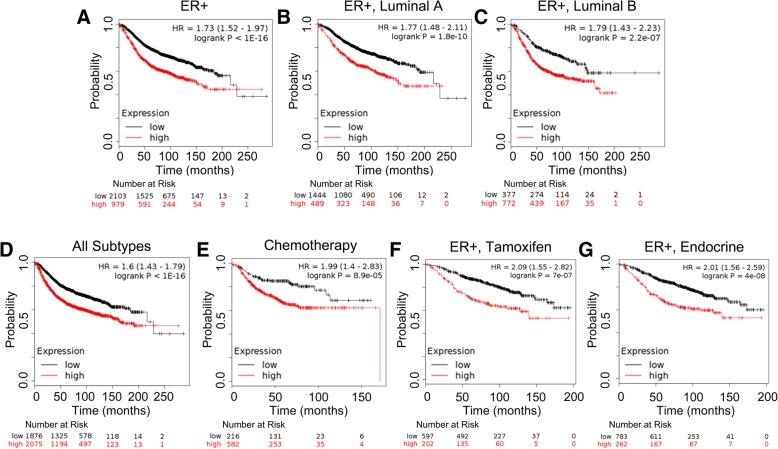
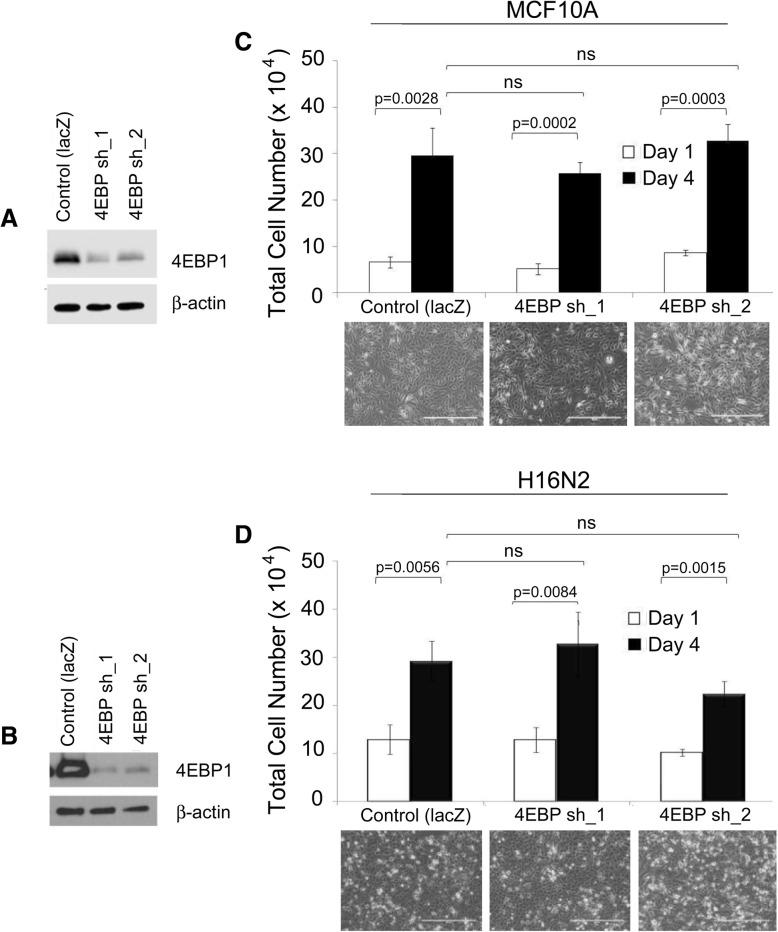
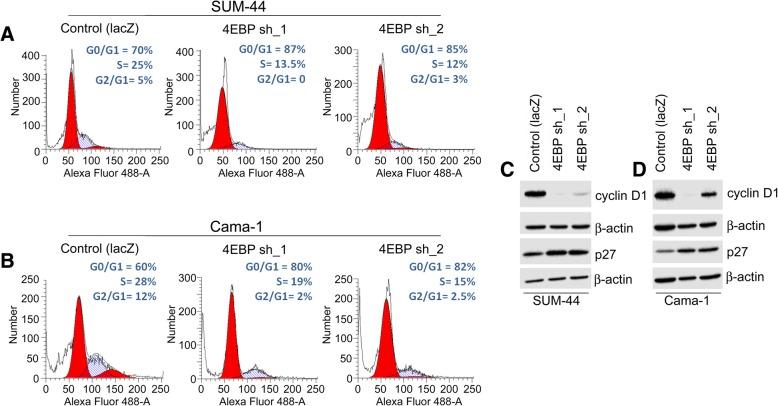
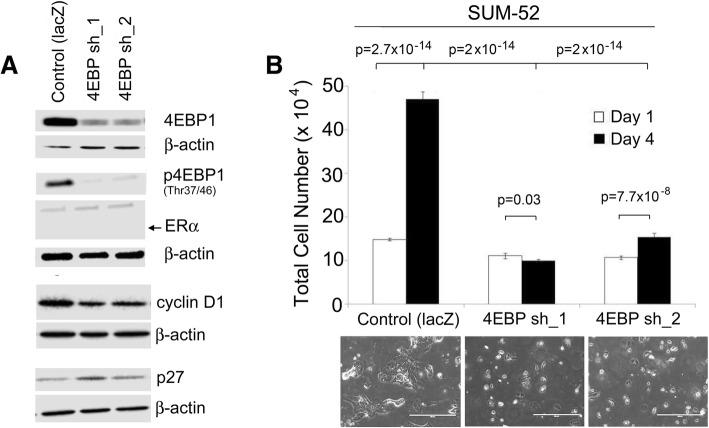
Using a genome-scale shRNA screen on the SUM panel of breast cancer cell lines, we found 4EBP1 to be a strong hit in the 8p11 amplified SUM-44 cells, which have amplification and overexpression of 4EBP1. We then found that knock-down of 4EBP1 resulted in dramatic reductions in cell proliferation in 8p11 amplified breast cancer cells as well as in other luminal breast cancer cell lines, but had little or no effect on the proliferation of immortalized but non-tumorigenic human mammary epithelial cells. Kaplan-Meier analysis of EIF4EBP1 expression in breast cancer patients demonstrated that overexpression of this gene was associated with reduced relapse free patient survival across all breast tumor subtypes.
CONCLUSIONS
These results are consistent with an oncogenic role of 4EBP1 in luminal breast cancer and suggests a role for this protein in cell proliferation distinct from its more well-known role as a regulator of cap-dependent translation.
背景
真核起始因子 4E 结合蛋白 (EIF4EBP1, 4EBP1) 在包括乳腺癌在内的许多人类癌症中过表达,但 4EBP1 在乳腺癌中的作用仍未得到充分研究。尽管已知 4EBP1 是一种帽依赖性蛋白翻译的负调控因子,但 4EBP1 在许多体外癌细胞系中被预测为必不可少的驱动癌基因,并可作为癌细胞增殖的驱动因素。EIF4EBP1 位于 8p11-p12 基因组位置,该位置在乳腺癌中经常扩增,已知可预测预后不良和对内分泌治疗的耐药性。
方法
在这里,我们通过 shRNA 敲低 4EBP1 的表达来评估 4EBP1 靶向作用的效果,以及对 mTORC 靶向药物依维莫司的反应,这些细胞系代表不同的乳腺癌亚型,包括具有 8p11-p12 扩增子的乳腺癌细胞,以更好地定义致癌 4EBP1 的上下文和机制。
结果
我们在 SUM 系列乳腺癌细胞系的全基因组 shRNA 筛选中发现,4EBP1 在 8p11 扩增的 SUM-44 细胞中是一个强烈的靶点,该细胞具有 4EBP1 的扩增和过表达。然后,我们发现 4EBP1 的敲低导致 8p11 扩增的乳腺癌细胞以及其他 luminal 乳腺癌细胞系中的细胞增殖显著减少,但对永生化但非肿瘤性的人乳腺上皮细胞的增殖几乎没有影响。乳腺癌患者 EIF4EBP1 表达的 Kaplan-Meier 分析表明,该基因的过表达与所有乳腺癌肿瘤亚型患者的无复发生存率降低相关。
结论
这些结果与 4EBP1 在 luminal 乳腺癌中的致癌作用一致,并表明该蛋白在细胞增殖中的作用与其作为帽依赖性翻译调节剂的更知名作用不同。

 Zotero 插件