
线粒体融合蛋白:E3 连接酶在线粒体质量控制中的疾病守门人和枢纽蛋白
Mitofusins: Disease Gatekeepers and Hubs in Mitochondrial Quality Control by E3 Ligases.
作者信息
Escobar-Henriques Mafalda, Joaquim Mariana
机构信息
Center for Molecular Medicine Cologne (CMMC), Institute for Genetics, Cologne Excellence Cluster on Cellular Stress Responses in Aging-Associated Diseases (CECAD), University of Cologne, Cologne, Germany.
出版信息
Front Physiol. 2019 May 9;10:517. doi: 10.3389/fphys.2019.00517. eCollection 2019.
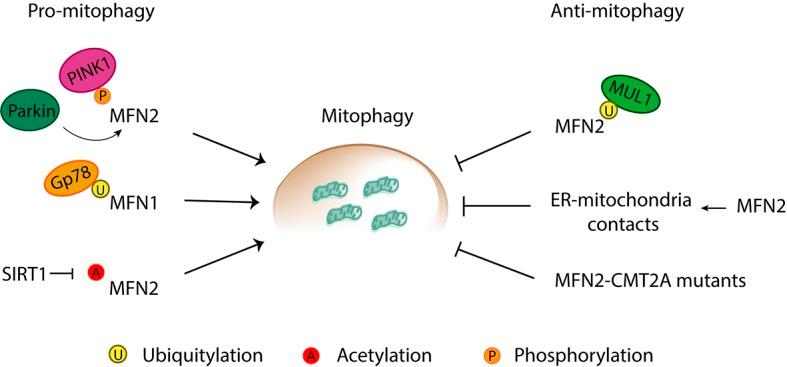
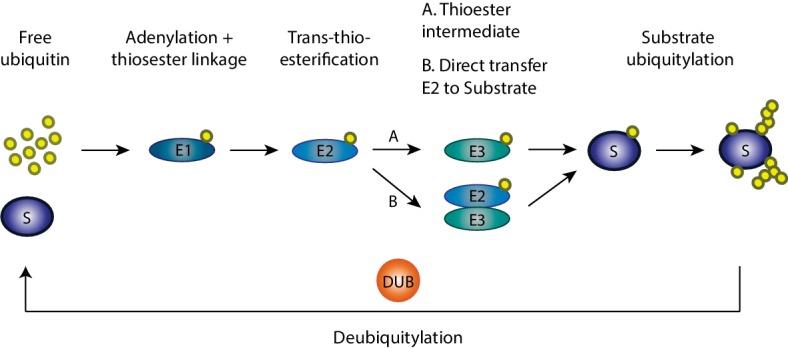
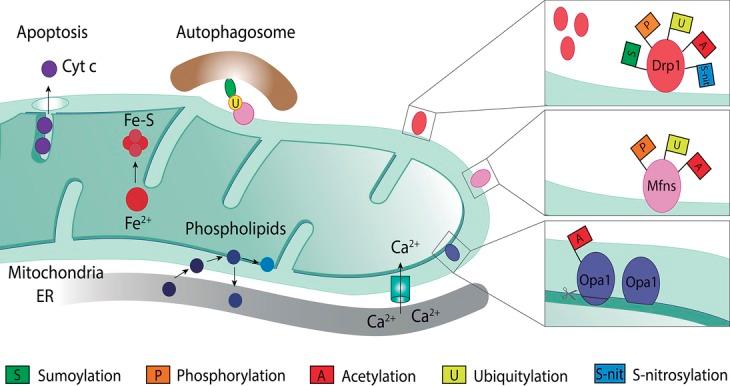
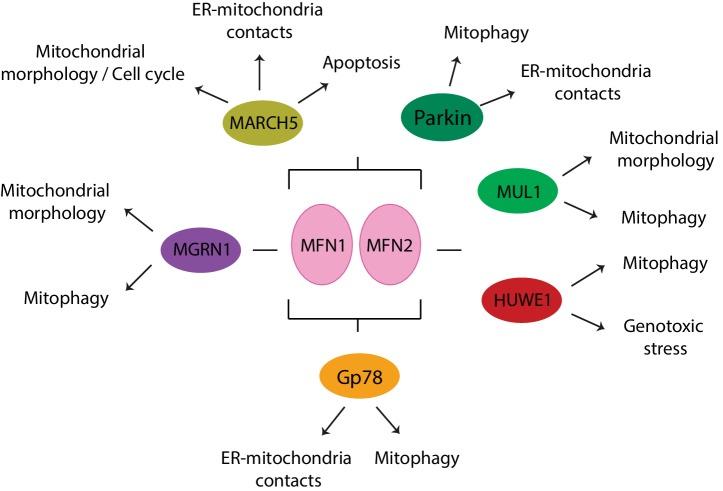
Mitochondria are dynamic organelles engaged in quality control and aging processes. They constantly undergo fusion, fission, transport, and anchoring events, which empower mitochondria with a very interactive behavior. The membrane remodeling processes needed for fusion require conserved proteins named mitofusins, MFN1 and MFN2 in mammals and Fzo1 in yeast. They are the first determinants deciding on whether communication and content exchange between different mitochondrial populations should occur. Importantly, each cell possesses hundreds of mitochondria, with a different severity of mitochondrial mutations or dysfunctional proteins, which potentially spread damage to the entire network. Therefore, the degree of their merging capacity critically influences cellular fitness. In turn, the mitochondrial network rapidly and dramatically changes in response to metabolic and environmental cues. Notably, cancer or obesity conditions, and stress experienced by neurons and cardiomyocytes, for example, triggers the downregulation of mitofusins and thus fragmentation of mitochondria. This places mitofusins upfront in sensing and transmitting stress. In fact, mitofusins are almost entirely exposed to the cytoplasm, a topology suitable for a critical relay point in information exchange between mitochondria and their cellular environment. Consistent with their topology, mitofusins are either activated or repressed by cytosolic post-translational modifiers, mainly by ubiquitin. Ubiquitin is a ubiquitous small protein orchestrating multiple quality control pathways, which is covalently attached to lysine residues in its substrates, or in ubiquitin itself. Importantly, from a chain of events also mediated by E1 and E2 enzymes, E3 ligases perform the ultimate and determinant step in substrate choice. Here, we review the ubiquitin E3 ligases that modify mitofusins. Two mitochondrial E3 enzymes-March5 and MUL1-one ligase located to the ER-Gp78-and finally three cytosolic enzymes-MGRN1, HUWE1, and Parkin-were shown to ubiquitylate mitofusins, in response to a variety of cellular inputs. The respective outcomes on mitochondrial morphology, on contact sites to the endoplasmic reticulum and on destructive processes, like mitophagy or apoptosis, are presented. Ultimately, understanding the mechanisms by which E3 ligases and mitofusins sense and bi-directionally signal mitochondria-cytosolic dysfunctions could pave the way for therapeutic approaches in neurodegenerative, cardiovascular, and obesity-linked diseases.
线粒体是参与质量控制和衰老过程的动态细胞器。它们不断经历融合、裂变、运输和锚定事件,这些赋予了线粒体非常活跃的行为。融合所需的膜重塑过程需要保守蛋白,在哺乳动物中为线粒体融合蛋白1(MFN1)和线粒体融合蛋白2(MFN2),在酵母中为Fzo1。它们是决定不同线粒体群体之间是否应该发生通讯和内容交换的首要决定因素。重要的是,每个细胞拥有数百个线粒体,其线粒体突变或功能失调蛋白的严重程度各不相同,这可能会将损伤扩散到整个网络。因此,它们的融合能力程度对细胞健康至关重要。反过来,线粒体网络会根据代谢和环境信号迅速而显著地发生变化。值得注意的是,癌症或肥胖状况,以及神经元和心肌细胞所经历的应激,例如,会触发线粒体融合蛋白的下调,从而导致线粒体碎片化。这使得线粒体融合蛋白在感知和传递应激方面处于前沿位置。事实上,线粒体融合蛋白几乎完全暴露于细胞质中,这种拓扑结构适合作为线粒体与其细胞环境之间信息交换的关键中继点。与其拓扑结构一致,线粒体融合蛋白被胞质翻译后修饰剂激活或抑制,主要是被泛素修饰。泛素是一种普遍存在的小蛋白,协调多种质量控制途径,它共价连接到底物或其自身的赖氨酸残基上。重要的是,在也由E1和E2酶介导的一系列事件中,E3连接酶在底物选择中执行最终的决定性步骤。在这里,我们综述了修饰线粒体融合蛋白的泛素E3连接酶。已表明两种线粒体E3酶——March5和MUL1——一种定位于内质网的连接酶Gp78——以及最后三种胞质酶——MGRN1、HUWE1和Parkin——会响应多种细胞输入而使线粒体融合蛋白发生泛素化。文中呈现了它们对线粒体形态、与内质网接触位点以及诸如线粒体自噬或凋亡等破坏过程的各自影响。最终,了解E3连接酶和线粒体融合蛋白感知线粒体 - 胞质功能障碍并进行双向信号传递的机制,可能为神经退行性疾病、心血管疾病和肥胖相关疾病的治疗方法铺平道路。



 Zotero 插件