
内质网应激应对机制与健康和疾病中的寿命调节
Endoplasmic Reticulum Stress Coping Mechanisms and Lifespan Regulation in Health and Diseases.
作者信息
Chadwick Sarah R, Lajoie Patrick
机构信息
Department of Anatomy and Cell Biology, The University of Western Ontario, London, ON, Canada.
出版信息
Front Cell Dev Biol. 2019 May 21;7:84. doi: 10.3389/fcell.2019.00084. eCollection 2019.
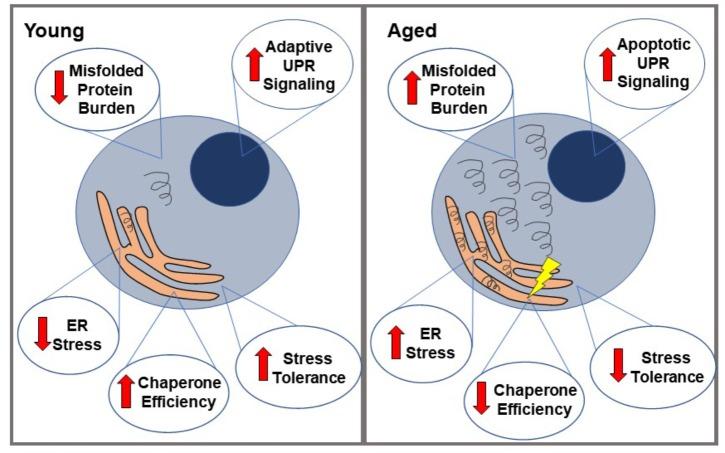
Multiple factors lead to proteostatic perturbations, often resulting in the aberrant accumulation of toxic misfolded proteins. Cells, from yeast to humans, can respond to sudden accumulation of secretory proteins within the endoplasmic reticulum (ER) through pathways such as the Unfolded Protein Response (UPR). The ability of cells to adapt the ER folding environment to the misfolded protein burden ultimately dictates cell fate. The aging process is a particularly important modifier of the proteostasis network; as cells age, both their ability to maintain this balance in protein folding/degradation and their ability to respond to insults in these pathways can break down, a common element of age-related diseases (including neurodegenerative diseases). ER stress coping mechanisms are central to lifespan regulation under both normal and disease states. In this review, we give a brief overview of the role of ER stress response pathways in age-dependent neurodegeneration.
多种因素导致蛋白质稳态失衡,常致使有毒的错误折叠蛋白异常积聚。从酵母到人类,细胞可通过诸如未折叠蛋白反应(UPR)等途径,对内质网(ER)内分泌蛋白的突然积聚做出反应。细胞使内质网折叠环境适应错误折叠蛋白负荷的能力最终决定细胞命运。衰老过程是蛋白质稳态网络的一个特别重要的调节因素;随着细胞衰老,它们在蛋白质折叠/降解中维持这种平衡的能力以及对这些途径中损伤做出反应的能力都会受到破坏,这是与年龄相关疾病(包括神经退行性疾病)的一个共同要素。内质网应激应对机制在正常和疾病状态下的寿命调节中都至关重要。在本综述中,我们简要概述内质网应激反应途径在年龄依赖性神经退行性变中的作用。
 Zotero 插件